SAN FRANCISCO — The Bay Area is no stranger to gray skies. And for the past several years, neither was the biotechnology industry.
A historic market downturn has weighed heavily on drug developers since early 2021, causing many to tighten their belts, lay off staff and trim research programs. Only in the last six or so months have the clouds started to part. One key measure of the sector’s health, larger acquisitions, rose significantly in the back half of 2025, providing the kind of returns and spectacle that encourage investors to put in more money.
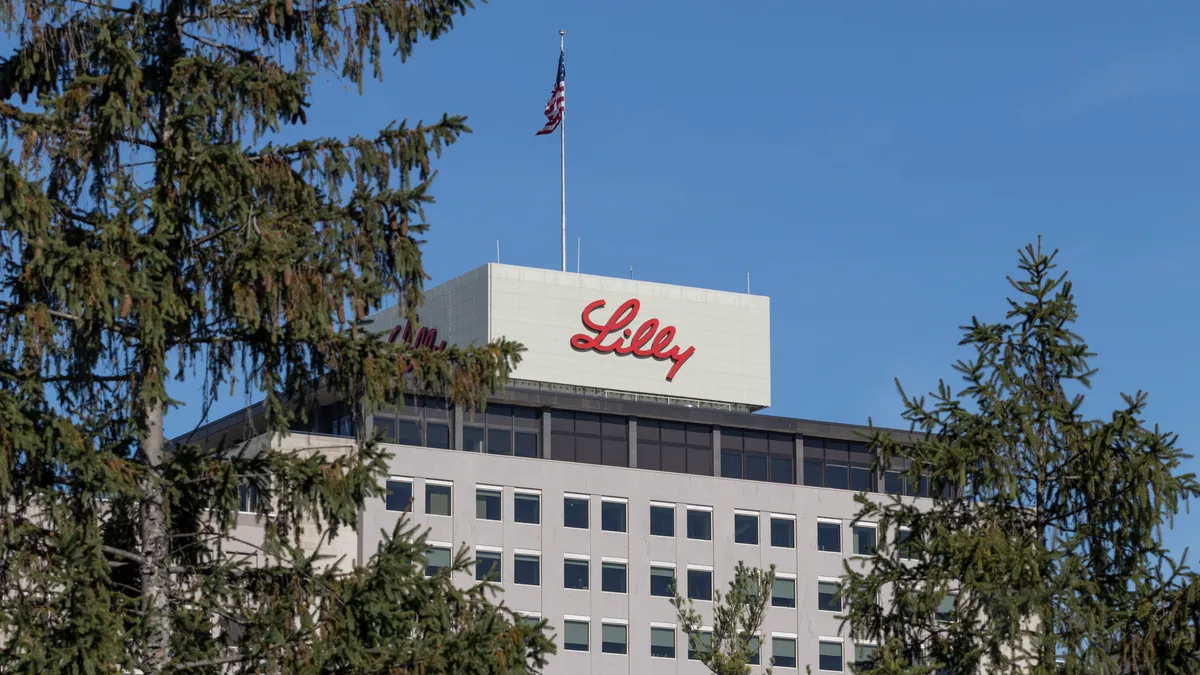
Heading into the industry’s bellwether event, the annual J.P. Morgan Healthcare Conference, there was reason to believe the momentum would continue. In the days leading up to the meeting, Eli Lilly agreed to buy immune system specialist Ventyx for $1.2 billion. Media outlets also reported Merck & Co. and AbbVie are interested in cancer drugmaker Revolution Medicines — though AbbVie denied the rumors — and said Lilly is preparing a nearly $18 billion bid for Abivax.
“The biotech sector right now is in a good place. There's going to be a lot of bounce in people's step at J.P. Morgan,” said John Maraganore, the multihyphenate biotech expert who served as founding CEO of Alnylam Pharmaceuticals and chairperson of the industry’s biggest trade group.
Yet, as the conference got underway, no major deals were announced. Investors were perhaps expecting a buzzier start, as the XBI, a closely watched biotech stock index, had fallen by as much as 2% Monday afternoon.
“This [has] been the slowest JPM for news in a long time,” Brad Loncar, a prominent biotech investor turned media analyst, posted on X.
Still, the pace could quickly change. Patent expirations should threaten some of the world’s best-selling medicines over the next few years. At J.P. Morgan, the big pharmas behind these drugs will be under pressure to convince shareholders they have solid plans in place to overcome the looming losses.
Meanwhile, former startups that have now matured into commercial-stage companies will be grabbing more of the spotlight. BridgeBio Pharma, a Palo Alto, California-based drugmaker that secured its first approval in late 2024, this year held one of the conference’s coveted first-up presentation slots. For those traveling throughout the city this week, ads for BridgeBio’s heart medicine, Attruby, can be seen in the ride-hailing app Lyft.
More broadly, investors are carefully evaluating how companies intend to grapple with the rapid rise of China’s biotech ecosystem. The last two days alone brought at least four deals focused on assets from Chinese developers, three of which involved big pharma firms. — Jacob Bell
A ‘Sputnik moment’ for U.S. biotech
Takeda Pharmaceutical was on the hunt over the past couple of years for drugs that could help build out its oncology business. The search ultimately led it to Innovent Biologics, a Chinese company that had already attracted interest from other large pharmas like Eli Lilly, Roche and Sanofi.
In October, Takeda bought rights to two Innovent therapies in the later stages of testing, plus a third in earlier development. The deal gave Innovent $1.2 billion up front, a $100 million equity investment from Takeda, and offered more than $10 billion in potential milestone payments.
“The more and more we looked, the more gravitational pull there was to China,” Andy Plump, Takeda’s head of research and development, said in an interview.
Such deals reinforce the exponentially growing power of Chinese biotechs. Data compiled by BioPharma Dive show north of 60 licensing deals with these developers last year.
This rise has been met with mixed reactions. Some see it as a net-positive for patients, the establishment of another global engine that can churn out new medicines. “I'm a big believer that innovation should come from anywhere in the world,” said Maraganore.
Yet, U.S. leaders have sounded alarms that the country will be — if it isn’t already — at risk of losing its place atop the world’s life sciences standings. Their fears have been heard by lawmakers in Washington, DC, but met with little action.
“If we're not careful, we could cede our leadership of this remarkable industry to another country. That would be a mistake,” Maraganore said. “We don't want biotech to become like semiconductors.”
“We should take this as a Sputnik moment, look around at what we do as an industry and figure out how to do it better,” he added. “After all, what's really driving this China wave right now is [their] ability to get clinical data cheaper and faster. Those are things we should be able to do in this country, if we just let it happen. That requires some regulatory reform, it requires some health policy reform, and that's what we should really think about here.” — Jacob Bell
Bristol Myers’ ‘data-rich’ year
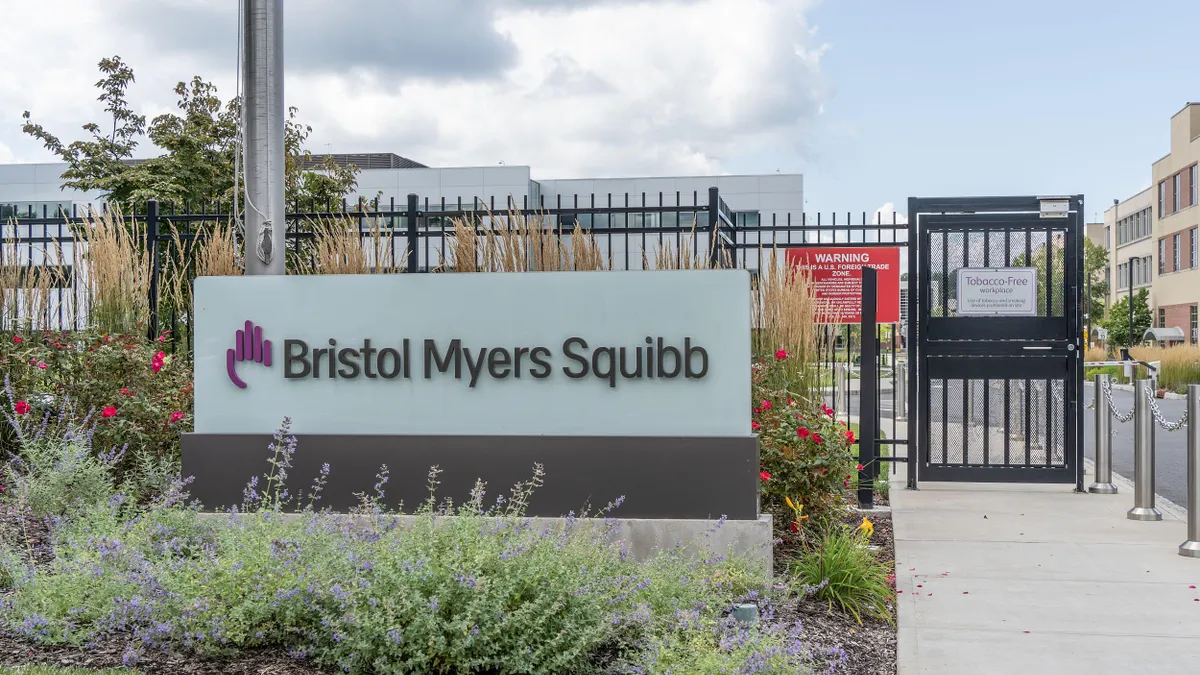
Bristol Myers Squibb is in a tough spot as 2026 begins. Patents will soon expire for two of its top sellers, heightening pressure on the New Jersey pharmaceutical giant to find replacements. A handful of the company’s drugs failed late-stage trials last year, though, erasing multiple chances at future sales growth. Shares trade at roughly the same price that they did at the start of 2025.
Bristol Myers deepened its cost-cutting plans last year to help fight through the turbulent period ahead and, at a presentation kicking off the conference Monday, CEO Chris Boerner said the company is “well on [its] way to delivering” the expected savings. But Boerner was also adamant that an arsenal of marketed and emerging medicines could help fill the coming revenue gap.
“Our future growth will not be dependent upon one or two blockbuster products,” he said.
Four young and growing products — Camzyos, Breyanzi, Opdualag and Reblozyl — eclipsed $1 billion in sales last year. Boerner said that Bristol Myers is focused on boosting those numbers while entering a “data-rich” period that could drive the company’s prospects higher.
One drug, a new type of blood thinner called milvexian, missed the mark in its first big Phase 3 trial but is involved in two other late-stage studies that should produce results this year. Phase 3 readouts are also coming for a fibrosis drug called admilparant; a radiopharmaceutical Bristol Myers acquired through a 2023 buyout deal; and protein degraders the company sees as successors to its widely used blood cancer medicines Revlimid and Pomalyst.
Investors are also paying close attention to Cobenfy, a schizophrenia drug Bristol Myers paid $14 billion to acquire. Last year, Bristol Myers delayed a highly anticipated readout that could significantly broaden use of Cobenfy, which generated $105 million over the first nine months of 2026. That result is now expected later this year, and “is going to be important to continue to accelerate the launch,” Boerner said.
By the end of the decade, what should emerge is “a younger and more diversified portfolio” that can sustain growth “into 2030 and beyond,” he added. — Gwendolyn Wu
Pfizer’s obesity ambitions
After winning a bruising bidding war for obesity drug developer Metsera that saw it pay double its initial offer, Pfizer isn’t biding its time. The company is speeding forward with the assets acquired in the deal, starting with plans to initiate 10 Phase 3 trials by the end of 2026 for Metsera’s top prospect, a long-acting injectable GLP-1 drug called MET-097i, CEO Albert Bourla told a J.P. Morgan audience.
Pfizer began the first of those trials before the end of 2025, just weeks after the deal closed and ahead of Metsera’s own internal schedule. “We were able to do such a good work in integrating and working with the Metsera team,” Bourla said, claiming the groups are working alongside one another “like if they were together for the last 10 years.”
Bourla reiterated his hyper-bullish view of the revenue potential for obesity drugs, stating he expects them to record some $150 billion in yearly sales by 2030. That rosy outlook is driven in part by his belief in a growing cash-pay market — a commercial segment he said Pfizer understands well. “When we launched Viagra, we were surprised how it was the first medicine that people were willing to pay out of pocket to get the medicine, irrelevant if it was covered or not by the system,” Bourla said.
“The Metsera portfolio is excellent, highly differentiated,” he said. But Pfizer’s commercial might is “what can make a difference vis-à-vis the leader in this industry, which is [Eli] Lilly,” he said.
Pfizer needs its gamble on Metsera to pay off. The company’s share price has fallen significantly in recent years amid declining sales for its COVID-19 products. The company has looked to obesity drugs to change the narrative, but its internal research efforts didn’t pan out. It hopes to launch Metsera’s drug, which it now calls PF-08653944, in 2028. — Jonathan Gardner
Sarepta’s brave face
Around this time last January, Sarepta Therapeutics was riding high. Its Duchenne muscular dystrophy gene therapy Elevidys appeared headed for more than $1 billion in yearly sales, and company shares were worth more than $110 apiece. A press release issued ahead of J.P. Morgan forecasted about $3 billion in product revenue in the year to come.
Those projections never materialized. A series of safety setbacks led Sarepta to an unusual standoff with the FDA and, eventually, a slimmer label. Sarepta cut staff. Elevidys sales trended downward. Two of its other Duchenne drugs failed key trials meant to confirm their benefits. And by the end of the year, shares traded at about $20, levels the company hadn’t seen in nearly a decade.
“We thought 2025 was going to be an easy year,” CEO Ingram said at a presentation during this year’s meeting. “Well, it wasn't.”
Yet at that presentation, Ingram remained optimistic. Though Sarepta’s roughly $1.9 billion in net product revenue fell well short of company forecasts a year ago, Elevidys still brought in almost $900 million of that total, representing 9% growth “even in the face of all the distractions that occurred in 2025.” Fourth-quarter sales would’ve been higher, too, if not for a difficult flu season that forced the rescheduling of infusions for six Elevidys recipients, the company said in a statement accompanying its presentation.
Ingram reiterated that Sarepta still expects a minimum of $500 million in annual Elevidys and emphasized the company’s “strong financial footing” after pushing off looming debt payments. Sarepta will meet with the FDA by the end of the quarter to discuss converting the accelerated clearances for Amondys 45 and Vyondys 53 — the two drugs that failed confirmatory trials — to traditional clearances.
The company also hopes that some RNA drugs it’s developing with Arrowhead Pharmaceuticals will begin generating revenue by the end of the decade. Early data are expected shortly.
There’s “an enormous amount of opportunity in front of us,” Ingram said.
Still, Sarepta stopped short of providing financial guidance, adding to ongoing questions about Elevidys’ future sales prospects and the stability of the company’s overall business. In a note to clients, RBC Markets analyst Brian Abrahams noted how that decision “may be indicative of continued uncertainty in uptake” for Elevidys and that, even if those six patients hadn’t missed infusions last quarter, sales still would’ve fallen compared to the previous three months.
“The full impact” of the FDA’s stricter Elevidys label also “remains to be seen,” added Leerink Partners analyst Joseph Schwartz.
Both Abrahams and Schwartz wrote that they remain “on the sidelines” with Sarepta shares, which fell by double digits on Monday. — Delilah Alvarado