Dive Brief:
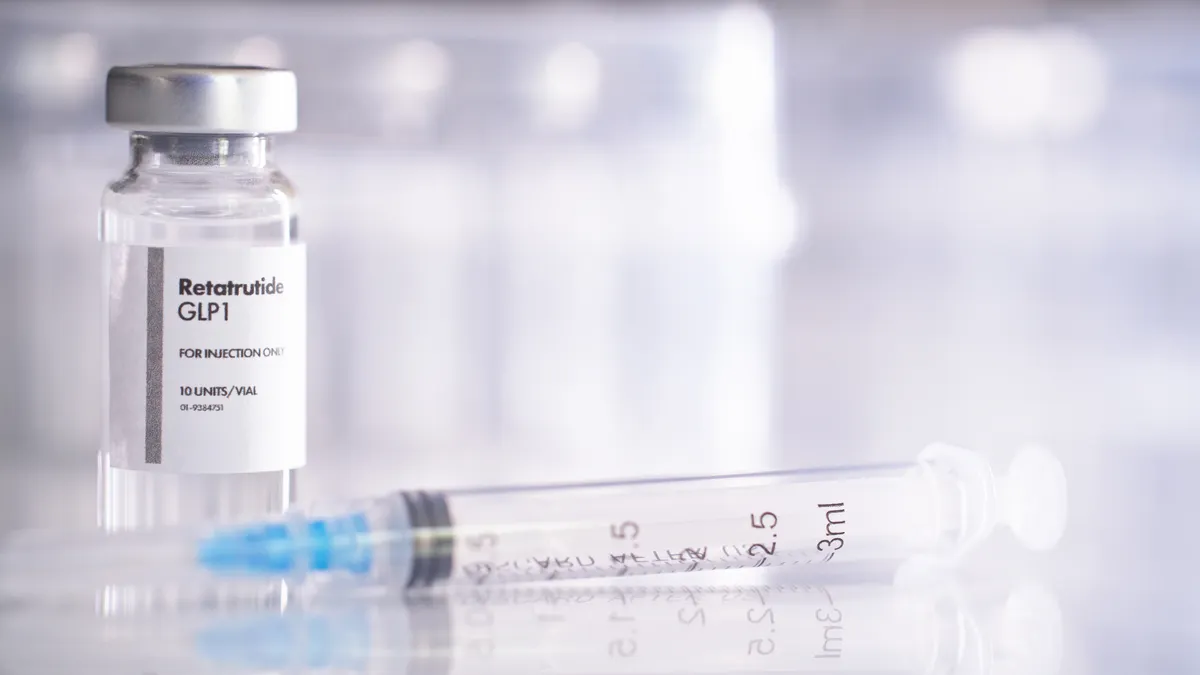
- Eli Lilly’s experimental, triple-acting obesity shot retatrutide helped people lose up to 28% of their body weight if they stayed on the medication for 80 weeks, a finding that could help the Indiana-based pharmaceutical giant further build its leading franchise.
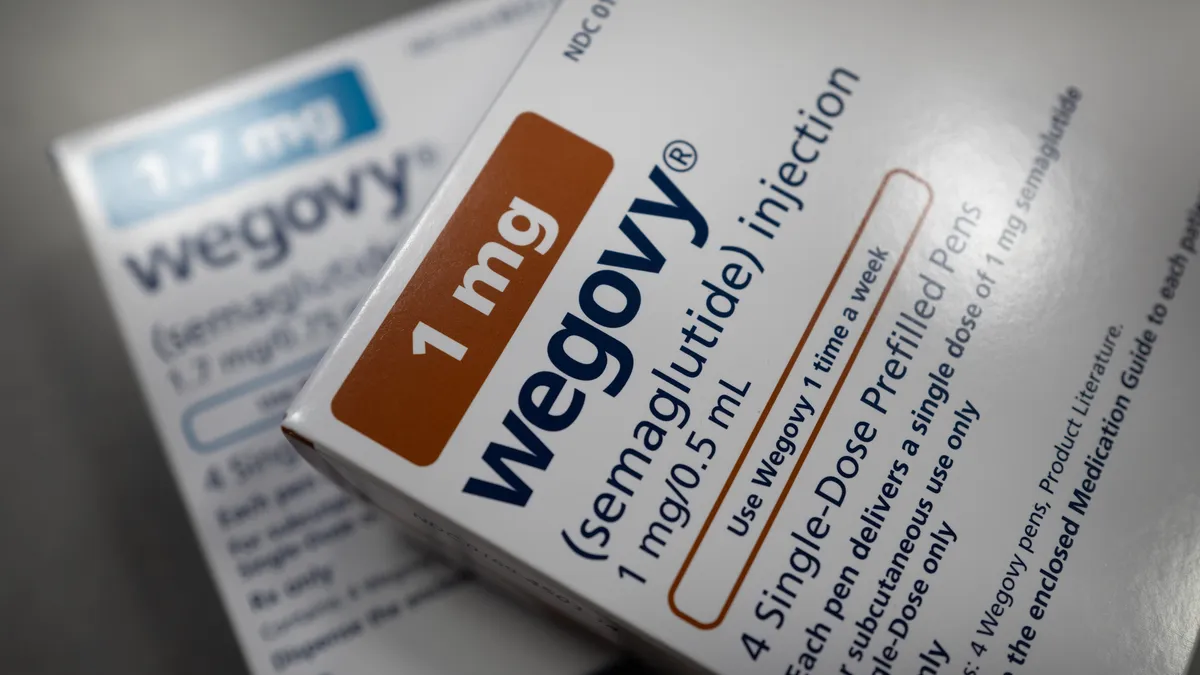
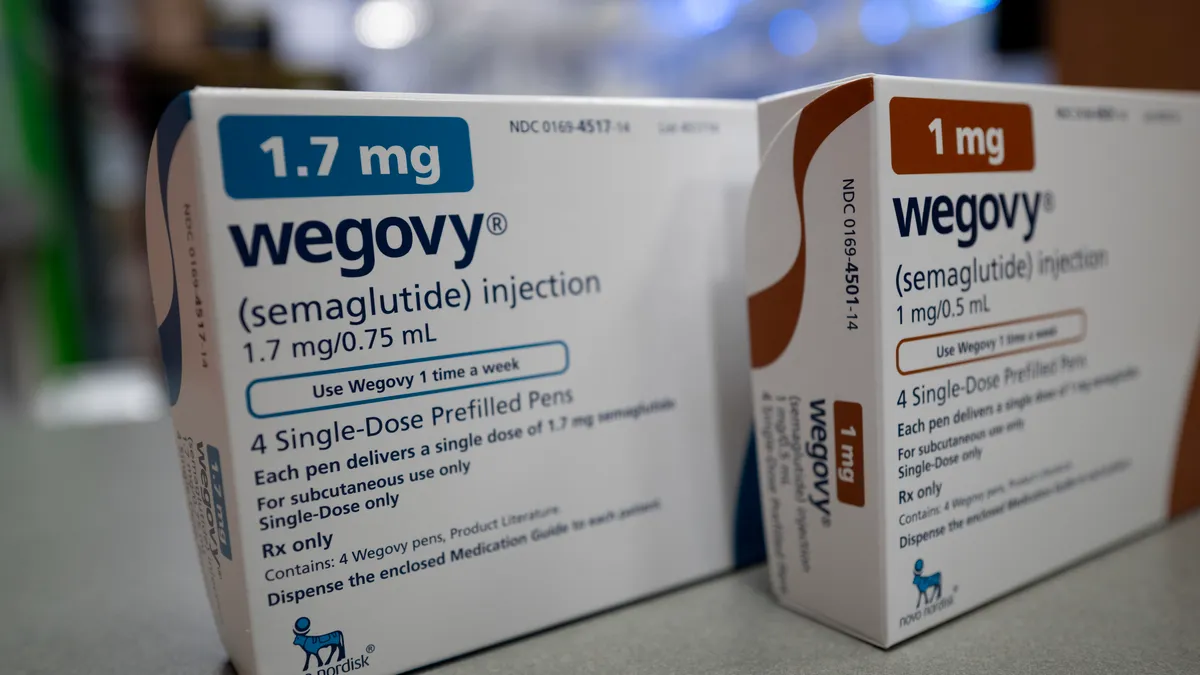
- The data released Thursday suggest that retatrutide will provide greater weight loss than Lilly’s own sector-leading shot Zepbound and could set a new benchmark for Wegovy-maker Novo Nordisk and along with other obesity rivals such as Roche, AstraZeneca and Structure Therapeutics.
- A low dose also resulted in 19% weight loss, in line with some Zepbound doses, while having a lower rate of discontinuation due to side effects than a placebo. The tolerability and substantial weight loss shown by retatrutide is “raising the bar for future novel obesity drug developers,” Leerink Partners analyst David Risinger wrote.
Dive Insight:
Retatrutide had already given strong signs it would be the shot to beat, with positive data in both diabetic patients as well as those with obesity and knee pain from osteoarthritis. The results announced Thursday came from “Triumph-1,” the largest and longest to date and the first from a trial focusing on those with obesity with a non-diabetic complication such as heart disease or high blood pressure.
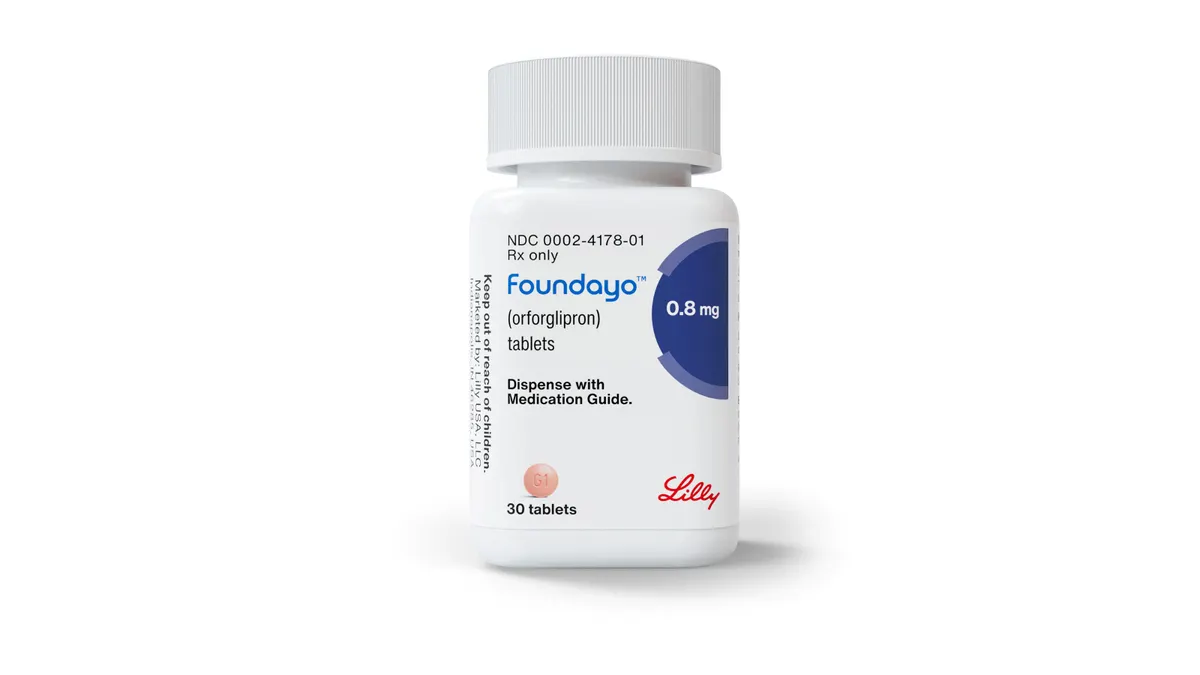
Investors have pinned high hopes on retatrutide to help sustain and expand Lilly’s already huge obesity franchise, with Zepbound posting sales of more than $13 billion in 2025 and a new pill, Foundayo, likely to have blockbuster sales.
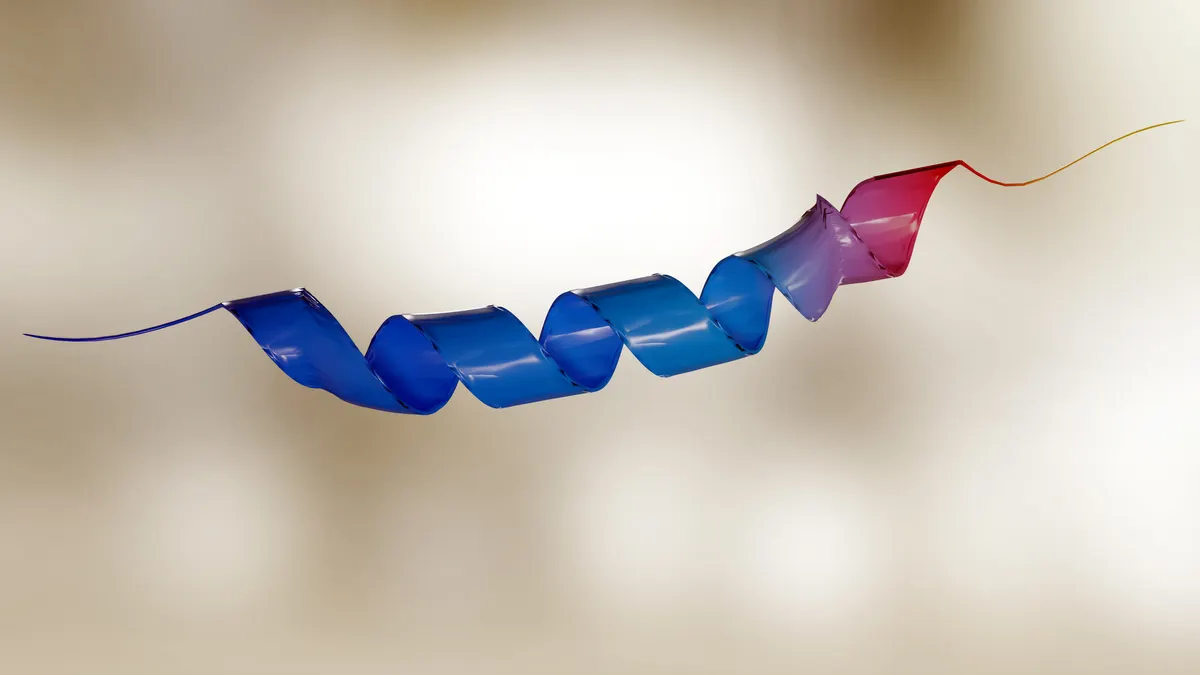
Retatrutide builds on those two drugs. Foundayo targets the gut hormone GLP-1, and Zepbound adds a second one called GIP to the treatment mix. Retatrutide modulates those two, plus a third called glucagon. The sector has given it the shorthand of a “triple-G” drug.
Lilly enrolled 2,339 participants in Triumph-1 and randomized equal numbers to take a weekly 4, 9 or 12 milligram dose of its drug, or a placebo. Investigators followed them for 80 weeks and measured weight loss along with secondary endpoints such as waist circumference. A group of around 500 continued onto an extension trial that ended 104 weeks after baseline measurements.
Those who received the 12mg dose and stayed on treatment saw an average weight loss of 28%; the 9mg group, 26%; and the 4mg group, 19%, while the placebo arm saw an average weight loss of 2%. When including those who discontinued or got another weight-management drug, the average weight loss was 18%, 24% and 25%, with those assigned to a placebo losing 4%.
As with other GLP-1 drugs, nausea, vomiting and other digestive problems were the main side effects. The 12mg group had an 11% discontinuation rate, similar to Zepbound. However, the 4mg group had a 4% discontinuation rate, slightly lower than the 5% rate observed among placebo recipients.
“The clean safety profile, combined with best-in-class efficacy across all doses, makes this a clean win for [Lilly],” wrote RBC Capital Markets analyst Trung Huynh in a note to clients.
Lilly will present trial data at the American Diabetes Association scientific sessions next month.