A cancer vaccine developed by Moderna and Merck & Co. has lived up to its billing, meeting lofty expectations from industry watchers and physicians in slowing the return of advanced melanoma, according to data published ahead of a major medical meeting.
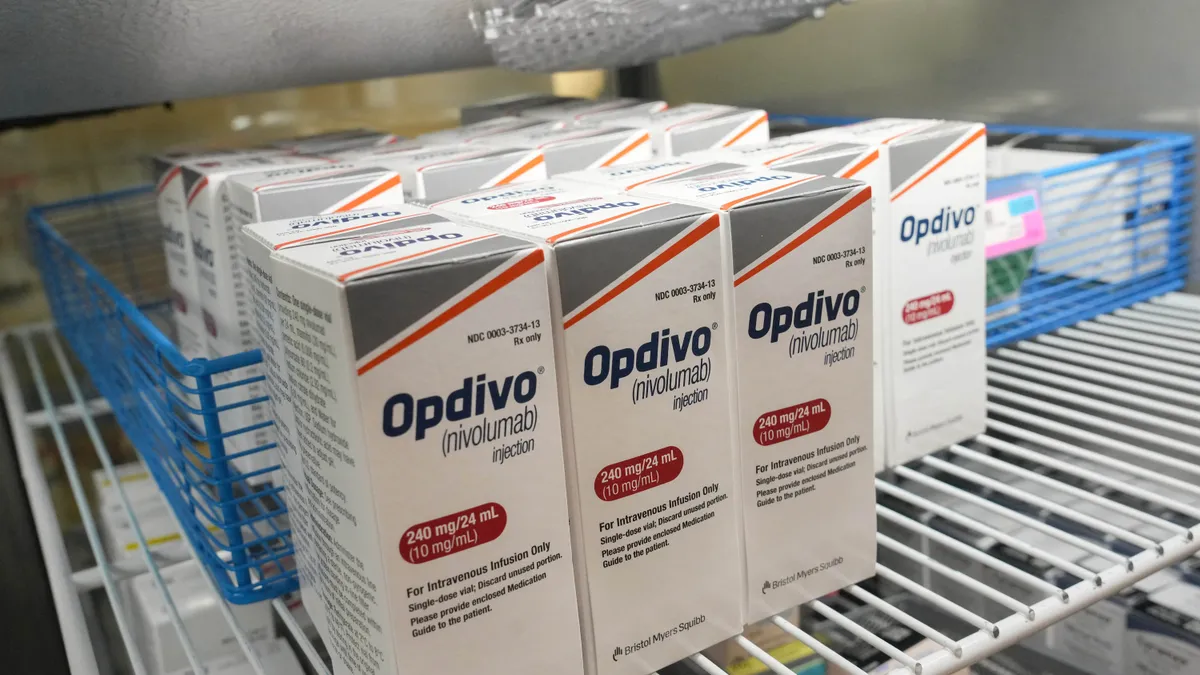
Moderna and Merck reported in August that a combination of the vaccine, “intismeran autogene,” and Merck’s immunotherapy Keytruda, bested Keytruda alone in a late-stage trial. That study evaluated both regimens in the “adjuvant” setting after surgical removal of a tumor.
The companies didn’t disclose details from the trial at the time, only noting that the combination had met its main goal at an early, pre-planned data check. Nonetheless, the results were hailed by analysts as a “landmark moment” and evidence that intismeran is destined for billions of dollars in sales. Moderna’s stock price swelled more than four-fold afterwards.
The announcement made a coming Saturday presentation from the trial at the European Society for Medical Oncology meeting this year one of the biotechnology sector’s most eagerly anticipated. Ahead of it, Wall Street investors expected the intismeran regimen to be associated with anywhere from 40% to 50% relative reduction in the risk of disease recurrence or death.
Moderna had already stated a 35% lowering would constitute a clinically significant outcome, which itself was a high bar considering Keytruda alone hit the 43% mark when compared to a placebo.
Screenshots of the findings were leaked on social media Thursday, prompting ESMO to immediately release the closely guarded study details before the meeting. According to those findings, intismeran met its mark, as the combination cut the relative risk of disease recurrence or death by 42% compared to Keytruda alone after a median of 24.6 months.
The results fall a touch short of the 44% figure initially observed in a smaller and similarly closely watched Phase 2 trial. Long-term results from that study were even more profound, showing that the risk of relapse was nearly cut in half after five years of follow-up.
Shares of both companies immediately fell on the news, with Moderna’s stock price tumbling by nearly 25% and Merck’s by around 1%.
Some analysts immediately rallied to both companies’ defense. A “sell-the-news reaction is playing out,” wrote William Blair analyst Myles Minter. The findings "represent a highly compelling efficacy profile and substantially clear the [physician]-defined bar for a practice-changing dataset in adjuvant melanoma,” added TD Cowen analyst Tyler Van Buren.
RBC Capital Markets analyst Trung Huynh, however, noted that the results were on the “low end” of expectations and showed a "deterioration" from what was seen in earlier testing.
“While approval seems likely, commercial success is far less certain,” Huynh wrote.
Investigators interviewed by BioPharma Dive argued that the data represent a possible step forward in care for a persistent type of cancer.
Even with the availability of Keytruda — one of the most successful cancer drugs in history — one-third or more of people diagnosed with late-stage melanoma will die or see their disease return within five years of treatment. Drugmakers have struggled mightily to improve upon those numbers, with “PD-1” inhibitors like Keytruda as well as other medications.
“We have tried really hard. I have led clinical trials. None of them has improved over PD-1,” said Hussein Tawbi, a professor of medicine at the MD Anderson Cancer Center and an investigator in Moderna and Merck’s study. “We were resigned to the fact that this was the best we can do for patients. And now we see we can do better.”
Adding intismeran to Keytruda also reduced the relative risk of cancer spreading to “distant” organs or tissues by 38% versus Keytruda alone, researchers found.
The trial enrollees who got intismeran reported similar rates of side effects, although those recipients had a substantially higher frequency of fever and injection-site pain. About 7% of the people who got intismeran discontinued treatment because of an adverse event, compared with 5% of those in the comparator group.
The risk of these side effects is likely “something a lot of patients would be willing to take on” given their chance to live longer, said Janice Mehnert, director of melanoma and cutaneous medical oncology at NYU Langone Health. Mehnert was also involved in the study.
The results are the product of decades of research into vaccines that can train the body’s immune system to better recognize and hunt down cancer cells. Several earlier projects failed because they didn’t trigger a strong enough immune response, stimulated the wrong immune cells or couldn’t overcome tumors’ ability to thwart the body’s defenses. But more recently, developers like Moderna have turned to mRNA technology popularized by COVID-19 vaccines to come up with a newer approach.
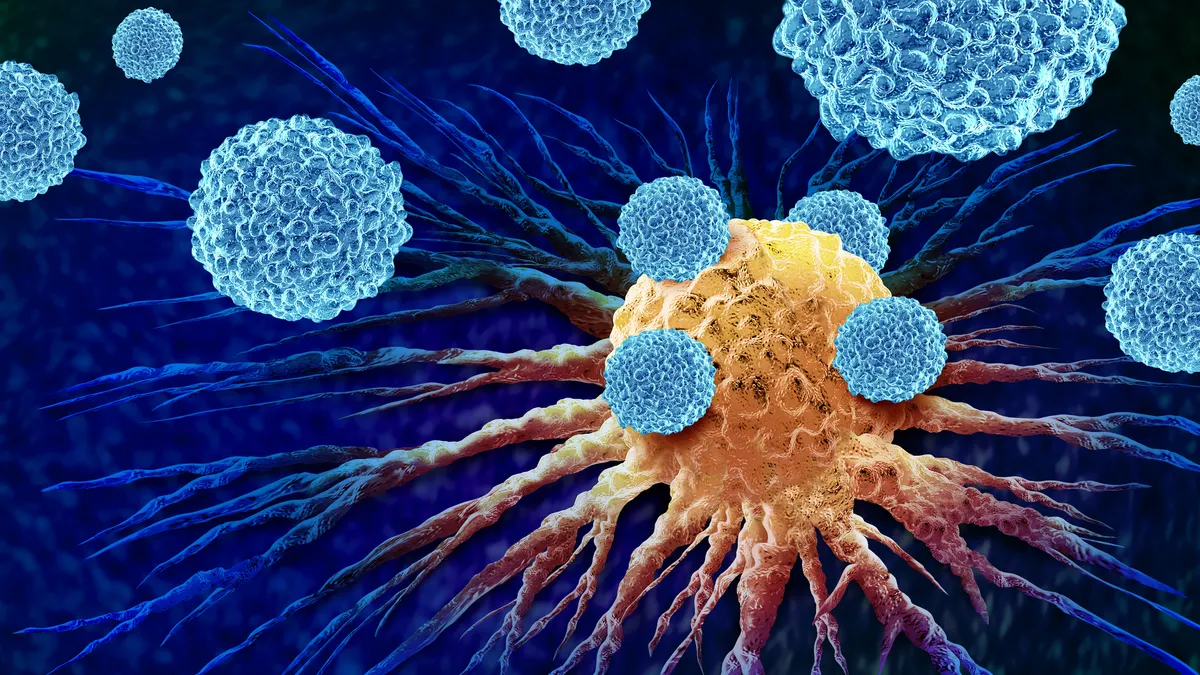
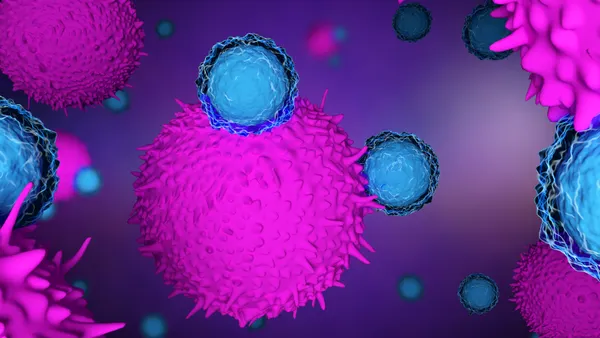
This strategy is known as “individualized neoantigen therapy.” It involves sequencing a patient’s tumor to find cancer-specific protein flags, or “neoantigens,” and then delivering into cells mRNA that encodes for them. Their presence sparks a response from immune defenders called T cells to hunt down and destroy any cells with those proteins.
Intismeran teaches the body to spot up to 34 neoantigens. Another developer, BioNTech, has an individualized therapy in testing in colorectal and pancreatic cancer.
Moderna and Merck have now shown the approach can work in melanoma. But physicians and investors aren’t yet sure how broadly impactful it might be in other types of cancer or in earlier stage disease. BioNTech recently reported that its personalized vaccine failed a mid-stage trial in colorectal cancer.
Merck and Moderna are running additional studies in lung, bladder and kidney cancer. Interim results from a mid-stage trial in kidney tumors could come later this year or in the first half of 2027, RBC analyst Huynh recently wrote in a note to investors.