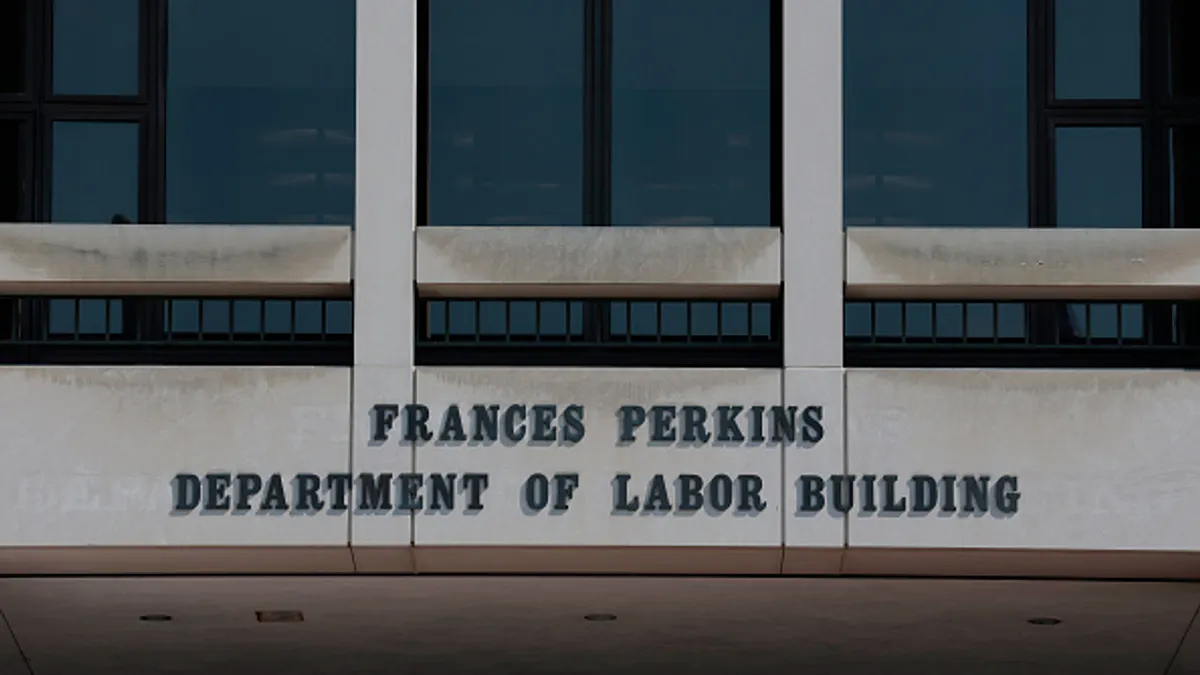

Pharmacy benefit managers will soon be required to share exhaustive information about their compensation with self-insured employer clients, under a Department of Labor rule finalized on Thursday that regulators expect will lower drug costs for employers and their workers by $22 billion over a decade.
The rule, which is broadly supported by employers and policymakers but vociferously opposed by PBMs, requires the drug middlemen to disclose a broad swath of data around the payments they get from drugmakers, pharmacies and other entities in the pharmaceutical supply chain for the first time.
That includes any rebates negotiated with drugmakers on medications, and “spread” payments a PBM keeps when the plan pays more for a prescription drug than the PBM reimburses a pharmacy.
Under the final rule, which takes effect July 2027, PBMs will have to share that information when negotiating or renewing a contract with an employer, as well as every six months. Employers will be able to audit the PBM disclosures once a year.
The rule enacts potentially severe consequences for PBMs that don’t comply, including financial penalties and potential invalidation of their contract.
In a press release Thursday, Trump administration officials said the rule will arm employers with the information they need to properly negotiate contracts and lower drug costs for workers and their families.
“This is a win for every American worker who has ever paid too much at the pharmacy counter,” Secretary of Labor Keith Sonderling said in a statement. “For years, PBMs have operated in the shadows, pocketing hidden fees while workers and employers were left in the dark.”
PBMs perform a wide range of services for employers and health plans, including negotiating discounts on drugs, determining their formulary placement, contracting with pharmacies and processing claims. The companies, the biggest of which are owned by healthcare conglomerates, say they save significant money for their clients.
But major PBMs are facing rising criticism that they leverage their market influence in order to profit, while increasing drug costs for everyone else. Employers complain that it’s difficult to tell whether their PBM is being a good steward of their dollars, given the middlemen maintain a complex web of hidden fees, opaque business contracts and rebate arrangements.
Just under half of large employers report getting sufficient insight into how much pharmaceutical companies are paying their health plan or PBM, according to a report from KFF released last week.
Meanwhile, pharmacy spending is gobbling up a greater share of employers’ health spending. Drug costs are expected to jump 11.5% in 2026, up from 9% the year prior, according to advisory firm WTW.
Employer groups say the transparency created by the DOL will help them oversee their PBMs and tamp down on unnecessary spending, and cheered the rule’s finalization on Thursday.
“Large employers pay for their workers’ prescriptions, but many can’t see how much of that money their PBM and any affiliated entity keeps,” James Gelfand, the president and CEO of the ERISA Industry Committee, said in a statement. “This rule changes that. Employers will be able to check the numbers, ask hard questions, and hold their vendors accountable to the contract.”
Experts generally agree that more transparency could help, mostly by encouraging PBMs to compete more aggressively against each other. But transparency is not a silver bullet, especially given the state of the market, experts say.
The “Big Three” PBMs — Cigna’s Express Scripts, CVS’ Caremark and UnitedHealth’s Optum Rx — jointly control about 80% of all U.S. prescriptions, fueling calls for Congress to break them up.
The rule’s finalization is a blow to PBMs, which have lobbied fiercely against the policies after the DOL first proposed them in January.
In comments on the draft rule, PBM industry groups argued that the DOL doesn’t have legal authority to force them to share more pricing information. Forcing disclosures is unnecessary, given the middlemen have been rolling out simpler and more transparent products on their own. And saddling PBMs with excessive reporting requirements will disproportionately hurt mid-sized PBMs, driving some out of the market, they said.
(The DOL estimates PBM will have to spend $1 million in the rule’s first year, and another $300,000 in subsequent years to comply with the new disclosure requirements.)
The Pharmaceutical Care Management Association, the largest PBM lobby in the U.S., also argued that the rule is duplicative with PBM reforms included in legislation to fund the government earlier this year, called the Consolidated Appropriations Act of 2026.
The PCMA reiterated that concern in a Thursday statement, while slamming the rule as government overreach.
“Full PBM transparency is also now federal law, following the enactment of sweeping PBM reform earlier this year. Drug-by-drug, claim-by-claim, pharmacy-by-pharmacy transparency is already law. All of this has long made the DOL’s desire to create another reporting system unnecessary, redundant, and extraordinarily burdensome, particularly for smaller PBMs,” David Marin, the president and CEO of the PCMA, said.
Marin called the rule “a solution in search of a problem.”
In the regulation, the DOL acknowledged “areas of overlap” with the CAA. But regulators tweaked the rule to align with the legislation, including limiting disclosures to large self-insured group health plans, harmonizing disclosure timelines and using the same terminology and definitions, they said.
In addition, the CAA and the DOL’s final rule serve different functions: The CAA requires PBMs to disclose more detailed information about drug spending and utilization, but that information is retrospective. In comparison, the DOL rule requires upfront disclosures to help plans shop between different PBMs, according to regulators.
“In the Department’s view, these two regimes complement each other,” the final rule reads.
The DOL rule “is really defining what disclosure means and who's on the hook from a fiduciary standpoint, where the CAA then talks about what PBMs must disclose. So the two work very nicely together,” Greg Baker, CEO of Affirmed Rx, which bills itself as a transparent PBM, said in a press call earlier this week.
“Anybody who fights this rule, in our opinion, and who is against this rule has something to hide,” Baker added.