Ferring Pharmaceuticals has agreed to buy fertility treatment startup Gameto in a potentially $1.4 billion deal that boosts the Swiss drugmaker’s portfolio of reproductive medicines.
Ferring didn’t disclose exactly how much it’s paying up front for Gameto in its announcement Tuesday, only noting that the transaction involves payments tied to unspecified development, regulatory and sales milestones. The two entities will also continue to operate independently until the buyout closes.
Once completed, the acquisition will hand Ferring “Fertilo,” a novel technology the biotech developed to help simplify and shorten in vitro fertilization cycles.
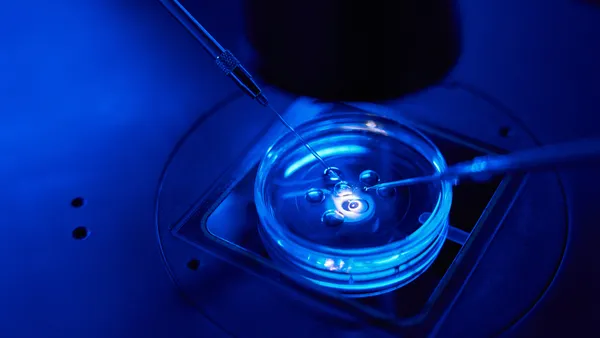
Typical in vitro fertilization, or “IVF,” procedures require around two weeks of daily hormone injections to help stimulate the production of as many mature eggs as possible. Those eggs are then extracted and either frozen or fertilized before being reimplanted in the womb. The process can be arduous and costly, often involving multiple cycles until a viable pregnancy occurs.
Fertilo is different, relying on stem cell-derived ovarian support cells to grow eggs outside the body. Gameto claims this approach could alleviate the need for hormone injections and compress IVF cycles and egg freezing to as little as three days. The treatment is cleared for use in Australia and some parts of Latin America. Phase 3 testing is underway in the U.S.
Ferring already has multiple marketed fertility products. The company’s “deep expertise and global reach in reproductive medicine” gives Gameto the chance to “expand access and bring more modern fertility treatment options to women and families around the world,” said CEO and cofounder Dina Turner, in a statement.
Gameto is also working on “Deovo,” an in vitro model of the female reproductive system that’s meant to aid in the discovery and development of drugs for women. And a third program, “Ameno,” is a cell therapy meant to slow down the onset of menopause — an area of research that’s recently seen increased attention.
Gameto has raised $127 million since its founding in 2020.
Ferring didn’t immediately respond to a request for comment.