Roche is wagering billions of dollars on a medicine that trashes a troublesome protein instead of stifling its activity.
The Swiss drugmaker on Monday reached a deal with Nurix Therapeutics to codevelop a therapy called bexobrutideg that’s nearing late-stage testing. Roche will pay Nurix $700 million up front and, in return, will split U.S. rights to the drug while gaining full ownership elsewhere. Roche will also cover 60% of the development costs and hand Nurix royalties on non-U.S. sales.
Nurix could ultimately receive up to $2.3 billion if a variety of regulatory and sales milestones are met, Roche said.
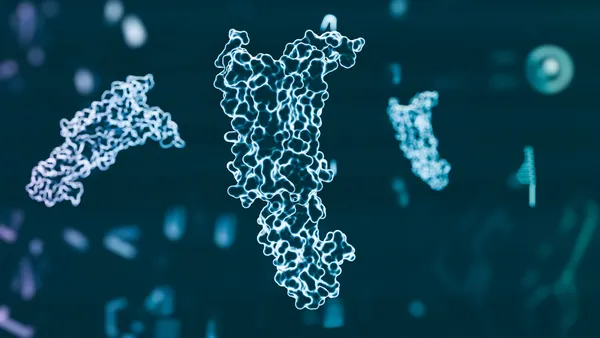
The deal represents the biopharmaceutical industry’s latest bet on what’s known as “targeted protein degradation.” Medicines are typically designed to lock onto a protein target to smother or amplify it. Protein degraders, by contrast, hijack a cell’s internal garbage disposal system to eliminate those targets altogether.
Proponents of degraders point to the technology as a way to get after proteins once thought to be “undruggable.” But the approach is also being used to destroy proteins more traditional methods can effectively block, in the hopes that it might yield superior drugs.
Nurix’s drug is one of those examples. Bexobrutideg is designed to degrade “Bruton’s tyrosine kinase,” a popular target of many protein-blocking medicines either approved or in development for blood cancers as well as autoimmune conditions. According to Roche, these BTK inhibitors are hamstrung by drug resistance and side effects that prevent long-term use. There also aren’t many treatment options in chronic lymphocytic leukemia, a common use for these medicines, once patients relapse.
Still, Roche noted how the need for BTK-targeting therapies is large and growing. The market opportunity for non-Hodgkin lymphoma and chronic lymphocytic leukemia drugs is projected to reach $41 billion by 2031, with BTK inhibitors accounting for nearly half that total, Roche said. Data Nurix has accumulated so far suggest bexobrutideg could become a “best-in-class treatment option” with better efficacy and tolerability. The drug might sidestep the kind of resistance those other therapies struggle with, too.
Roche is additionally optimistic that Nurix’s offering could have use treating certain immunological and brain conditions. Multiple BTK inhibitors have been studied against these kinds of disorders, with limited success so far. Roche has one of those drugs.
“We believe bexobrutideg could represent a major leap forward in the fight against complex blood cancers and other diseases,” said Levi Garraway, Roche’s chief medical officer and head of global product development, in a statement.
A Phase 3 study in CLL is expected to begin this summer.
For Nurix, the partnership solves “many lingering uncertainties” that have pressured shares, wrote RBC Capital Markets’ Brian Abrahams. Splitting development costs, while ensuring multiple cash infusions, should allay concerns about the spending required to pursue development in both cancer in immune conditions, he wrote.
The alliance is a “solid deal with top-notch partner that should elevate [bexobrutideg’s] competitiveness and prospects,” Abrahams wrote.
Still, Nurix shares climbed by only about 7% on Monday and, at about $16 apiece, are currently worth less than their debut price in 2020.