GSK could quickly begin making money on a drug it just acquired in one of the year’s biggest biopharmaceutical acquisitions.
The British drugmaker on Wednesday won approval from U.S. regulators to begin selling a therapy known as Jideytro. The Food and Drug Administration cleared that treatment, formerly called zidesamtinib, in people whose metastatic non-small cell lung cancer has alterations in the gene ROS1 and who previously received another targeted therapy. The nod comes well ahead of a Sept. 18 decision deadline, following a pair of “breakthrough therapy” and “orphan drug” designations that can accelerate reviews.
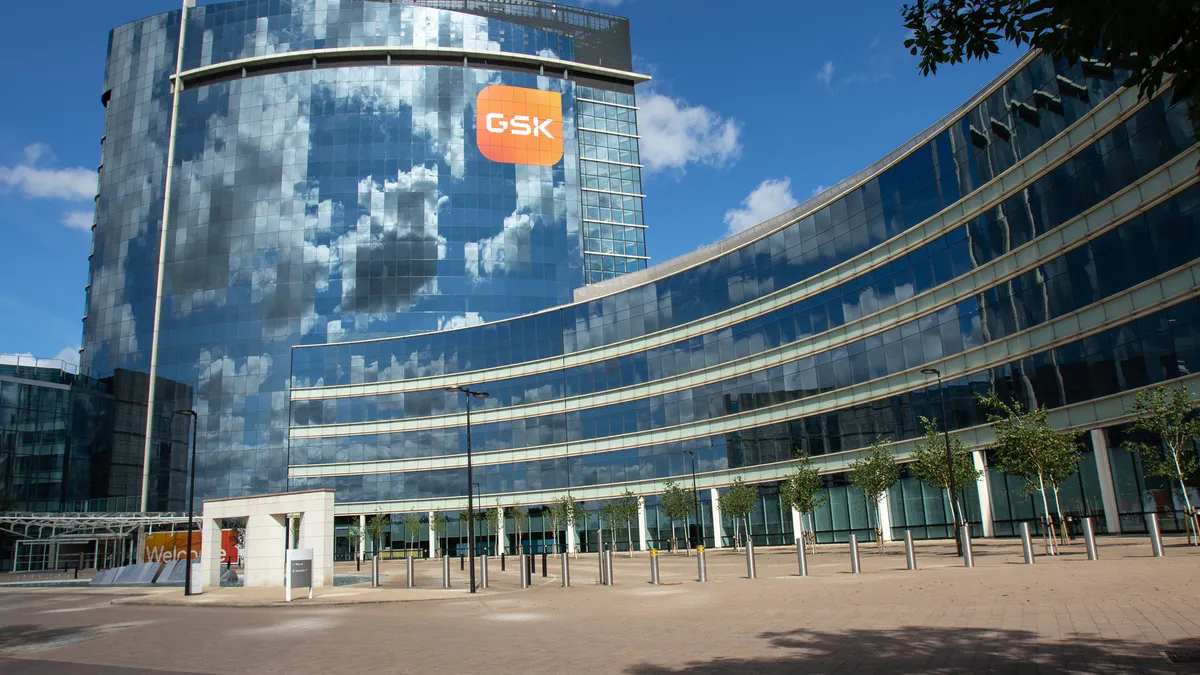
For GSK, the approval kickstarts a return on an acquisition it completed just last week. In that deal, GSK paid $10.6 billion for Nuvalent, the maker of Jideytro as well as another medicine, neladalkib, that’s currently under FDA review. That purchase was, by far, GSK’s largest over the last eight years, BioPharma Dive data show.
The Nuvalent buyout was also part of a broader effort by GSK — best known for its HIV medicines, respiratory disease drugs and vaccines — to grow an oncology business. Dealmaking helped GSK acquire the cancer medicines Jemperli and Zejula and the multiple myeloma treatment Blenrep. A partnership with China’s Hansoh Pharma and buyout of startup IDRx yielded a combined three other medicines that are now in advanced testing. Jefferies analyst Michael Leuchten estimated in a recent research note that the Hansoh and IDRx drugs alone have a peak revenue opportunity of more than 6 billion pounds, or $8 billion.
With Jideytro, meanwhile, GSK aims to make inroads in an area with plenty of competition and somewhat unclear sales potential. About 2% of people with non-small cell lung cancers are positive for ROS1 mutations. Multiple drugs like Pfizer’s Xalkori and Roche’s Rozlytrek are available but haven’t sold particularly well, raising skepticism about the commercial outlook for newer entrants.
Jideytro is a next-generation alternative. Prior to its acquisition, Nuvalent had touted the medicine’s potential to last longer and carry fewer side effects than other therapies while also sidestepping drug resistance. GSK made similar assertions in its statement Thursday, pointing to Jideytro’s “high” selectivity, “broad coverage” of resistance mutations and ability to combat the brain metastases that are a leading cause of disease progression.
Some 50,000 people worldwide are diagnosed with the disease, and many could stay on treatment “for several years,” the company said.
“The rapid progression of Jideytro from development to approval reflects both the strength of the underlying science and the urgent need for additional effective and tolerable treatments for ROS1-positive lung cancer,” Chief Scientific Officer Tony Wood said in GSK’s statement.