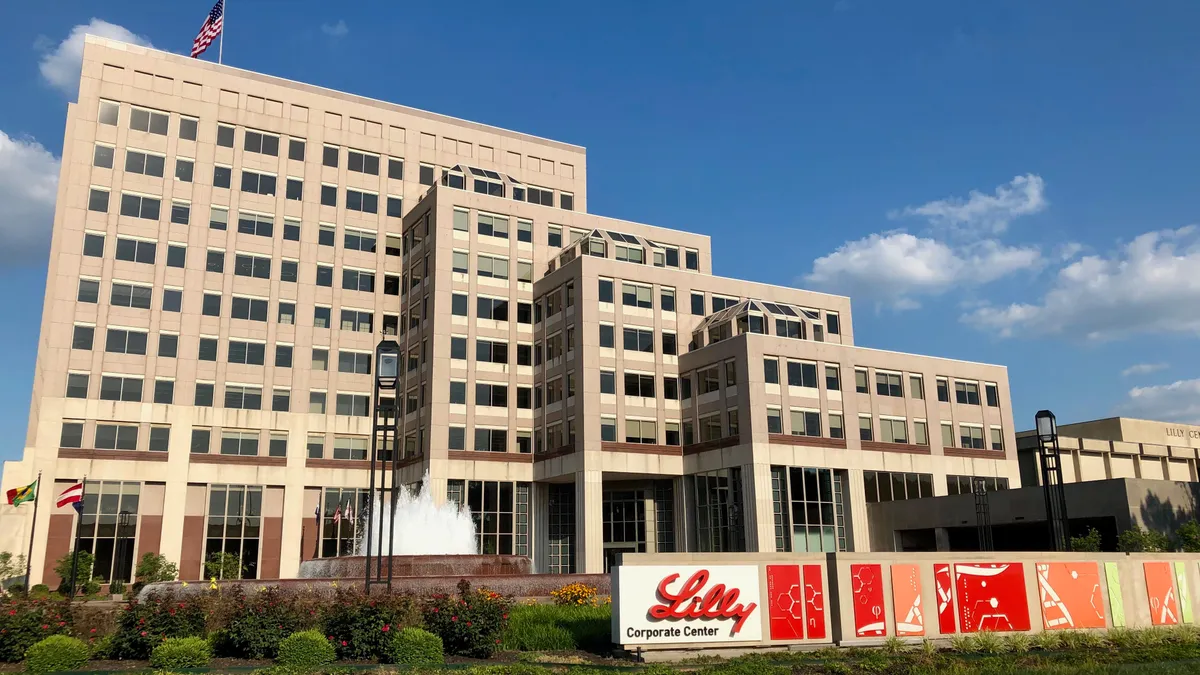
Gene editing company Scribe Therapeutics resides in two renovated buildings on the site of the former Alameda Works Shipyard in California. There's a layer of irony, Scribe CEO Benjamin Oakes says, in designing cutting-edge, microscopic gene modifying medicines where steelworkers once built and repaired 18,000-ton ships during World War II.
Oakes' company is at the forefront of a wave of young biotechs aiming to bring CRISPR technology to the masses. Launched with the help of several accomplished genetic medicine researchers from the University of California, Berkeley, Scribe is working on treatments for the kind of cardiovascular conditions that affect millions of people. In papers outlining its recently priced initial public offering — the first for a gene editing company in more than two years — Scribe pitched plans to make the approach more scalable than it's ever been. Its first program "switches off" a gene implicated in high cholesterol, rather than permanently altering it as some others do.
But as Oakes scrawled in thick black marker at the bottom of a canvas in one of Scribe's conference rooms, "plan B is your plan A." Many gene editing companies have made similarly bold claims, only to face surprise setbacks in clinical testing that battered their stock prices. Investors and Wall Street analysts are also skeptical that people would embrace gene editing drugs in diseases where more conventional alternatives are available.
Oakes spoke to BioPharma Dive about convincing investors not only to buy into gene editing, but believe in the potential of a medicine that would face considerable competition, if eventually approved.
This interview has been condensed and lightly edited for clarity.
BIOPHARMA DIVE: Several gene editing companies have struggled not just reaching the public markets, but growing their value afterwards. How, then, did you convince IPO investors to back Scribe?
BENJAMIN OAKES: There's a design principle called “MAYA” — it means most advanced yet acceptable. If you toe that line, but don’t go past it, then all of a sudden it becomes okay.
I want that most advanced thing. There's 1,000 different ways to build a cup, and I can build a really cool looking cup, but if I put wildly crazy things on it, like 10 handles, it may look like it's the cup of the future, but no one's going to want to use it because it doesn't feel accessible. So how do you build something that is more acceptable?
That’s where epigenetic silencing really fits in. We have to develop almost a new framework for all of these approaches because the framework that we're finding is most important for medicine is human psychology. Human behavior drives how people are essentially interacting with their own health.
How does that framework apply to making a new type of cholesterol drug?
OAKES: We see this problem time and time again in LDL-C lowering, where there are incredibly good drugs. Statins have been around forever. Bempedoic acid exists, you can get combos of that. There are antibodies like Repatha, siRNAs like Leqvio, and now we have small molecules that are PCSK9 inhibitors. If you look at the stats, between 50 and 70% of those people are no longer taking [statins] within the first year.
You have to take these drugs for a decade, two decades, probably four decades for most people. What's so interesting is this is not a drug problem anymore. This is a human behavior problem. We're not trying to solve for making a better drug necessarily. We're trying to solve for how we make human behavior interact well with our drugs.
How do you see Scribe competing in an increasingly competitive field where different gene editing drugs from Eli Lilly and others are further along?
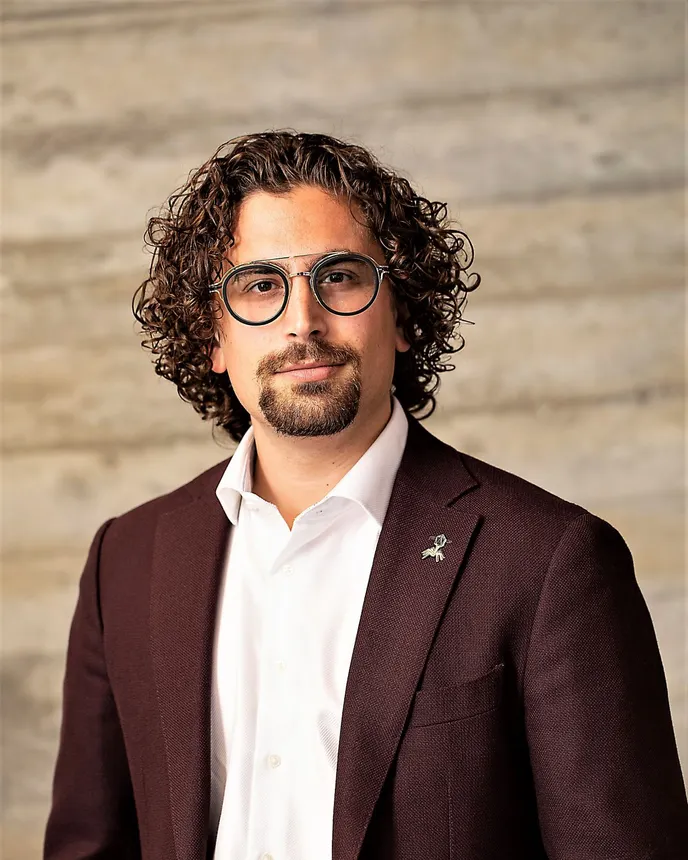
OAKES: There's a very obvious difference between the medicines that are being created, and I think any individual patient, provider or payer can make those distinctions as they see fit. But the reality is right now, only 30% of people who should be on an LDL-C-lowering medication are. The number is so large that almost all we have to do is provide more options.
This isn't about competition; I want Verve [Therapeutics] and Lilly to be as wildly successful as they can, because we're going to be providing something similar, but distinct, that can broaden accessibility in the patient population. While this market seems like it's well-served, it's so wildly underserved, and in many instances, unserved.
You've said previously that you think the future of medicine is preventive, rather than reactive. Where do you see Scribe's work fitting in?
OAKES: My goal is to try to build a drug that ultimately can be thought of as a preventative medicine to help people avoid cardiovascular disease risk. How do we give cardio-protective genetics to everybody, and how do we make that as broadly accessible as possible?
Everyone's very focused on longevity research; this concept of if we can just reprogram the whole body, we could all stay useful. That's all well and good, and there's a lot of exciting things that you might be able to do with epigenetic tools like we build.
But there’s also the pragmatic engineer in me that says that science is not yet proven. I can't say that it's never going to happen. We don't know that it exists and, or how it exists. I'm sure that at some point we'll learn more. In front of us is a very real way to lengthen a lifespan for everybody. Treat the leading cause of morbidity and mortality globally.
Why did you choose to go public now, rather than raise more private financing?
OAKES: We’re the first in vivo gene editing company to be in the clinic at the time of IPO. We knew we were going to get to the clinic [with our first drug], we also knew we had the second and third asset. It was time to accelerate not only the success we were having on the first asset, but accelerate the second and third asset into the clinic. We want to build essentially the box set, if you will, of approaches to address cardiovascular lipid risk. We also wanted to allow folks the opportunity to join us in a way that was meaningful.
We thought the best way to do that would be once we get into the clinic, and we were less than a year from clinical data, to go and ask the question: Is our profile as an organization that has been incredibly capital efficient for a very long time, and very reasonable in our approaches, one that you want to support? And I think we were really pleased at the reception to that.
The median IPO this year has hovered around $300 million, and the biggest offerings have surpassed $600 million. Scribe raised far less, by comparison. What do you attribute that difference to?
OAKES: We try to be very disciplined and focused with how we run.
We licensed molecules from Berkeley that did not work, that edited the genome less than 1%. We spent the past eight years iterating on these molecules year after year in the stepping stone evolution approach.
We're not getting awards for improving our molecule's potency by 50% every year. But when I improve my potency 50% every year, you get this compounding interest in something like potency and specificity that starts to become really meaningful for the therapeutic window.
We're trying to bridge the gap between where CRISPR molecules are, as bacterial immune systems, and where they should be, as therapeutics.
Many people have, and should have, concerns. Previous organizations, some of which no longer even exist, have done things wrong, and it's very easy for an investor to paint a broad brush.
The same thing could have been said about antibodies or RNAi companies back in the day. Just because you could create an easy gestalt of how you might think these things could work, doesn't mean that the specific organizations like ourselves fit within that picture. We can go and paint our own picture and say “no, we can be highly focused. We can build therapeutics that have the chance to change how we think about the leading cause of disease globally. We can do so in a way that's focused and efficient,” all those things come together. We can get into the clinic after having raised only $150 million in the past seven years.