Two months after Actio Biosciences sold some of its assets to Jazz Pharmaceuticals, the team that led that biotech is debuting a new company formed to rehouse the rest of its work.
Called Setara Biosciences, that company officially launched Friday with $90 million in financing to take forward a drug with the potential to treat the genetic disorder Charcot-Marie-Tooth as well as overactive bladder. Setara is also starting up with a handful of discovery-stage programs targeting other rare diseases, epilepsy and migraines.
Actio’s initial focus was epilepsies related to so-called KCNT1 mutations. A drug it brought into early-stage testing blocked a malfunctioning protein which, the company believed, should help reduce the number of seizures patients experience. Jazz paid $1.3 billion to buy Actio for that program in August.
Actio’s successor company Setara now aims to find a treatment that can change the course of Charcot-Marie-Tooth, a historically difficult challenge for drugmakers. Epilepsy drugs have clearly defined goals of lowering seizure rates, said David Goldstein, the CEO of Actio and now Setara. It’s trickier to measure improvement in a multifaceted and slow-progressing disorder like Charcot-Marie-Tooth. Patients with the condition experience nerve damage and muscle weakness in the limbs, and in the “type 2C” form that Setara is targeting, also experience vocal cord issues and other respiratory problems.
“You have a variety of muscle groups that get weaker and compromise function in complicated ways,” Goldstein said. “Then you have the question of what's the best way to assess the impact of the disease and whether therapy is improving it.”
Setara — which derives its name from the Farsi word “setar,” or star — is preparing to bring its new lead program, “STAR-0871,” into a Phase 1b study of patients with a severe form of Charcot-Marie-Tooth disease by the end of the year.
Like the epilepsy drug Jazz acquired, the pill Setara is making inhibits a specific ion channel, a tiny protein tunnel found in the outer skirts of a cell. Vertex Pharmaceuticals built a multibillion-dollar cystic fibrosis drug business around medicines that go after these microscopic gateways. More recently, though, they’ve been the target of a broader push to develop new medicines for neurological conditions like pain and Parkinson’s disease.
STAR-0871 is one example. The drug blocks the ion channel protein TRPV4. That approach should address many of the disease-causing mutations in Charcot-Marie-Tooth patients, and “take a mutant channel that's overactive and push its activity back down to, or below wild-type levels,” Goldstein said.
The company will also study STAR-0871 in a Phase 2 study of people with overactive bladders. Setara chose to pursue that condition — which affects tens of millions of people in the U.S. — after seeing certain commonalities among people with overactive bladders or Charcot-Marie-Tooth, Goldstein said.
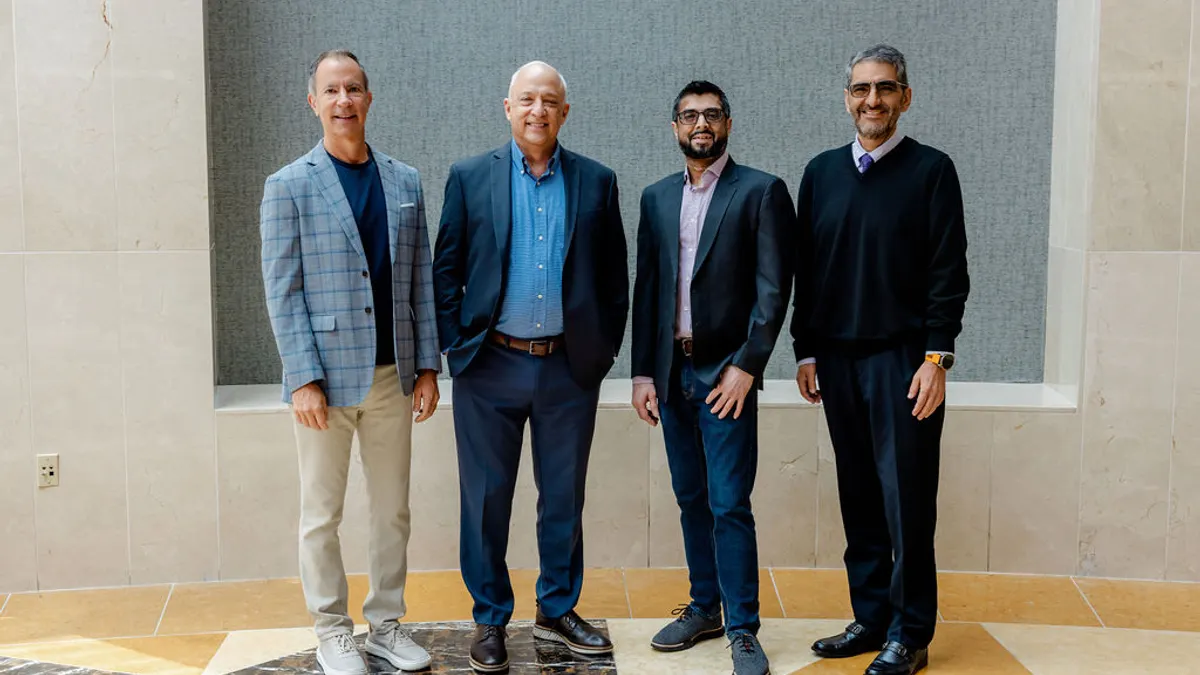
Joining Goldstein at Setara are Chief Scientific Officer David Breckenridge and Chief Financial Officer Cayce Denton, both of whom are Actio alumni.
Many of Actio’s early investors are bankrolling the new company, including Deerfield Management, Canaan and Jazz, which agreed to pick up a minority stake in Setara in the August buyout.
“We believe that Actio’s acquisition by Jazz validates the genetics-driven approach to drug discovery and development that underpins Setara,” said Jason Fuller, a partner at Deerfield Management, in a statement.
The decision to develop Actio’s remaining pipeline through Setara is what Goldstein described as “the best way to make a bunch of new, highly effective medicines.”
“We didn't start all this to just sell everything for whoever is willing to buy it for a certain price,” Goldstein said. “A small, laser-focused biotech is, in my view, the best environment to do this kind of early-stage work.”