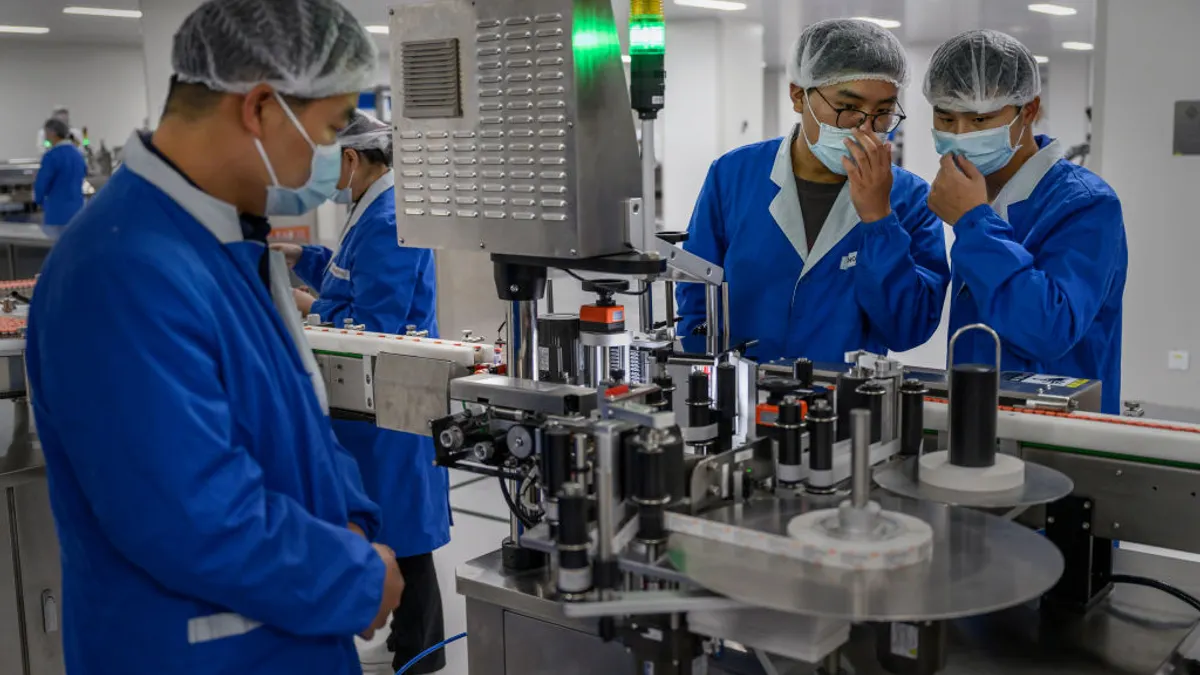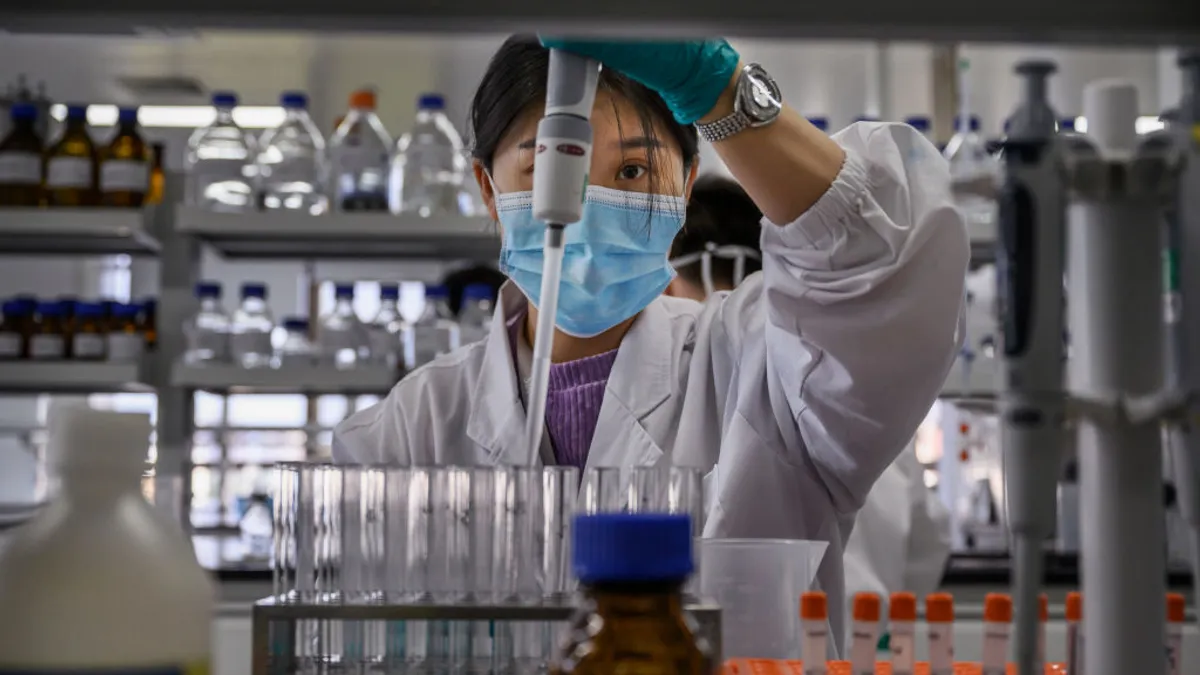
The fast rise of China’s biotechnology sector has put U.S. drugmakers and the investors who back them in a difficult position.
A flexible regulatory environment and low development costs have propelled a trove of promising drug prospects U.S. companies and venture capitalists can pluck and quickly advance. But striking deals for those therapies could further erode the U.S.’ long-held edge.
So far, biotechs and their backers have overwhelmingly chosen the former option. Over 60 licensing pacts with Chinese companies were struck last year, and more than two dozen have followed in 2026, according to BioPharma Dive data. They’ve come despite alarm bells from lawmakers on Capitol Hill, as well as top biotech and pharmaceutical executives. The U.S. has yet to respond with concrete regulatory incentives to level the playing field.
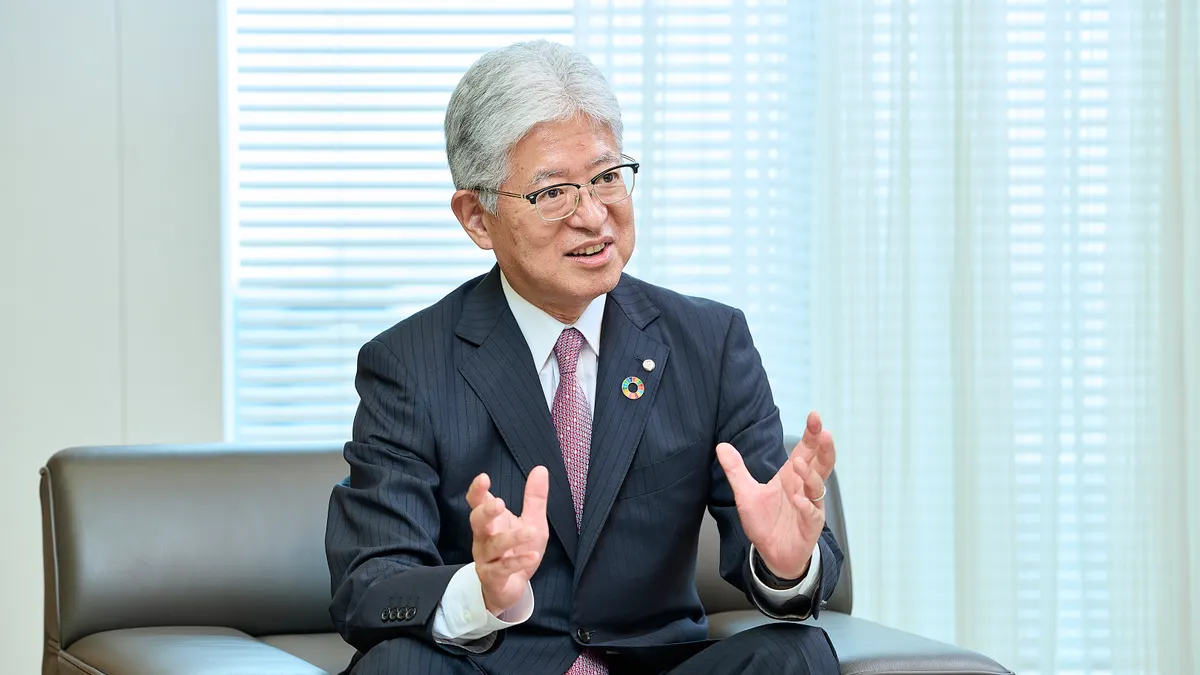
Yet some investors, like SR One CEO and managing partner Simeon George, view the situation as a positive for the world's biotech ecosystem. The heightened competition is leading to safer bets and fewer gambles on companies built around “half-baked ideas,” he said in an interview.
A handful of companies George's firm has recently backed serve as clear examples. Among them are AirNexis Therapeutics, which is built on a lung disease drug discovered in China, and Corxel Pharmaceuticals, which is advancing an obesity medicine licensed from a Chinese biotech.
“The ecosystem is more global and more competitive,” George told BioPharma Dive in a recent interview. “That is not a threat to U.S. science. It is a forcing function for higher-conviction investing.”
George spoke with BioPharma Dive about how the explosion of new drug candidates from China is shifting the way venture capital firms are approaching newer biotech investments.
This interview has been condensed and lightly edited for clarity.
BIOPHARMA DIVE: What do you make of the growing presence of drugs coming from China?
SIMEON GEORGE: It’s good to have competition. It’s great that China is doing what it's doing, but we have to step up our game. There’s plenty of venture firms that have reloaded, they’ve raised fresh capital for doing this work. In some instances, they’'re raising more capital for each round. We’re also doing that, and that's partly because we don’t want to come back to the market with a story that’s half-baked. We want to get to something that truly is a definitive milestone, and we want to fund for those milestones.
How is the availability of drug research in China affecting the way biotech venture firms are deploying capital?
GEORGE: China is no longer a lower-cost outsourcing market for biotech. It has become a genuine source of high-quality assets, fast clinical execution, and increasingly sophisticated drug development. That changes how capital gets deployed at every stage.
At the company creation stage, the bar for building around translational science has risen materially. At the venture stage, the shift is toward strong biological validation and a clearer path to decisive human data. The industry is moving away from long-duration stories without obvious catalysts.
At the growth stage, execution speed is now a genuine competitive advantage. The ability to generate differentiated clinical data efficiently and operate across geographies is no longer a nice-to-have.
What is the impact of that on the more traditional avenue of translational research coming out of university labs in the U.S.?
GEORGE: I do not think it matters less. Truly novel science from top academic labs may become more valuable precisely because commodity biology is now available faster and cheaper elsewhere. What changes is the standard of differentiation required to justify long-duration venture capital. Firms are becoming much more selective about where they deploy that capital when there are faster, more capital-efficient paths to clinically validated biology elsewhere in the world.
How is the presence of all these less risky assets in China affecting investments in other early-stage startups?
GEORGE: We need a healthy ecosystem of new companies and innovators at the seed stage to build up plans of what’s going to become the mid-to-late stage [companies] and IPOs. So we need to be sufficiently courageous to continue to invest in early-stage companies. You’ve got to be doing something innovative. It has to be different. It has to pretty clearly capture attention. You might not have the proof points today, but “these are the next critical experiments and steps, this is the time frame, this is the capital required to get to that.” The whole package needs to be tight.
It needs to probably acknowledge some of the big issues that everyone is dealing with. China — how are you going to deal with competition? AI, most favored nation drug pricing, all the things that are on people's minds. To the extent that what you're building has some level of read-through into those categories, you should have a way to defend and explain what helps you.
It's an entrepreneurial ecosystem. There's a level of Darwinian selection here.
What needs to happen in the sector to draw more investment into riskier science?
GEORGE: We need to see this courage pay off. Whether it's early M&A, partnerships or investors that are willing to come in in the next round and pay out because we've taken the risk, we've discharged it to some degree. Because if that isn't happening, then the question is “why is the first investor taking all that risk?” If no one’s going to pay for it, [and] pharma isn’t engaging, then that market cycle gets broken.
What stops pharma from cutting out the middleman and going straight to Chinese companies for assets? Is that a concern for investors like you?
GEORGE: Not really a concern. This question arises in every innovation-driven sector with large incumbents. Pharma sees the same biology, the same platforms, the same opportunities — and has far more resources. So why does the biotech startup ecosystem exist at all?
Because large organizations cannot move fast, take concentrated risk, or follow the science without running it through layers of bureaucracy and committee. Those constraints are structural, not fixable. It is why pharma acquires rather than builds.
GSK understood this. They acquired Aiolos Bio — built around a Hengrui [Pharma] asset — before striking the direct deal. The venture-built wrapper was part of what they paid for. And direct access only works with large, established players. Truly early-stage opportunities are not easily available or accessible for licensing. They require someone willing to build and move before the opportunity is obvious.
If anything, GSK paying $500 million upfront for a Chinese-originated COPD asset in the same pathway AirNexis is pursuing tells me pharma urgently wants to own this space. That is validation, not a warning.