Boulevard Bio, a new startup co-founded by pioneering autoimmune disease researcher Georg Schett, officially launched Wednesday with $65 million in its coffers and three experimental drugs.
One of those medicines is already in early testing. Called BLVD-101, that drug is a so-called bispecific antibody aimed at a pair of targets known to drive the progressive kidney condition IgA nephropathy.
IgAN has become a popular target for drugmakers of late. In the last year, U.S. regulators have approved two drugs, Vera Therapeutics’ Trutakna and Otsuka Pharmaceutical’s Voyxact. A third from Vertex Pharmaceuticals could follow.
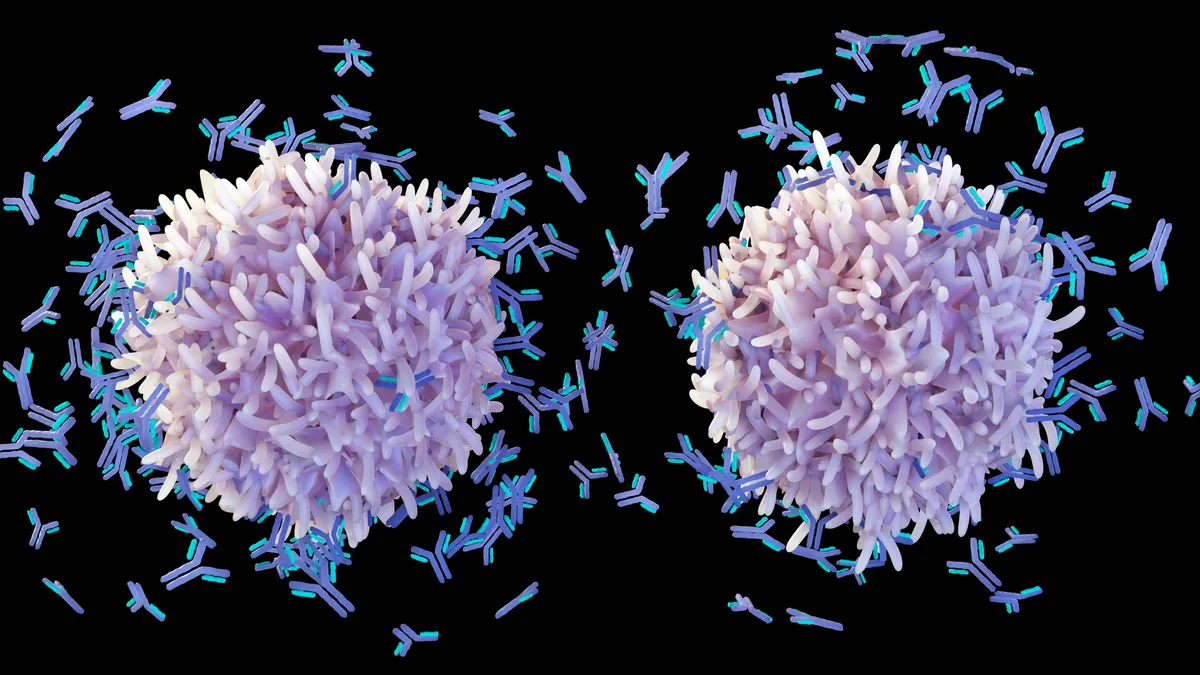
BLVD-101 works similarly to Vera and Vertex’s medicines, homing in on the “BAFF” and “APRIL” cytokines that help accelerate production of the “autoantibodies” that mistakenly attack kidney tissue in IgAN. Those medicines need to be taken weekly or monthly. BLVD-101, by comparison, could be dosed every 12 weeks, potentially freeing patients “of the tremendous burden that they carry in autoimmune diseases,” said Boulevard CEO Mahesh Karande.
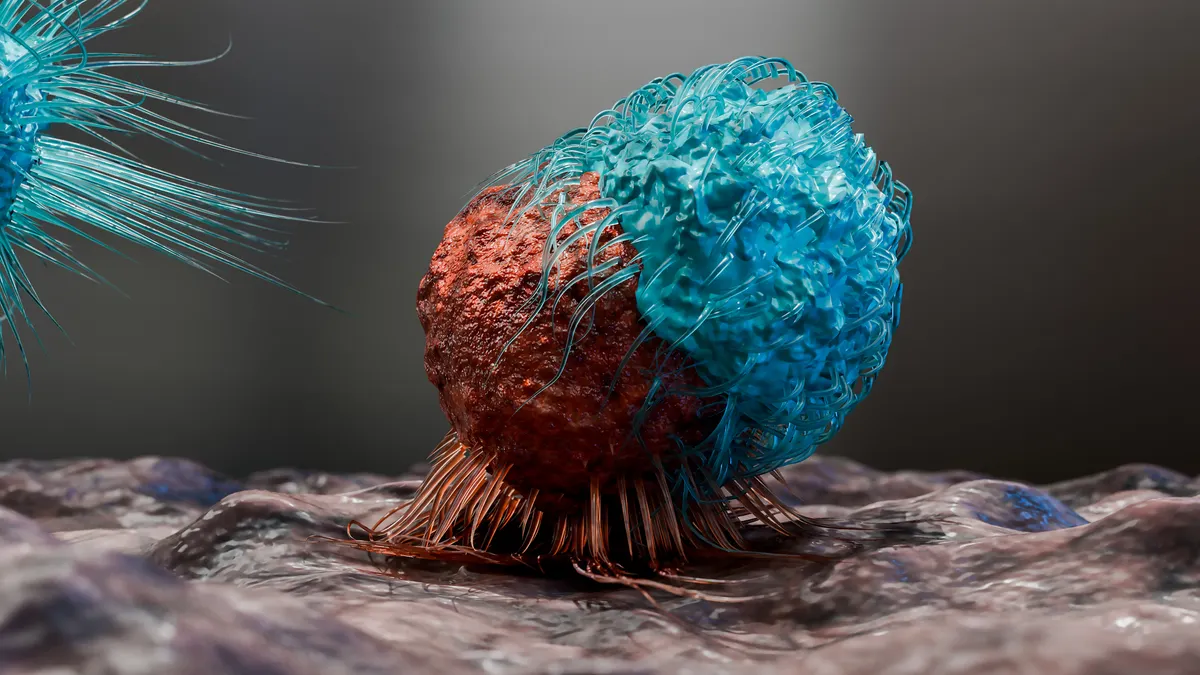
A second Boulevard prospect named BLVD-201 is a “trispecific” medicine that draws T cells to two proteins, CD19 and BCMA, on the surface of B cells. Boulevard licensed the drug in June from China-based drug developer METiS TechBio for $20 million up front and possibly as much as $1.6 billion in future payouts. A third candidate is directed at an unspecified “novel target combination,” according to a statement. Both are in preclinical development and being advanced against autoimmune conditions linked to malfunctioning B cells.
In targeting these B cell-driven diseases, Boulevard is capitalizing on scientific progress its co-founder Schett helped usher forward. With a team of fellow researchers, Schett found that cell therapies originally designed to attack cancer might be able to “reset” the immune systems of people with many immune diseases by wiping out errant B cells. Their findings kicked off a flurry of investments in autoimmune cell therapies and, increasingly since then, multi-pronged antibody drugs designed for the same purpose.
As with others developing these B cell-depleting antibodies for autoimmune diseases, Boulevard is aiming for a more practical solution than cell therapies that are complex to manufacture and typically involve a chemotherapy conditioning step.
“At the end of the day, it’s about a patient's quality of life,” Karande said.
Karande also believes BLVD-201 could have a leg up on bispecific counterparts because of its triple-acting mechanism, which could enable the drug to penetrate more deeply into tissue and pack a more powerful punch at a lower dose, he said.
Boulevard has ground to make up. Companies like Sanofi, Gilead Sciences and UCB have either licensed or acquired bispecific drugs in large deals over the last year or so. But to Karande, those deals are evidence of the approach’s promise in treating autoimmune diseases.
“Our initial data are proving our hypothesis at this stage, and if you take that forward, a drug like this has so much applicability,” he said.
Working with Karande and Schett is Frank Nestle, the former chief scientific officer of Sanofi. Nestle is a scientific co-founder of Boulevard and a partner at Deerfield Management, the startup’s founding investor. He’s also the head of Deerfield Discovery and Development, the venture fund’s R&D engine and biotech incubator.