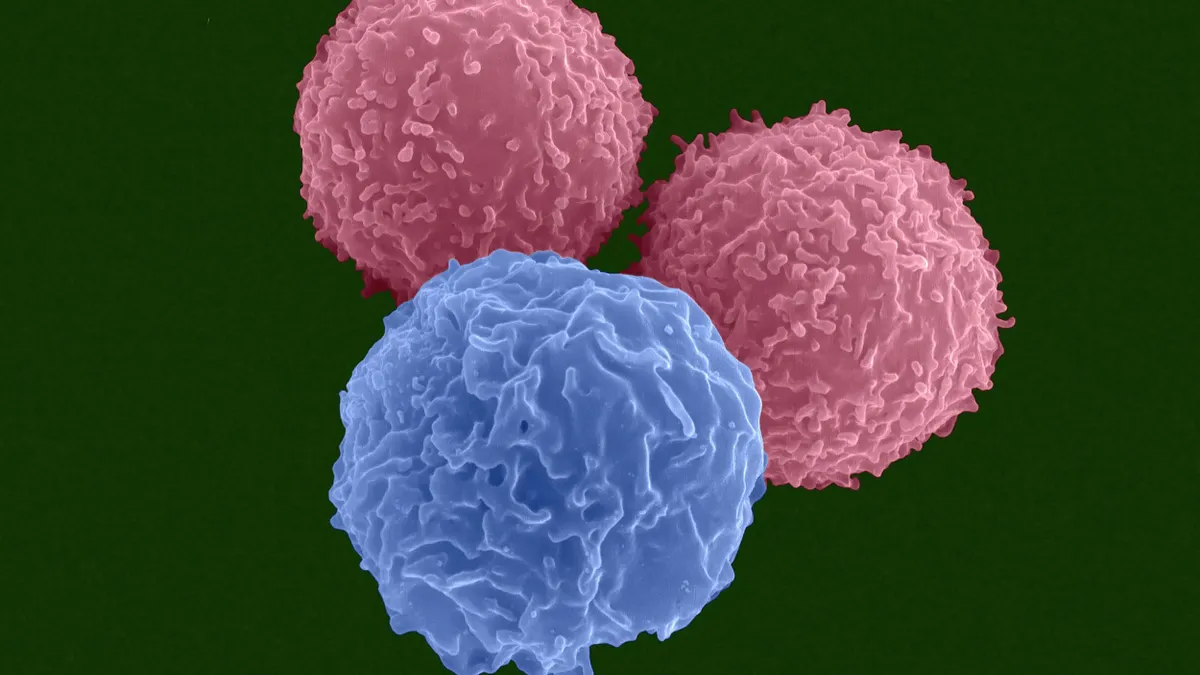
T cell engager drugmaker T-Therapeutics has raised a fresh $133 million Series B round to spark clinical development of its cancer and immune drugs, the company said Thursday.
Its lead program, a bispecific antibody called “TTX-008,” targets an unspecified “pan-tumor driver.” A second experimental treatment, “TTX-018,” is designed to treat autoimmune conditions. Neither is in human testing yet. The venture funding will help the company generate proof-of-concept data for both drugs.
“This financing is a key step in our transition to a clinical-stage company,” said Theodora Harold, T-Therapeutics’ CEO, in a statement, noting that its two most developed programs have “pan-indication, blockbuster potential.”
The U.K. startup has disclosed little about its drugs’ targets or development plans. In a statement, the company said its core technology provides an “unparalleled supply of fully human” T-cell receptors, enabling T-Therapeutics to engineer ones with particularly “high affinity and exquisite specificity to disease specific targets.” The result, it claimed, is a way to get after validated but “previously undruggable” targets inside cells.
T-Therapeutics said its cancer drug prospect has “broad therapeutic potential” against solid tumors, which have proven tricky to target with T cell engagers. The startup is also among many companies aiming to reset the immune system in people with autoimmune conditions. Without providing specifics, it said its therapy has a “novel, precision approach” that selectively eliminates certain disease-causing cells driving chronic inflammation.
T-Therapeutics’ backers include Advent Life Sciences and British Business Bank, which led the financing together, as well as a bevy of notable investors such as Eli Lilly, Johnson & Johnson’s venture arm, Samsara BioCapital and Sofinnova Partners. Last year, the company added $32 million to a Series A round that Harold described as “a strong validation of both our technology and our progress to date.”
T cell engagers “have been held back in solid tumors by the lack of appropriate targets,” said Advent Life Sciences General Partner Dominic Schmidt, in a statement. T-Therapeutics appears able to access previously unreachable targets “with the potential for a markedly improved safety profile.”
Multi-pronged antibodies are one of the hottest areas of research for drug developers. Ten T cell engagers have been approved by U.S. regulators, mostly for blood cancers. More recently, drugmakers have tried to replicate that success in solid tumors, often with the help of technical advances meant to address certain weaknesses.
Drugmakers large and small are also using T cell engagers against immune disease, where the approach is seen as a more convenient alternative to cell therapies. Some startups working on the approach, like Ouro Medicines and Candid Therapeutics, have been acquired.
Other T cell engager developers that have received venture funds this year include Crossbow Therapeutics, Cytospire and Excalipoint Therapeutics.
These drugs have also been a popular target in licensing deals between U.S. and European drugmakers and their China-based counterparts. Twenty-nine such transactions involving multi-pronged antibodies have been announced since the beginning of 2025, according to BioPharma Dive data.