Dive Brief:
- An experimental drug Takeda acquired in a multibillion-dollar deal has succeeded in a pair of late-stage trials, positioning the company to seek clearance of a therapy it expects to become a future blockbuster.
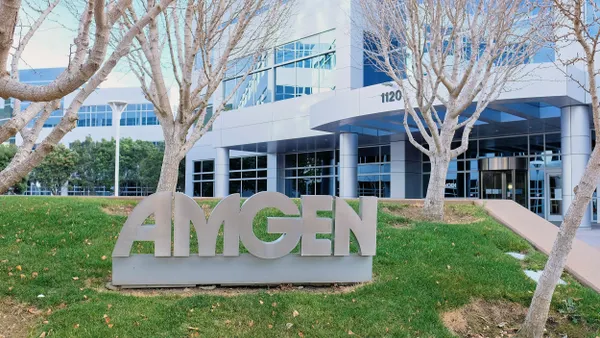
- The therapy, known as zasocitinib, met its co-primary and top secondary objectives in two Phase 3 studies testing it against a placebo or Amgen’s Otezla in patients with plaque psoriasis. Without disclosing specifics, Takeda said Thursday that, after four months, zasocitinib demonstrated “superiority” on both top study goals, which involved meaningfully reducing disease severity on two different measures. Respiratory tract infections, colds and acne were the most common side effects, according to the company.
- Takeda will provide detailed results at an upcoming medical meeting and intends to file for approvals in the U.S. and elsewhere during its 2026 fiscal year. Zasocitinib is also being evaluated in multiple other indications, as well as in a head-to-head study testing it against Bristol Myers Squibb’s similar, rival drug Sotyktu.
Dive Insight:
Zasocitinib came to Takeda in one of the biopharmaceutical industry’s most valuable single-drug acquisitions in years.
Struck in December 2022, the deal handed Nimbus Therapeutics, a well-funded, Cambridge, Massachusetts-based startup, $4 billion in guaranteed cash. It came after Nimbus had declared success in a Phase 2 trial, which had sparked a bidding war between Takeda and others.
The interest in zasocitinib centered around its mechanism. It's one of many medicines in development that target TYK2, an enzyme involved in cell signaling pathways that are implicated in inflammation. These treatments became coveted in recent years because of their potential to be oral alternatives to top-selling, injectable medicines like Humira. The first, Bristol Myers’ Sotyktu, was approved for psoriasis in 2022 and notably without safety warnings associated with a similar group of oral autoimmune drugs.
Nimbus had long argued its molecule was more selective than Sotyktu, meaning higher doses could be safely used. Takeda executives have been similarly confident, pitching zasocitinib as a key contributor to the company’s plans for future growth and launching multiple trials in arthritis, ulcerative colitis and other conditions.
But zasocitinib is also progressing at a time when the development of oral medications for autoimmune conditions has become particularly competitive. Multiple drugs with different mechanisms are advancing in testing for the types of conditions zasocitinib is chasing. One, from Johnson & Johnson and Protagonist Therapeutics, has already been submitted to regulators for plaque psoriasis. Sotyktu, meanwhile, hasn’t yet been the kind of seller Bristol Myers envisioned.
“It’s a huge evolution,” Takeda’s R&D chief, Andy Plump, said in an interview last year. TYK2 drugs “will be a big part of that, and I think our molecule will be the leader.”
The results announced Wednesday came from two studies that enrolled 693 and 1,108 participants, respectively, with moderate-to-severe cases of plaque psoriasis. Patients were randomized to receive Takeda’s drug, Otezla or a placebo.
Zasocitinib had two main objectives. One was to help more patients than a placebo achieve at least a 75% reduction on a measure known as PASI that assesses the magnitude of skin lesions. The other was to lower scores on “sPGA,” a separate doctors’ evaluation of severity.
Takeda said the drug not only met both of these goals, but it was also associated with a “significantly greater” response rate that emerged as soon as a month and improved through six months. It's drug also hit a variety of secondary goals, including near or full skin clearance and a lower sPGA score compared to Otezla and placebo.
Additionally, after four months, more than half of treated study participants had clear or almost clear skin, while 30% showed what's considered "completely" clear skin.
“People living with psoriasis continue to seek safe, effective and fast-acting oral therapies. These landmark results support zasocitinib’s promise to become a leading oral treatment option that can deliver clear skin for patients with plaque psoriasis,” said Takeda president and CEO Christophe Weber, in a statement.