Dive Brief:
- After a year of ups and downs, UniQure on Wednesday said it’s submitted applications for what could become the first medication approved to treat the underlying cause of Huntington’s disease.
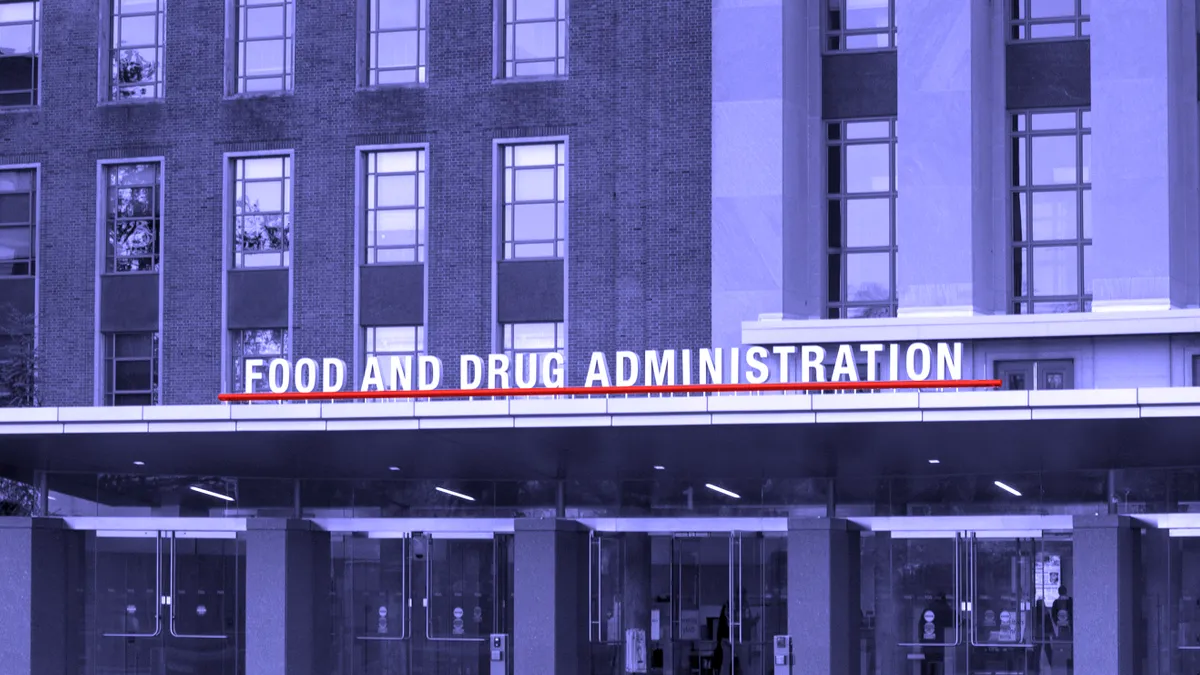
- The Dutch company is asking the Food and Drug Administration to give its AMT-130 gene therapy a priority review, which could result in a decision in about eight months. UniQure said it’s also completed a submission with U.K. regulators.
- UniQure based its applications on previously announced three-year data that showed AMT-130 could significantly slow signs of disease progression. It’s asking the FDA for an “accelerated approval,” which means it would have to later supply research confirming the product’s clinical benefits.
Dive Insight:
UniQure’s submission came almost a year after the company triumphantly announced it would seek FDA approval on the basis of a study suggesting its therapy could have a “massive effect on patients’ lives.” Its shares more than tripled, even as some investors voiced uncertainty about the fate of AMT-130 in an agency division then led by Vinay Prasad, who had been critical of earlier gene therapy approvals.
Those fears proved well-founded. In early November, UniQure announced a “drastic change” in the FDA’s view of its experimental treatment and the data behind it. The company indicated that FDA officials under the Biden administration had signed off on its research plans, but new leadership wasn’t convinced UniQure’s data could support an application.
At issue was an analysis UniQure used to support the benefits of AMT-130, comparing the data collected from treated patients after three years with that of patients in a natural history database called Enroll-HD instead of an in-study control group.
But UniQure’s gene therapy requires an hours-long surgery. After initially including some patients who received a sham surgery as a control, the company — seemingly with the FDA’s blessing — moved on to an external control group. By March of this year, the FDA made clear it wanted UniQure to run a new double-blind trial that included a sham surgery control group, raising ethical concerns.
In the meantime, an extraordinary war of words raged, with federal health officials attacking UniQure and an FDA official — whom many believed to be Prasad — taking the unusual step of discussing the case with journalists on the condition of anonymity. Prasad’s departure from the agency was quickly announced, and FDA Commissioner Marty Makary resigned in May.
The interim FDA leadership has been trying to steady the ship, while giving new life to several experimental programs, including Moderna’s mRNA flu vaccine and Replimune’s melanoma treatment Tudriqev. UniQure in June said the agency now believed its original three-year dataset was enough to seek approval of the Huntington’s disease therapy.
“Some regulatory risk remains, given the continued leadership changes at the FDA,” William Blair analyst Sami Corwin wrote in a note to clients after Wednesday’s announcement. Still, she and other analysts said they were encouraged that UniQure appears to be aligned with agency officials on how to run a confirmatory study — and that the trial won’t require a sham surgery control.
“Avoiding a sham procedure should make the study considerably more practical to enroll and removes a meaningful ethical and execution hurdle,” Leerink Partners analyst Joseph Schwartz wrote in a note to clients. The next big catalyst for the stock will be four-year follow-up data due by the end of the month, he and other analysts said.