Dive Brief:
- Caribou Biosciences, one of the first companies founded to advance CRISPR gene-editing technology in medicine, is discontinuing research, laying off staff and looking for “strategic alternatives” because it can’t raise the money to continue.
- The decision means the end of Caribou’s work on two “off-the-shelf” CAR-T cancer therapies, one of which was ready for Phase 3 testing. “Despite the progress we’ve made, the current financing environment for allogeneic CAR-T cell therapies has made it increasingly challenging to secure the capital necessary to responsibly advance these programs,” Caribou CEO Rachel Haurwitz said in a statement Tuesday.
- The company’s board will consider mergers, acquisitions or other transactions related to the company as a whole or for its assets, Caribou said. In the meantime, a “substantial reduction in workforce” will be mostly completed by the end of the year, the company added.
Dive Insight:
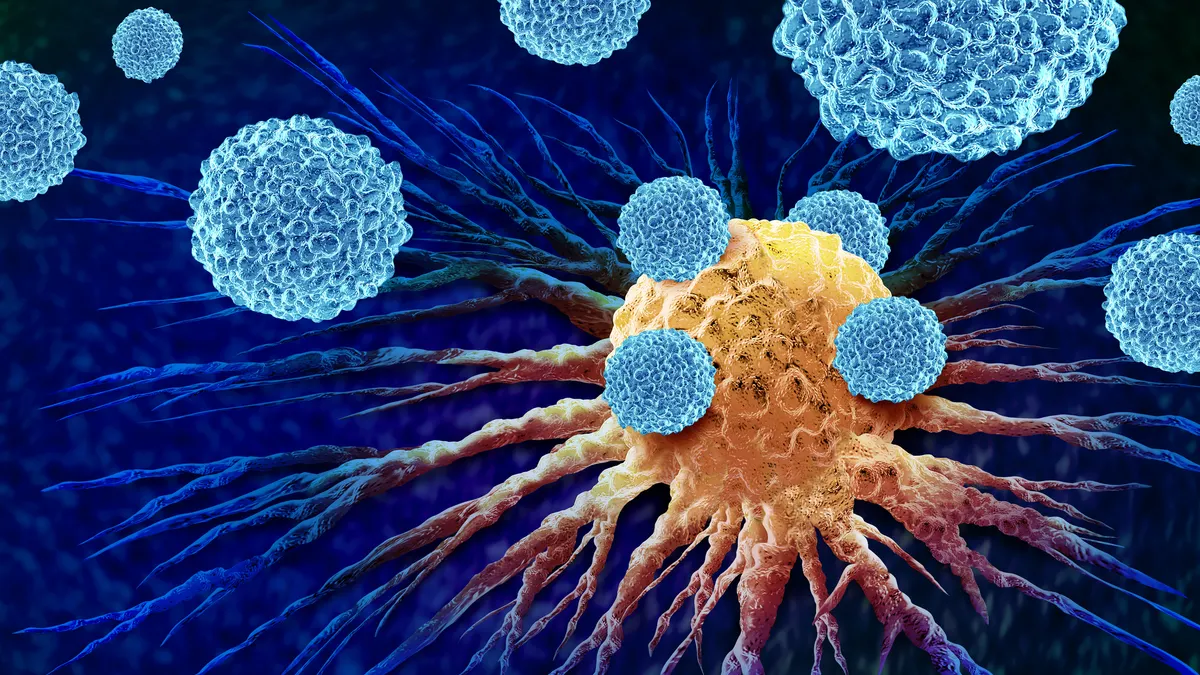
The decline of Caribou is emblematic of a broader struggle by the industry to provide a more convenient cell therapy alternative to the personalized CAR-T treatments that have become a critical weapon against cancer. Instead of extracting a patient’s own cells, manipulating them in a lab and reinjecting them, these off-the-shelf allogeneic therapies use donor cells, offering the possibility of cheaper, faster and easier-to-produce treatments.
But Caribou and other companies have faced a number of research setbacks and questions about the power and durability of off-the-shelf CAR-T therapies. Caribou thought it had found an answer — last year trumpeting the results of its vispa-cel therapy in lymphoma after working to match proteins called human leukocyte antigens on donor cells to patients in its trials.
Vispa-cel is now ready for Phase 3, with the Food and Drug Administration agreeing to a proposed trial design, Haurwitz said Tuesday. But financing still eluded the company. “Evidently, investors were unwilling to fund the trial,” with questions still lingering about clinical risk, Caribou’s matching strategy and the strength of vispa-cel’s data, Leerink Partners analyst Daina Graybosch wrote in a note to clients.
Caribou began operations in 2011, with co-founders including Jennifer Doudna, a Nobel Prize winner for her work on CRISPR as a gene-editing tool. The company debuted on the stock market 10 years later in one of the biggest initial public offerings to date in the field. Its shares — now trading under $1 — briefly topped $30 a piece in September 2021.
A series of ups and downs followed the IPO. In June 2024, the company delivered disappointing study results for vispa-cel, then known as CB-010. A month later, Caribou announced a 12% reduction in its workforce and stopped work on a different kind of allogeneic approach. In 2025, the company gave up on a foray into autoimmune disease and again slashed its staff, opting to focus on its work in oncology.
On Tuesday, Haurwitz emphasized that vispa-cel and another experimental medicine called CB-011, under testing for multiple myeloma, had promise. “This is an extraordinarily difficult decision, particularly because it is in no way a reflection of our belief that vispa-cel and CB-011 have the potential to benefit patients,” she said in the company’s statement.