Obesity and metabolic disease specialists are gathering in Milan this week for the annual meeting of the European Association for the Study of Diabetes, one of a few opportunities for drugmakers developing weight-loss treatments to pitch data from experimental drugs to potential future prescribers.
As expected, obesity leaders Eli Lilly and Novo made headlines. Still, some fast followers hoped to break through the noise, with Boehringer Ingelheim and AbbVie detailing data from in-licensed assets.
As Zepbound and Wegovy continue to rake in billions of dollars a month, the focus is turning to a next generation of treatments that may promise greater weight loss, fewer side effects or more convenience.
Eli Lilly’s amylin-Zepbound combo
The Indianapolis-based drugmaker doesn’t appear satisfied with owning a chunk of the obesity market based on the data from its next batch of medicines. Its experimental, triple-acting drug retatrutide impressed investors in May. At EASD, Lilly had data from a different type of three-pronged treatment strategy: Zepbound combined with a separate drug called eloralintide that stimulates a digestive hormone called amylin.
The data came from a Phase 2 trial which compared the combination to Zepbound or eloralintide alone. The highest doses of the combination taken together over 48 weeks by people with obesity stimulated 23% weight loss, or around 54 pounds, compared with 15% for the high dose of Zepbound and 12%, at the greatest, for eloralintide alone.
Based on data seen so far, Leerink Research analyst David Risinger wrote in a client note that he forecasts eloralintide sales of $23 billion in 2035. Eloralintide and other drugs of its type, like Novo’s cagrilintide and Zealand Pharma’s Roche-partnered petrelintide, could emerge as a “softer” weight-loss option with fewer gastrointestinal side effects, wrote William Blair’s Andy Hsieh. Meanwhile, Evercore ISI’s Umer Raffat suggested a treatment strategy of starting with more tolerable eloralintide and adding Zepbound if patients want greater weight loss.
Novo’s shot-to-pill data
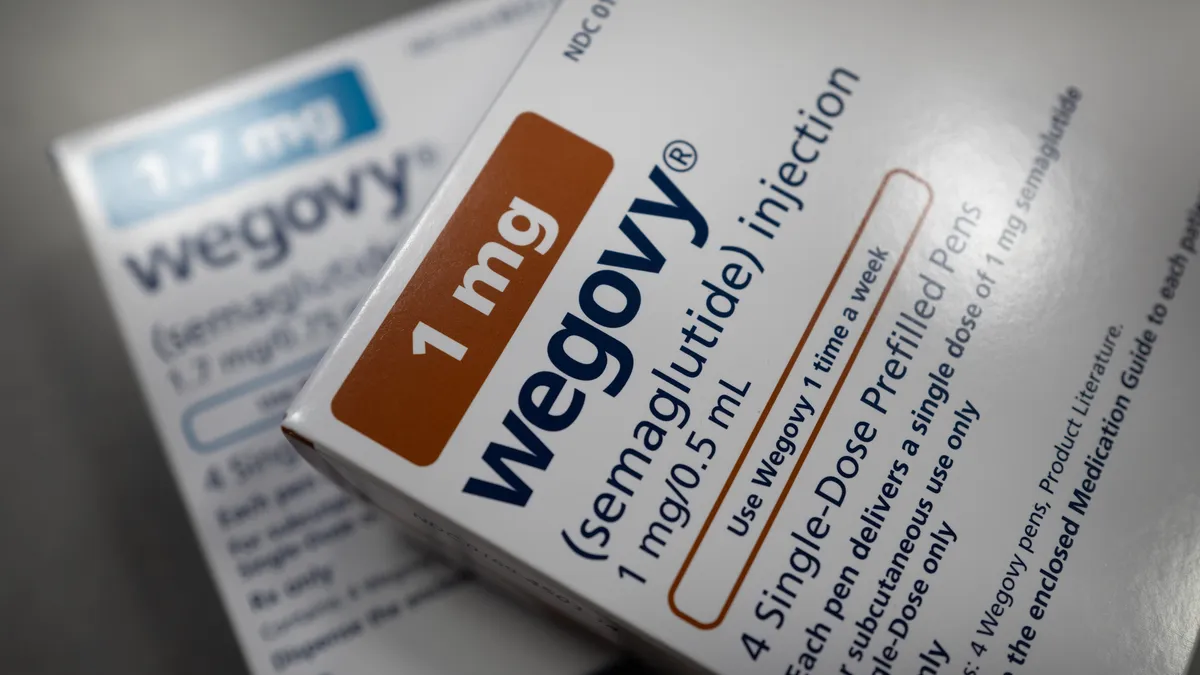
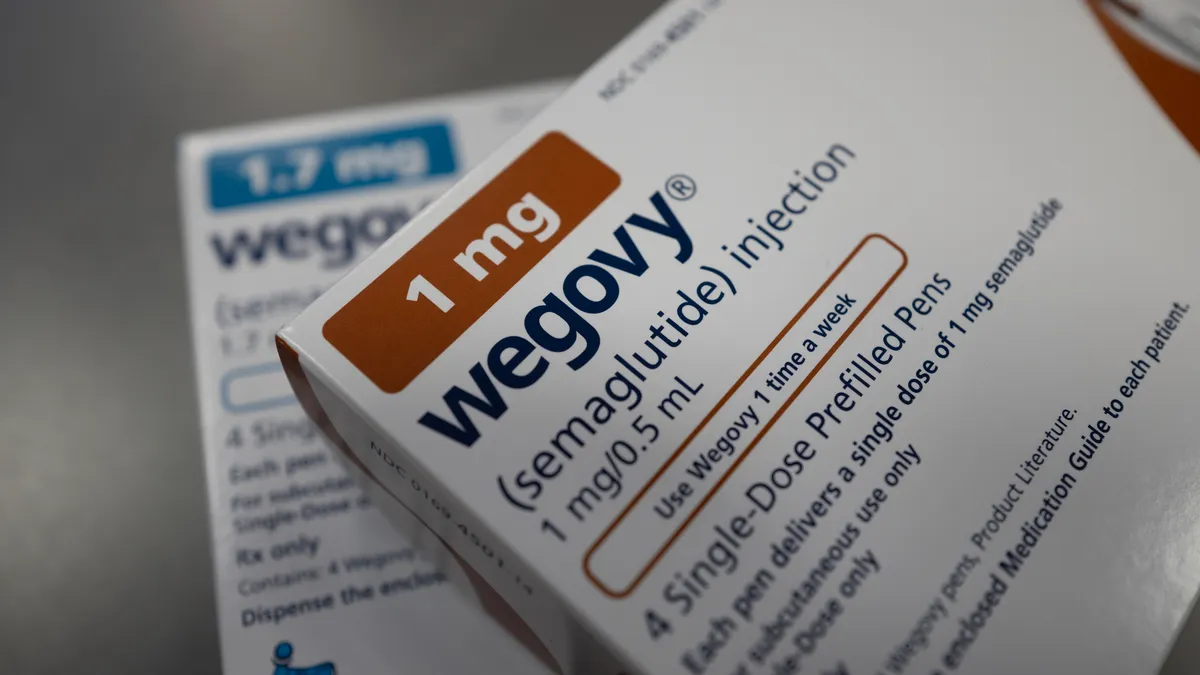
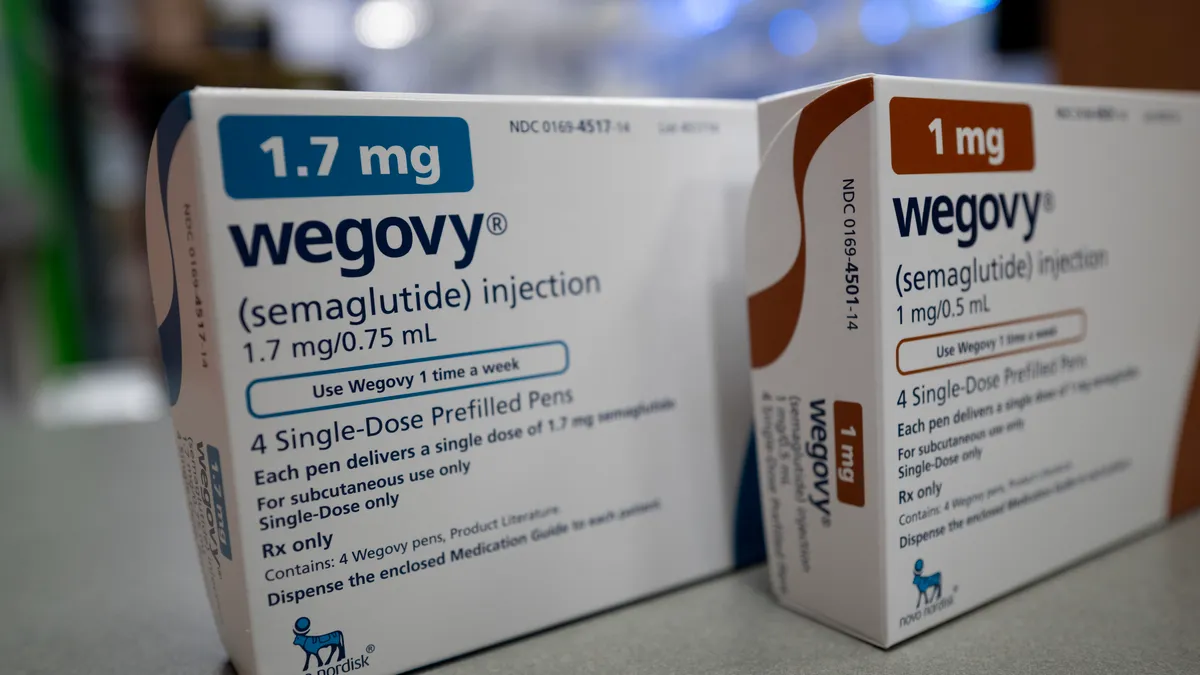
The Danish drugmaker is still trying to capitalize on its first-mover advantage in oral GLP-1 treatment by focusing on the promise of transitioning patients from the injectable forms to its Wegovy pill. At EASD, it presented data from a “real world” study of de-identified patient data it did in conjunction with direct-to-consumer partner Ro.
People who switched either from the Wegovy shot or Zepbound to the Wegovy pill and continued for at least another three months lost, on average, an additional 4.1% of their body weight. The proportion of trial participants who were classified as obese fell from 87% to 66%, Novo said.
“These are exciting early insights on how the pill can individualize obesity care, and we look forward to seeing longer-term outcomes,” Louis Aronne, a study investigator and director of the Comprehensive Weight Control Center at Weill Cornell Medicine, said in a statement.
New competitors?
Boehringer Ingelheim has had a presence in metabolic medicine for years, marketing alongside Lilly a groundbreaking diabetes drug called Jardiance. Its innovation in obesity came via a partnership with Zealand Pharma, licensing a shot called survodutide that targets GLP-1 and glucagon.
Data from a study in people with obesity came earlier this year, and at EASD, the privately held German company outlined results from a trial in the more challenging population of those with obesity and diabetes. Enrollees who got survodutide and remained on treatment lost on average 13% of their body weight, significantly more than the 3% lost by those who got a placebo.
AbbVie, meanwhile, also has entered the market via a partnership. In its case, it licensed a long-acting amylin-targeting drug it calls ABBV-295 from Gubra for $350 million. The aim is to reduce the frequency of shots to up to monthly intervals.
In a small Phase 1 trial detailed at EASD, once-weekly shots stimulated an average weight loss of up to 10% at week 12, while people receiving a shot every other week lost up to 10%. Those getting monthly shots lost 8%, compared with less than 1% for those getting placebo. One-third of people getting the experimental drug experienced nausea, compared with one-fifth of those who got the placebo.