Dive Brief:
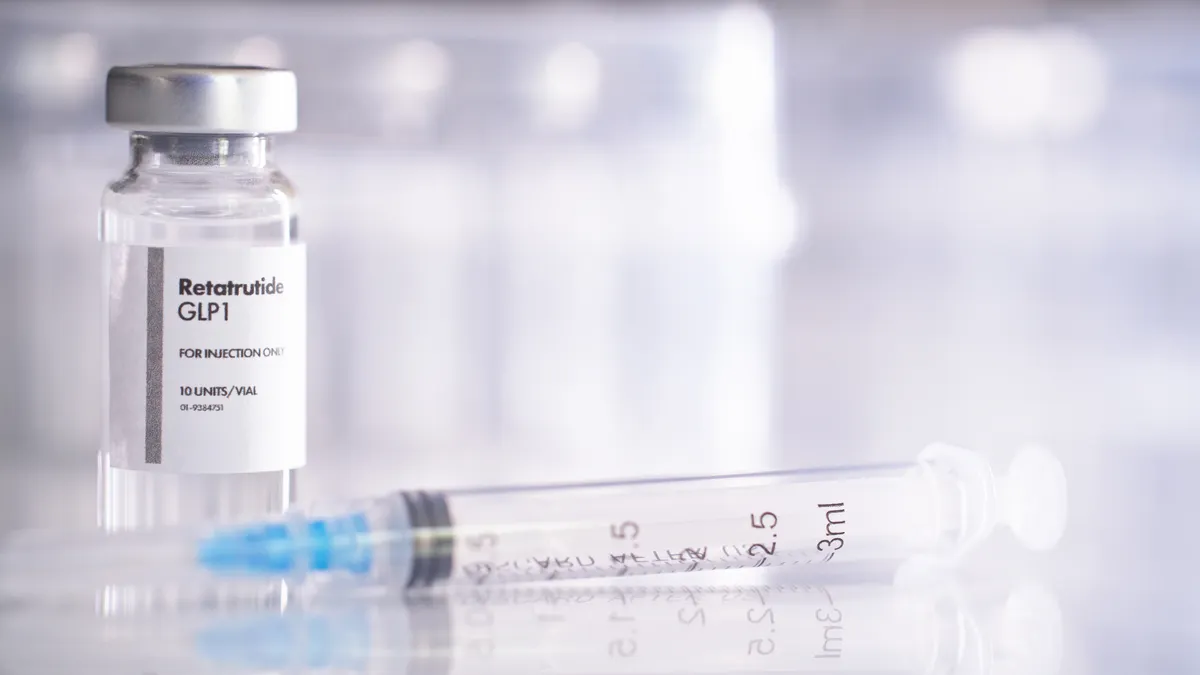
- Boehringer Ingelheim said its dual-acting obesity shot succeeded in a Phase 3 trial, announcing Tuesday that the therapy, survodutide, helped enrollees who received it lose significantly more weight than those who got a placebo.
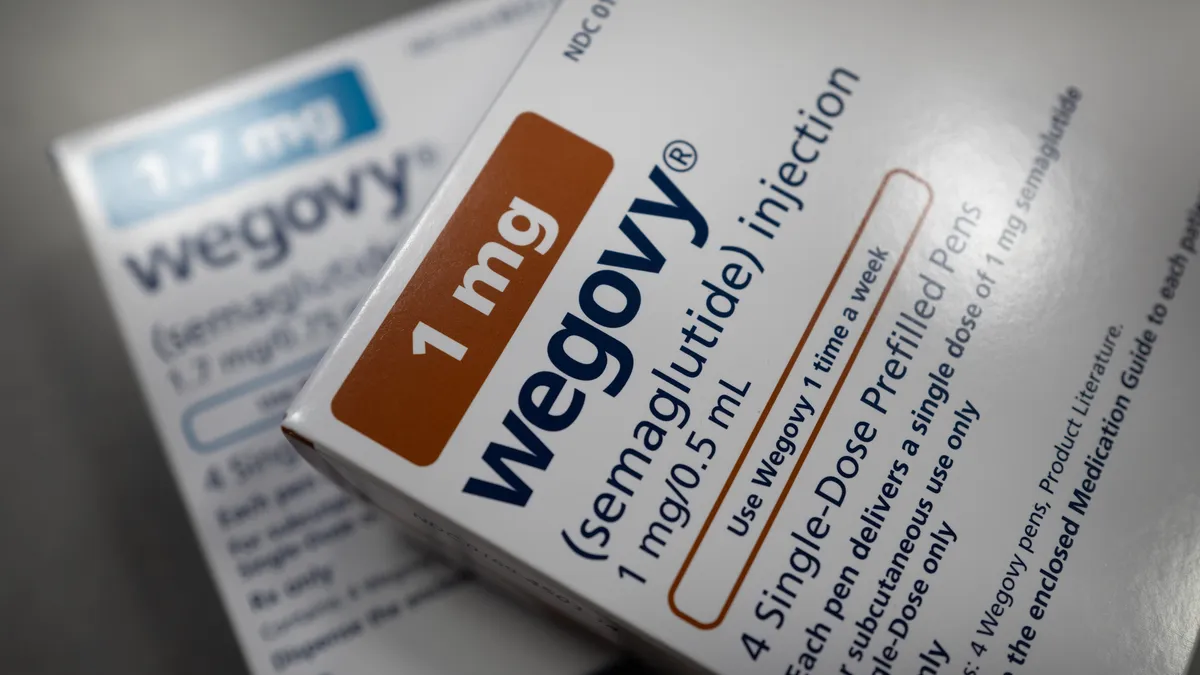
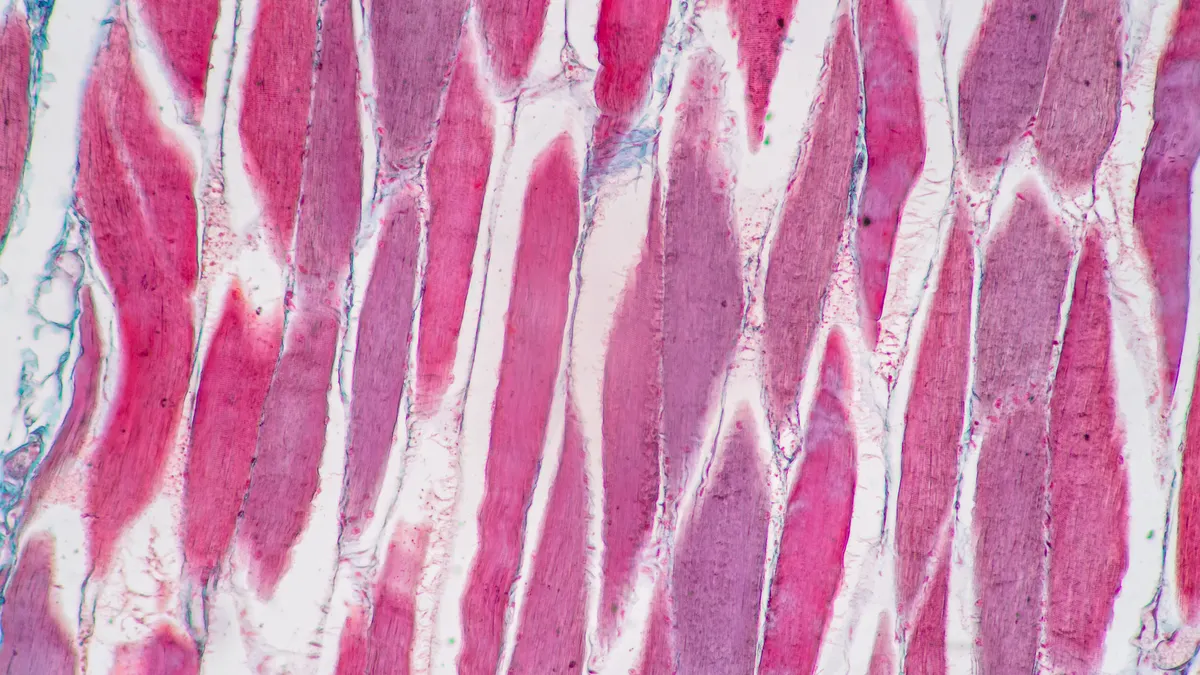
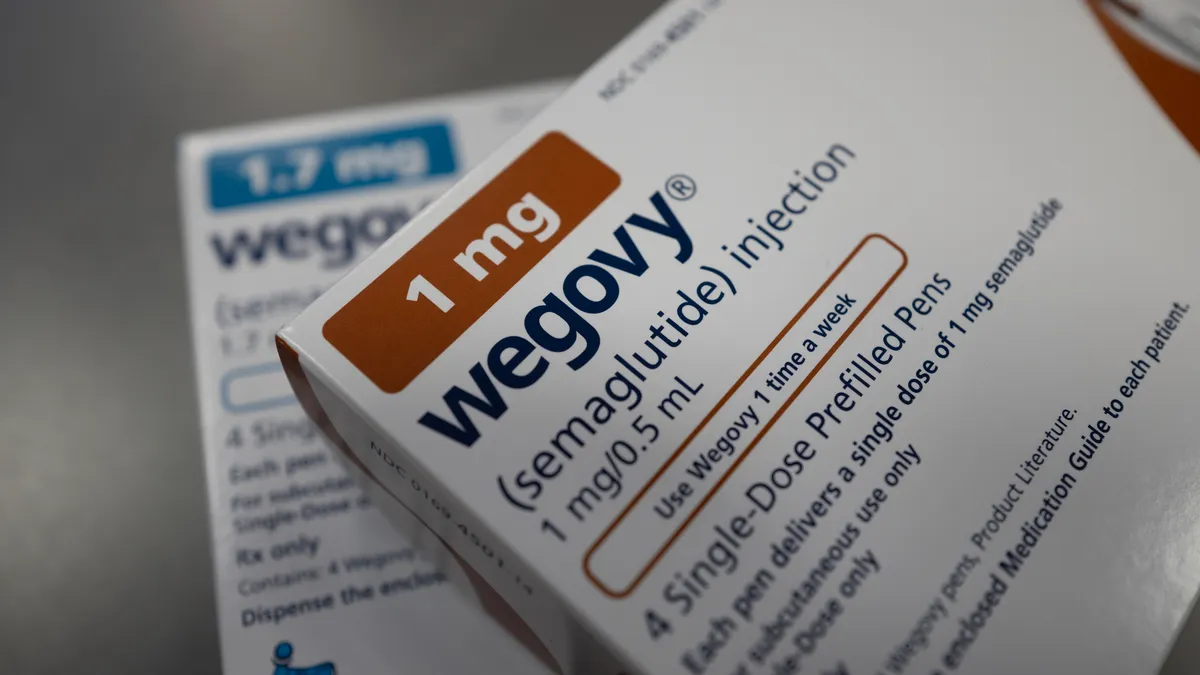
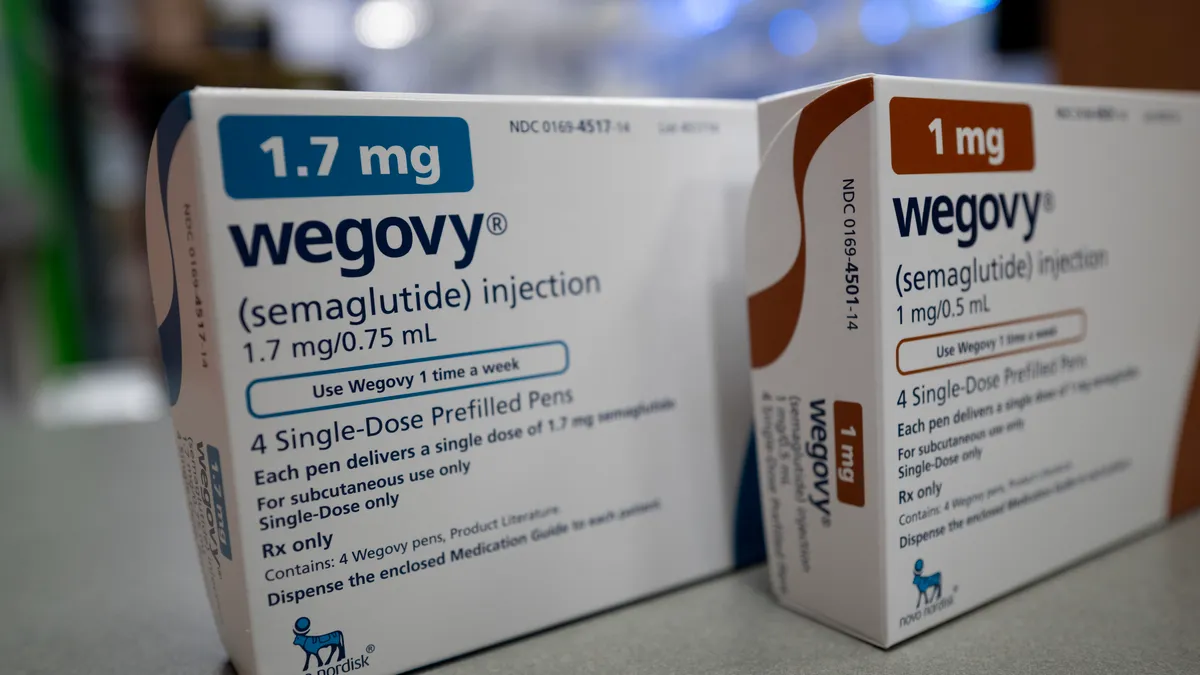
- Notably, the shot, which Boehringer licensed from Zealand Pharma, also showed signs of helping study participants reduce weight while preserving muscle. That purported benefit could address a weakness of Eli Lilly’s Zepbound and Novo Nordisk’s Wegovy, both of which have been shown to lower lean body mass along with fat.
- In notes to clients following the announcement, Wall Street analysts described survodutide’s weight loss effects as comparable to Wegovy but short of what’s been seen in testing of Zepbound. Multiple analysts are also awaiting more details on the drug’s side effects as well as data from a trial in the liver disease MASH before making further judgments about its commercial potential.
Dive Insight:
Novo revolutionized obesity care when it repositioned as weight loss treatments the “GLP-1” medicines first used to treat diabetes. Lilly then built on that progress with Zepbound, a dual-acting drug that acted on GLP-1 as well as another metabolic hormone, GIP. Lilly’s medication has since become the top-selling drug for obesity.
Survodutide represents another strategy of combating obesity. The medication stimulates GLP-1 and a different hormone, glucagon, that also regulates biological functions like blood sugar levels, appetite and digestion. Lilly and Novo are interested in that target, too, as both have in their arsenal three-pronged drugs with a glucagon-targeting component.
In a trial called Synchronize-1, the privately-owned German drugmaker enrolled 725 people diagnosed as obese or overweight and randomized them to receive either a placebo or one of two different weekly doses of survodutide. Study investigators evaluated the drug’s effects on weight loss and other trial objectives over 76 weeks of treatment.
When only including people who stayed on treatment through the evaluation period, those who got survodutide lost up to 17% of their body weight, significantly more than the 3% weight loss in placebo recipients. Survodutide also hit a co-primary goal, helping up to 85% of those treated lose 5% or more of their body weight, compared with 39% of those getting a placebo.
Investigators also measured waist circumference, a secondary objective aimed at assessing changes in body composition. Those who got survodutide had a significantly greater reduction, although Boehringer didn’t release specific numbers. The company is set to present more detailed data at the American Diabetes Association scientific sessions in June.
The initial analysis indicates the weight reduction observed “was driven predominantly by loss of fat tissue, with lean mass contributing only a small proportion,” the company said in a statement.
Boehringer didn’t disclose results from a more statistically rigorous analysis that includes all enrollees, regardless of whether they completed the treatment course. It also didn’t divulge detailed safety data, only saying no new safety issues cropped up, that treatment was associated with mild to moderate gastrointestinal problems, and that people who left the trial because of side effects did so during the period when doses were steadily increasing.
The weight loss numbers don’t separate survodutide from Wegovy or Zepbound, Wall Street analysts wrote in client notes Tuesday. But a benefit on liver health could prove a decisive edge in treating the roughly one-third of obese people who also have metabolic dysfunction-associated steatohepatitis, or MASH. Survodutide’s glucagon-targeting mechanism is “hoped to translate to better liver targeting for patients with MASH,” wrote Benjamin Jackson, a Jefferies analyst who covers Zealand.
Shares in Denmark-based Zealand rose as much as 7% in daily trading in Copenhagen before closing on a 2% gain, changing hands at 309 kroner apiece.