Today, a brief rundown of news involving Agenus and the University of Oxford, as well as updates from Apnimed, Bristol Myers Squibb and Pfizer that you may have missed.
Agenus has raised $340 million in private funding as part of a plan to change its clinical development strategy. The company will no longer financially support an ongoing late-stage trial of a cancer immunotherapy combination, “BOT+BAL,” in a form of late-line colorectal cancer. Instead, it’ll use the new funding to back a study testing that regimen in the “neoadjuvant,” or pre-surgery setting in certain colon cancers. Agenus claimed Monday that that setting represents an annual sales opportunity of more than $7 billion and that the financing — from RA Capital Management, TCGX and others — will enable the company to operate through an interim readout. Company shares doubled in early Monday trading.
A vaccine developed by the University of Oxford has become the first preventive shot for the Bundibugyo ebolavirus to reach Phase 1 testing. Known as ChAdOx1 BDBV, the vaccine was developed in response to the outbreak spreading through the Democratic Republic of the Congo and Uganda, and is one of a few shots currently being fast-tracked by the Coalition for Epidemic Preparedness Innovation. Study recruitment is underway, with vaccinations expected to begin "within the coming weeks," CEPI said Monday. The shot was invented with the same underlying technology that produced a COVID-19 vaccine once sold by AstraZeneca.
Apnimed is seeking an initial public offering to help fund the expected launch of a sleep apnea pill. Apnea’s prospective treatment, to be sold as Oxnimbi, is a dual-acting medication that’s designed to target the neuromuscular defect that causes airways to collapse during sleep in people with obstructive sleep apnea. That treatment succeeded in a pair of Phase 3 trials, but in discussions afterwards, the Food and Drug Administration indicated that “additional analyses and justification may be needed” to prove it provides a “clinically meaningful benefit.” Apnimed believes it’s addressed those concerns and submitted an approval application in June.
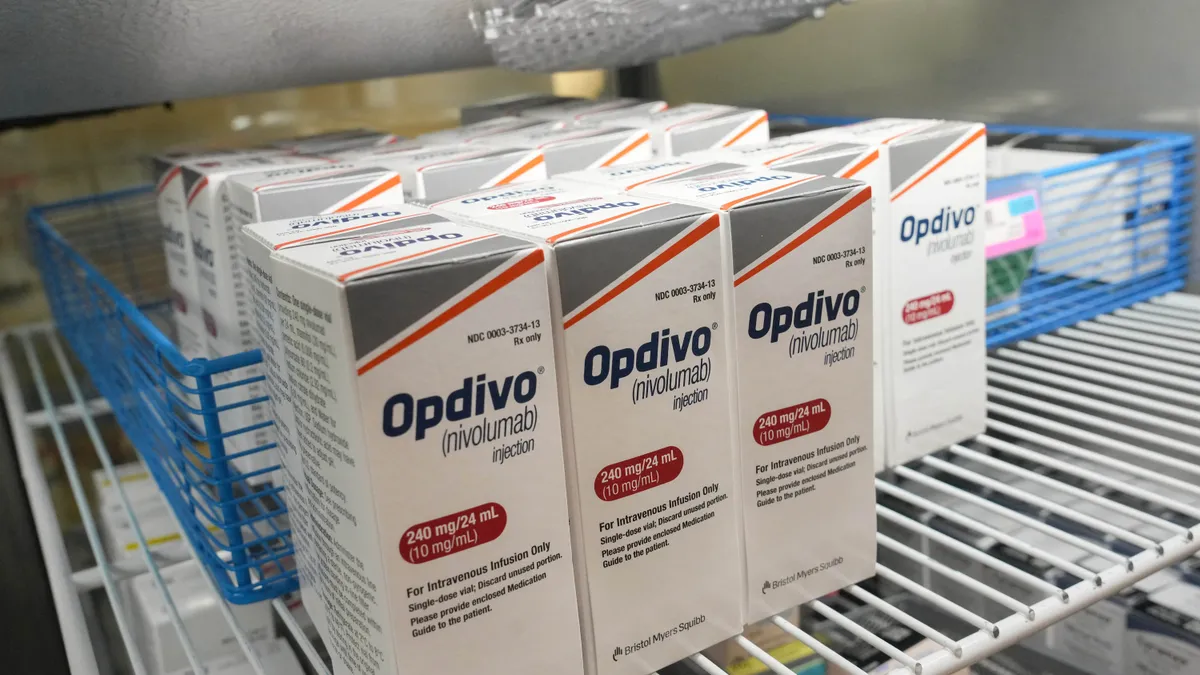
The FDA will decide whether to approve an experimental Bristol Myers Squibb medication for multiple myeloma by May 13, 2027. Called mezigdomide, the drug is one of a few new protein degrading “CELMoDs” Bristol Myers hopes to position as successors to its lucrative Revlimid franchise. The agency could clear the first of those therapies, iberdomide, by Aug. 17. Bristol Myers presented study data supporting its application for mezigdomide at the American Society of Clinical Oncology meeting in May.
The FDA on Friday also broadened use of a regimen involving Pfizer and Astellas Pharma's antibody-drug conjugate Padcev in early muscle-invasive bladder cancer, or MIBC. A combination of Padcev and Merck & Co.'s Keytruda used before and after surgical removal of a MIBC tumor was first approved in 2025. On Friday, the agency expanded that clearance to include patients who are eligible for a common chemotherapy, making Padcev-Keytruda the first chemo-free option available for all patients in that setting.