Dive Brief:
- CellCentric, a biotechnology company developing an experimental drug for multiple myeloma, announced Wednesday it raised a $220 million Series D round to finance mid- and late-stage trials.
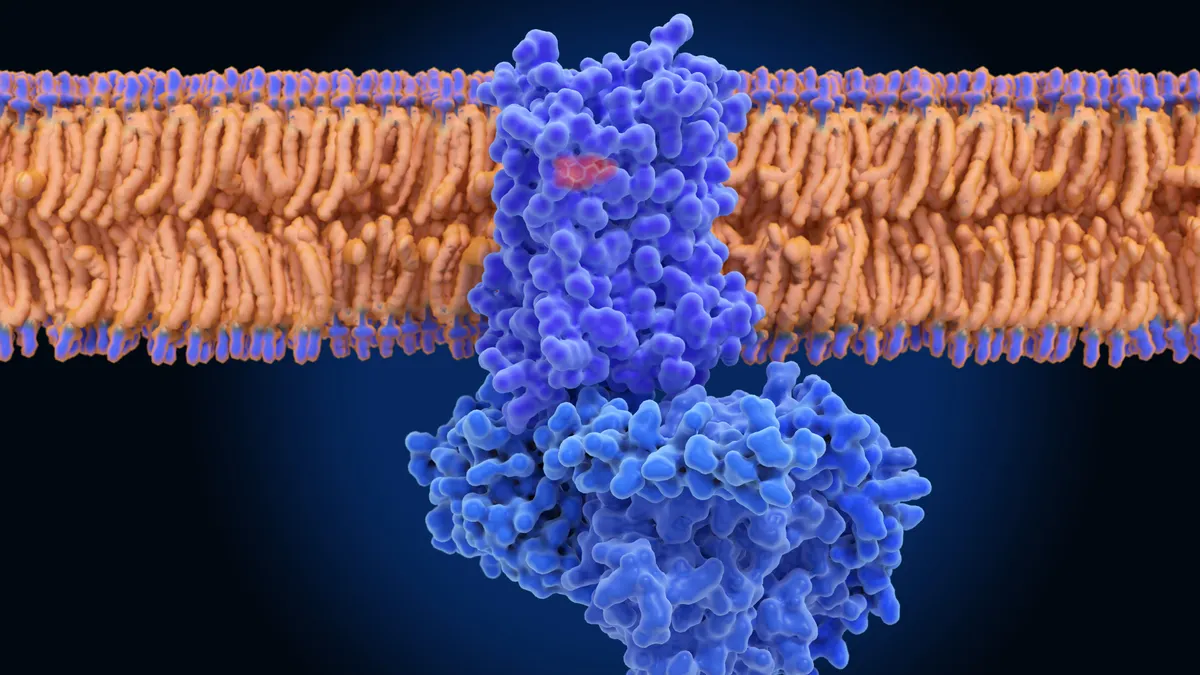
- Its lead drug, dubbed inobrodib, is an oral medicine that blocks a pair of proteins called “p300” and “CBP,” which in turn prevents the expression of certain key cancer-driving genes. CellCentric believes the treatment might be useful as an additive therapy across different lines of care in multiple myeloma.
- The biotech is testing inobrodib in an all-oral combination involving Bristol Myers Squibb’s Pomalyst, as well as in conjunction with bispecific antibodies for myeloma such as Pfizer’s Elrexfio and Johnson & Johnson’s Tecvayli. It’s also evaluating use in a “maintenance” setting, where treatments are used to keep cancer from returning.
Dive Insight:
The treatment landscape for multiple myeloma has changed significantly in recent years. Older therapies like Pomalyst, Revlimid and Velcade have been joined by newer approaches that are helping extend disease remissions and survival. Among them are bispecifics and cell therapies, which have steadily worked their way into earlier lines of care.
Despite that progress, there remains a need for new therapies. The disease is often incurable, and most patients eventually relapse. Drugmakers continue to invest in newer approaches, among them next-generation cellular medicines designed to be safer or more convenient than their predecessors.
CellCentric contends that many patients aren’t served by available treatments and, in a statement, said it aims to offer a new and “transformative” option with inobrodib. The company views inobrodib as a drug for those whose disease has progressed despite multiple treatments, and could be particularly beneficial after someone has received a bispecific.
Will West, CellCentric’s CEO, told BioPharma Dive in an email that inobrodib can serve “a different patient segment” and, as an oral therapy, be administered at home or at the clinics where “the majority of myeloma patients receive treatment.”
“This offers meaningful flexibility for patients,” West said. “Not every patient is eligible for, or can access, more complex cellular or infusion-based therapies.”
CellCentric already produced mid-stage data suggesting its therapy can help improve response rates when combined with older myeloma medications in heavily pretreated patients. But the company also sees inobrodib potentially boosting the effects of bispecifics, too. West noted that, while these drugs are “highly effective,” pairing them with inobrodib might lead to a stronger immune response without additive toxicity.
“If we can build on that in combination with bispecifics — while maintaining a favorable safety profile — we believe there’s potential to further extend both depth and durability of response beyond what we might expect with monotherapy,” West said.
Venrock was the lead investor in CellCentric’s Series D round. Last year, the Cambridge, U.K. and Boston-based biotechnology firm added $120 million to its coffers in a Series C round co-led by RA Capital Management and Forbion.