Eli Lilly is adding new abilities to make drugs that can reprogram cells inside the body, agreeing on Monday to acquire privately held biotechnology company Kelonia Therapeutics in a deal worth as much as $7 billion.
Lilly will pay $3.25 billion up front for Kelonia and could hand the startup’s shareholders another $3.75 billion if certain unspecified clinical, regulatory and sales milestones are met, it said in a statement. The deal is expected to close in the second half of 2026.
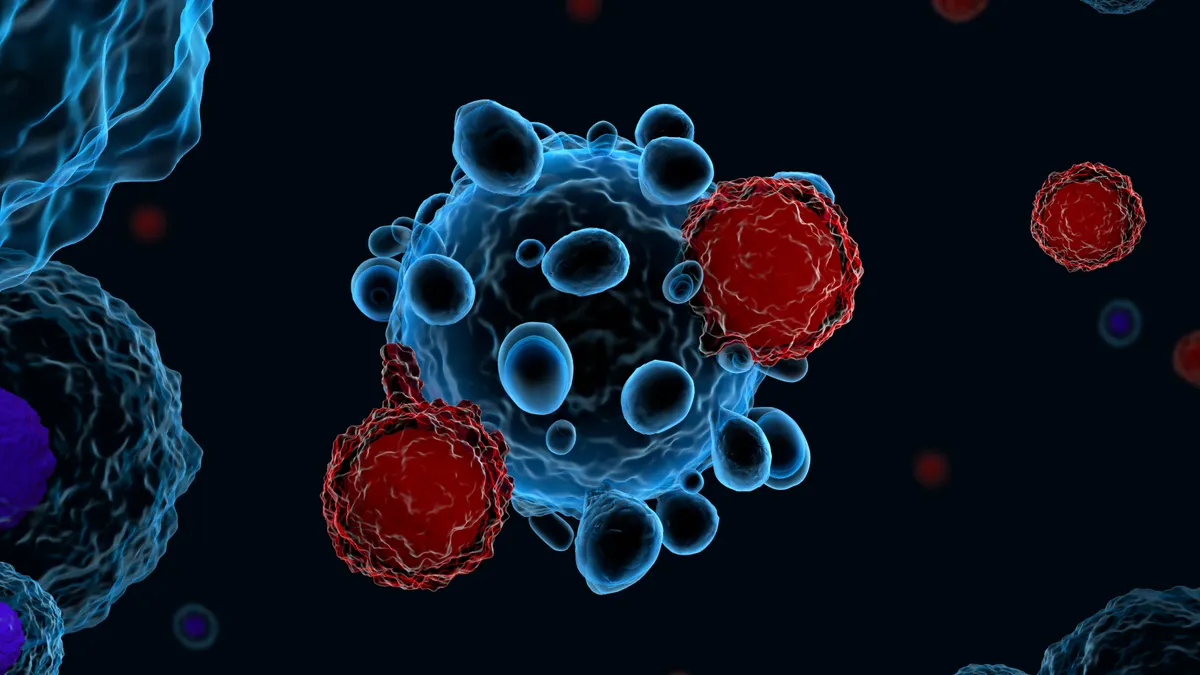
For Lilly, the acquisition furthers a push into “in vivo” cell therapy, a fast-advancing field of drug research. The cell therapies currently on the market involve “ex vivo” procedures, in which patient cells are extracted, genetically modified in a lab and then reinfused. Newer “in vivo” approaches are designed to alter immune cells without this complex and burdensome process, a workaround that could significantly broaden cell therapy’s reach.
In vivo cell therapy research remains early, with many programs currently only in preclinical or the first stage of human testing. Nonetheless, the concept’s potential has captured the attention of many large drugmakers. At least five have acquired biotech startups working on the technology over the last year or so. Lilly has bought two developers since February: Orna Therapeutics and now Kelonia.
Worth up to $2.4 billion, the Orna deal gave Lilly a preclinical program that’s shown promise in autoimmune disease, as well as a technology for manipulating cells “in vivo.” The Kelonia buyout hands Lilly another way of making these therapies; specially engineered viral particles that can get into cells and teach them how to make a new cancer-fighting receptor.
Kelonia’s most significant attempt at this approach is “KLN-1010,” a treatment in early-stage testing for multiple myeloma. The therapy is designed to help the body generate immune cells that target BCMA, a protein universally found on malignant cells.
According to Lilly, early data presented at a medical meeting last year provided “initial clinical validation” and “promising tolerability.” If successful in further testing, KLN-1010 would represent a “transformative advance” against the disease by “eliminating the complexities” of marketed cell therapies, Lilly added in its statement.
Available cell therapies “have meaningfully improved outcomes for patients with various cancers, but significant manufacturing, safety, and access barriers mean that only a fraction of eligible patients actually receive them,” said Jacob Van Naarden, head of Lilly’s oncology division as well as corporate business development, in the statement. “Kelonia's in vivo platform has the potential to change that by delivering rapid, durable responses in a far simpler, off-the-shelf format.”
While the upfront payment “appears full, we believe it is justified given the strength of the clinical data and the competitive dynamics in the space,” wrote RBC Capital Markets analyst Trung Huynh in a Monday note to clients. AbbVie and Bristol Myers Squibb paid $2.1 billion and $1.5 billion, respectively, for companies that didn't have "comparable efficacy data" when they were acquired, he added.
The buyout "positions [Lilly] at the forefront of a potentially transformative technology with broad platform applicability beyond multiple myeloma," Huynh wrote.
The acquisition also adds to concerted push by Lilly, best known for its diabetes and obesity drugs, into genetic medicine. The company has used a series of dealmaking moves to compile a pipeline of gene therapies and gene editing treatments for high cholesterol, hearing loss and other conditions.