Dive Brief:
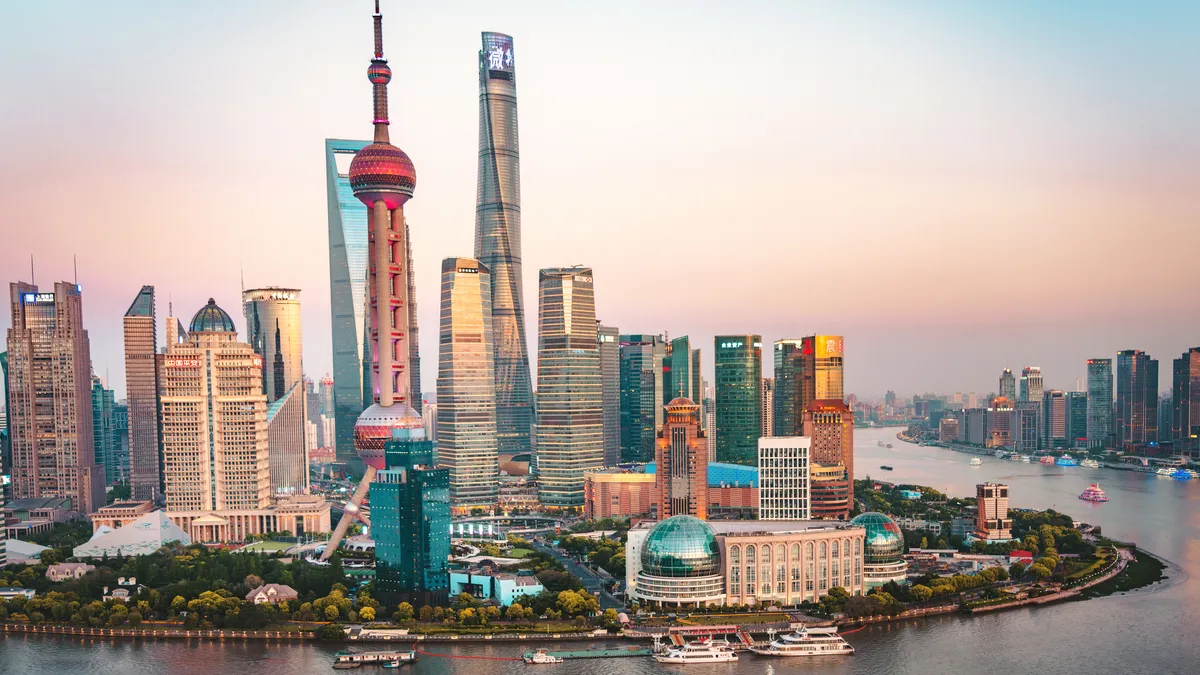
- Licensing deals between China-based biopharmaceutical companies and their U.S. and European counterparts should continue in 2026 and broaden in scope, according to a new report from analytics firm Pitchbook.
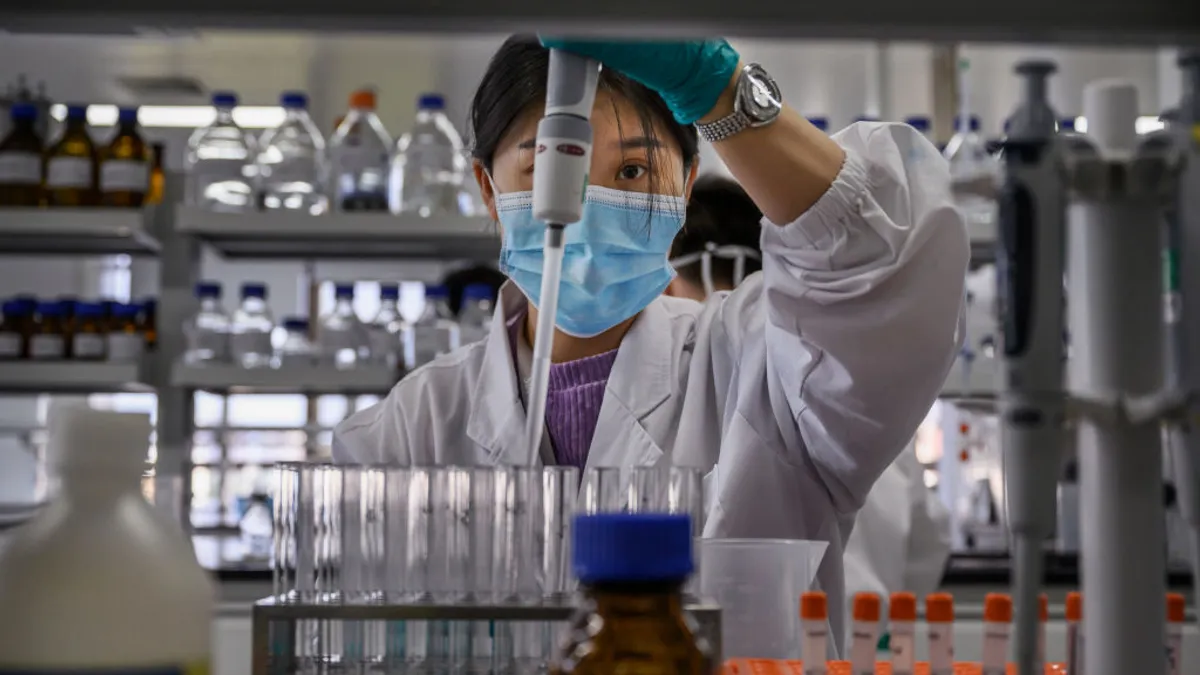
- The report published Friday and written by analyst Ben Zercher noted that China’s biotech ecosystem has “gained the lead” in generating early promising drug candidates. That edge will “likely persist” as those prospects are “underfunded” in other markets including the U.S., and China’s own sector has become more self-sufficient.
- Licensing deals have historically concentrated around antibody drugs for cancer. But collaborations this year may cover more obesity programs, cell and gene therapies, and “targeted” delivery technologies, Pitchbook predicted.
Dive Insight:
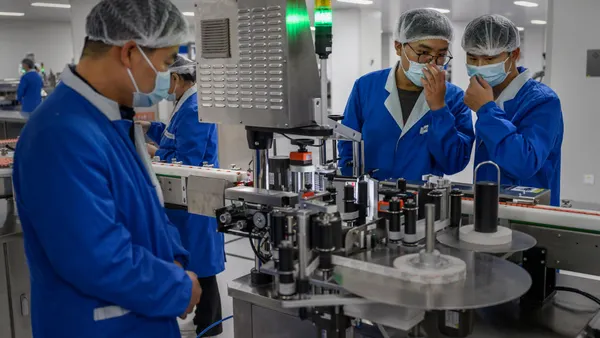
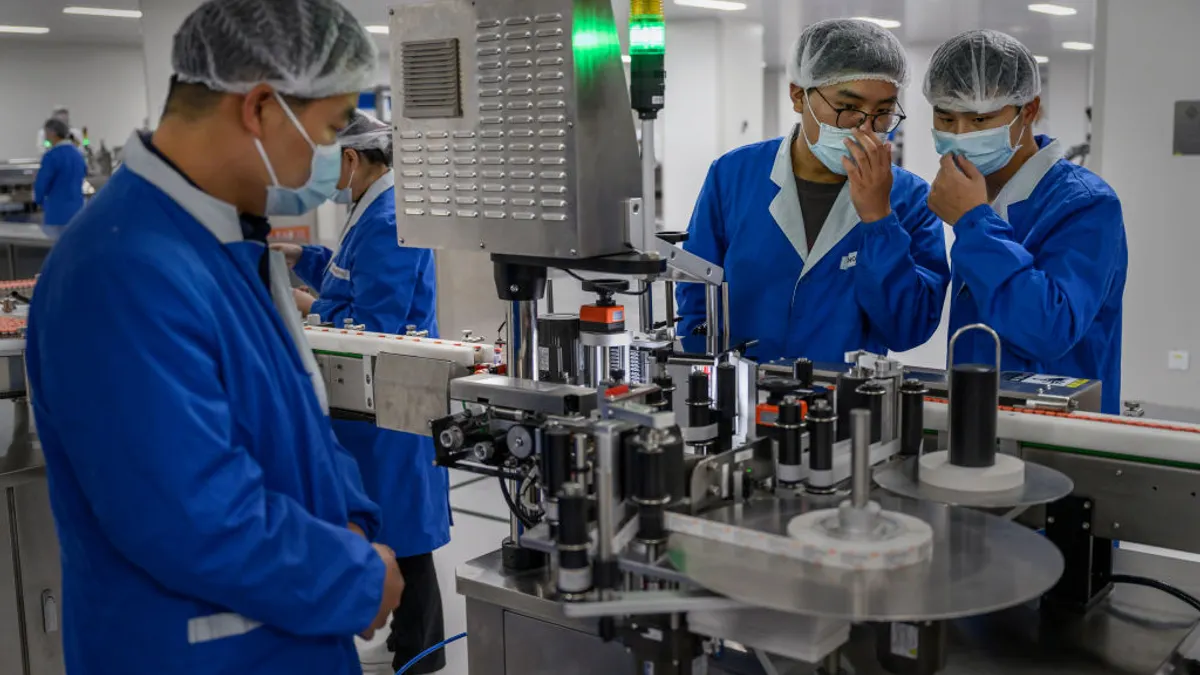
The rise of China’s biotech industry has altered the makeup of the world’s pharmaceutical pipeline in short order. More than 60 licensing deals were struck last year between Chinese companies and U.S. or European drugmakers last year, according to BioPharma Dive data. At least six more have already occurred in January, among them a cancer-focused deal from AbbVie that’s potentially worth nearly $6 billion.
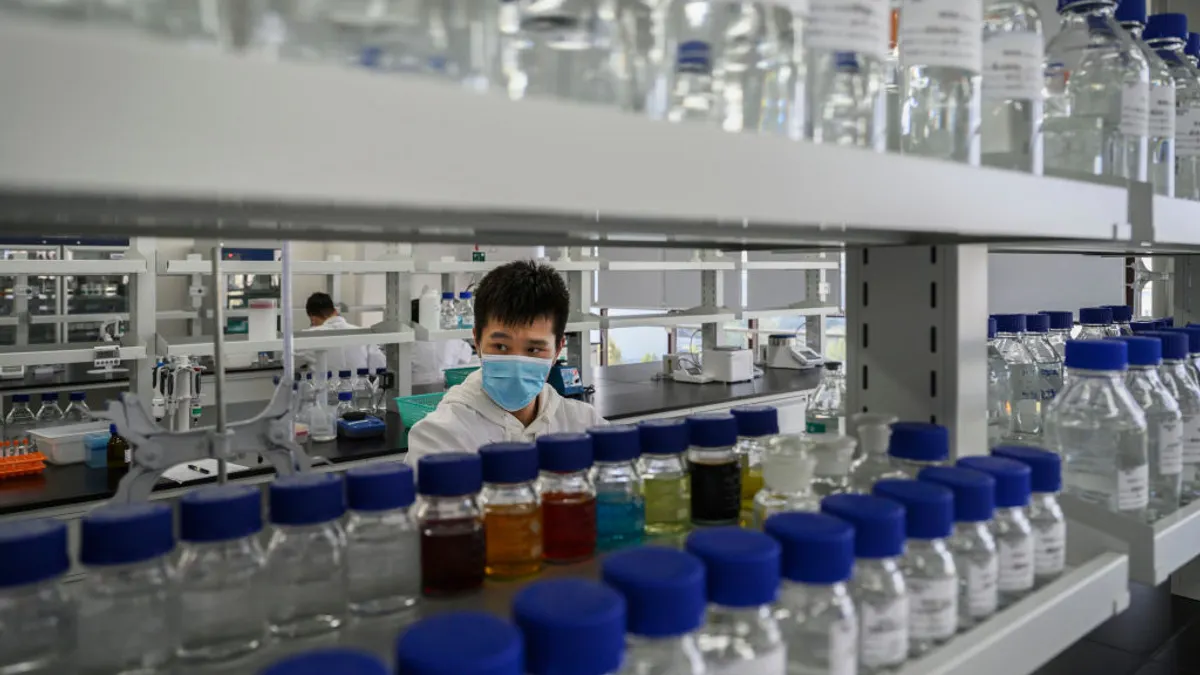
These deals reflect the speed at which Chinese companies can bring new medicines into testing and the growing quality of those prospects. Drug candidates that have historically been “me too” candidates are increasingly involving more cutting-edge work, a trend Pitchbook’s report put into context.
From 2019 to 2023, the “innovative drugs” submitted for human testing by the country’s developers spiked from 688 to 2,298. Since 2021, China has also registered nearly twice as many first-in-human trials for next-generation antibodies — which include bispecific antibodies, antibody-drug conjugates and other molecules — as the U.S. and Europe combined, the report added, citing data from Nature Reviews Drug Discovery.
According to Pitchbook, that shift has yielded a change in startup creation in China. Since 2016, “advancing and emerging” modalities such as nucleic acid-based assets and cell and gene therapy prospects have “consistently expanded” their portion of venture deal activity there. In 2025, those drug types accounted for nearly 50% of the deal volume, highlighting investor appetite for “high-complexity assets” over “fast-follower[s].”
Meanwhile, next-generation antibodies were the prominent focus of cross-border licensing deals, accounting for about half of those recorded last year. But notably, nearly three-quarters of the pacts involved drugs in preclinical or Phase 1 testing, indicating a “growing global trust” in China-originated medicines. Western drugmakers “are essentially acquiring de-risked innovation hubs at a fraction of the cost of full M&A,” Pitchbook wrote.
Pitchbook predicted that antibody-focused dealmaking, particularly for cancer drugs, will continue in the year ahead. But it also expects investors and large pharmaceutical companies to zero in on cell and gene therapy assets, as a combination of progress in China and a funding downturn in the U.S. could make international partnerships more attractive.
“Rising U.S. costs and funding constraints are increasing reliance on external innovation, reinforcing incentives for cross-border licensing and partnerships,” the report said. “These dynamics serve to entrench China’s early-stage asset advantage, which will likely persist for at least the next several years.”