Dive Brief:
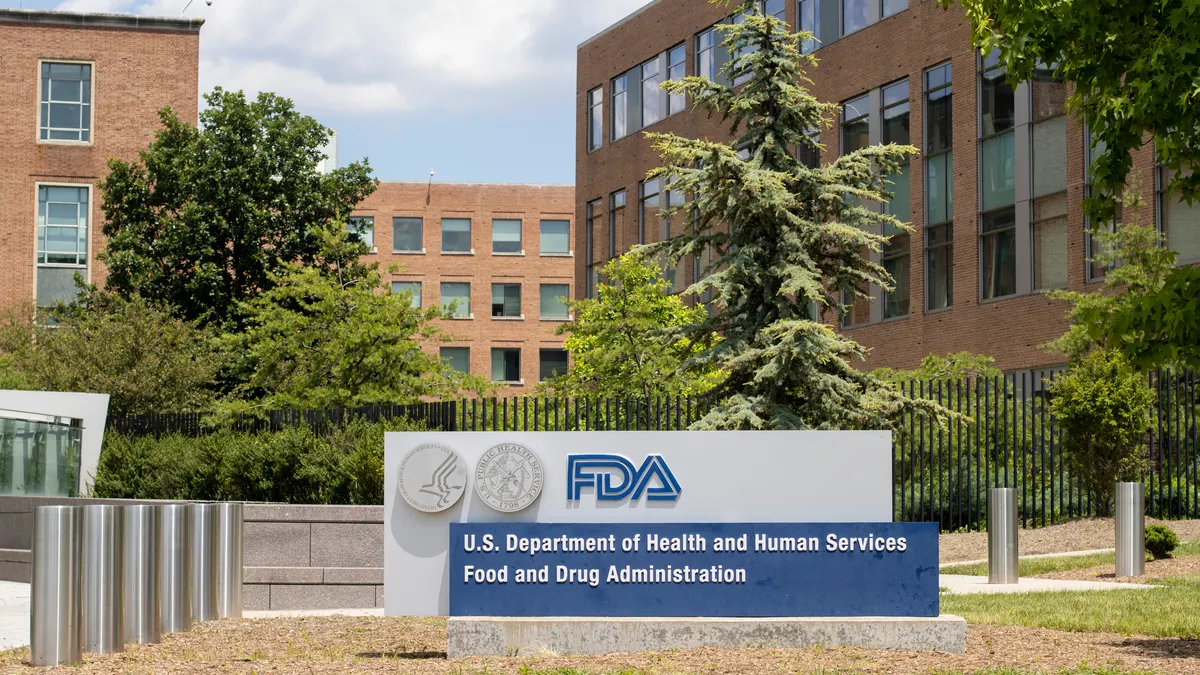
- The Food and Drug Administration has approved the first drug for a type of inherited disorder, endorsing BridgeBio’s Welgemda for the 2I/R9 variant of limb-girdle muscular dystrophy characterized by muscle breakdown due to an enzyme deficiency.
- Approval of Welgemda expands BridgeBio’s portfolio of marketed drugs, joining the rare heart-disease drug Attruby as a commercial-stage product. The company reported $253 million in sales for the first nine months of the year and net losses of $60 million.
- Wall Street analysts said Welgemda, with an annual price of $983,500, should be able to earn it more than $1 billion a year in sales at its peak. BridgeBio plans an immediate launch, and all patients who participated in a Phase 3 clinical trial will be transitioned to an open label extension until they have reached 36 months of treatment.
Dive Insight:
Formerly known as BBP-418 and scientifically as ribitol, Welgemda is for limb-girdle muscular dystrophy, in which weakness in the shoulders and hips leads to atrophy in the arms and legs. In the 2I/R9 variant that Welgemda specifically treats, a genetic mutation leads to a shortage of an enzyme called FKRP essential to a chemical process that stabilizes muscle cells.
In people with this disorder, limb weakness is seen first in childhood or early adulthood, but the disease can progress to cause heart and lung problems. About 7,000 people in the U.S. and Europe have the 2I/R9 disorder and related forms of limb-girdle muscular dystrophy, according to BridgeBio.
Welgemda’s mechanism of action “is not fully known,” according to the FDA, but it is believed that it helps increase a natural sugar molecule that anchors a key protein in muscle tissue. It is taken twice a day as an oral solution mixed with water.
In the Phase 3 clinical trial, BridgeBio tested Welgemda against a placebo to detect differences in the chemical reaction that FKRP is essential to, as well as time over a 100-meter walking test and a breathing diagnostic. People who received Welgemda had a statistically significant benefit on all three after 12 months of treatment, notably the walking test, where people who got the drug were 0.27 meters per second faster than those who got the placebo.
The most common side effect was diarrhea, and no trial enrollee who got Welgemda quit because of side effects.
BridgeBio executives told Wall Street analysts they have identified 500 genetically confirmed patients in the U.S., hoping to reach 100 by the end of 2027, 300 by the end of 2028 and all 500 by the end of 2029. The executive team also believes there are 2,000 to 3,000 U.S. patients overall who will need to be identified by patient awareness and genetic testing campaigns.
When patients in Europe and other countries are included, the total peak sales could be as high as $1.5 billion, according to T.D. Cowen analyst Tyler Van Buren. Similarly, Jefferies analyst Andrew Tsai wrote in a client note that global peak sales exceeding $1 billion “looks achievable.”