GSK has reached a deal with Sino Biopharmaceutical to help maximize access to an experimental hepatitis B drug that’s on the verge of approval in China.
Through an agreement announced Monday, a subsidiary of China-based Sino will buy a supply of GSK’s therapy, bepirovisen, and distribute and promote it through a network of more than 5,000 medical centers there. That agreement has an initial five-and-a-half year term, but can be extended by both companies. GSK will also get the chance to pick through Sino’s early-stage pipeline to evaluate potential partnership opportunities outside of China.
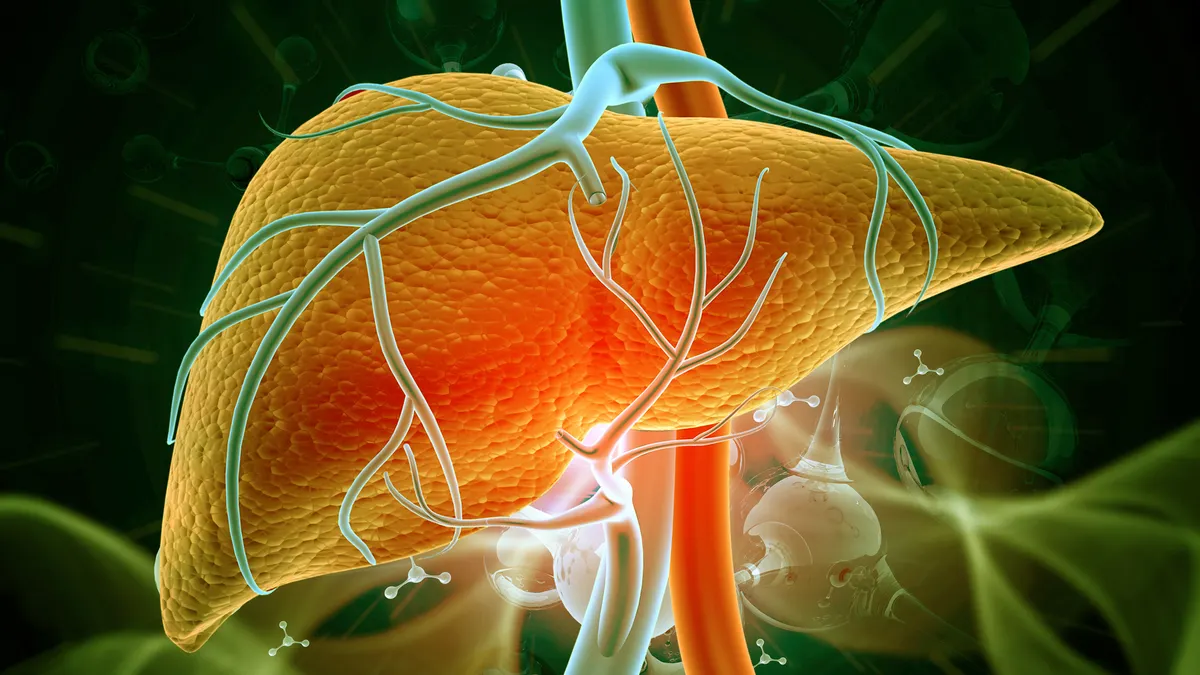
Bepirovirsen is currently under regulatory priority review in China for the treatment of chronic hepatitis B infections which, if left unaddressed, can cause cirrhosis and liver cancer. These chronic infections remain a global issue, affecting more than 250 million people worldwide, according to GSK. And they’re a particular problem in China, which accounts for about a third of the global disease burden, according to the World Health Organization.
Many patients with chronic hepatitis B end up taking antiviral drugs for life. GSK and its development partner, Ionis Pharmaceuticals, are positioning bepirovirsen as a “functional cure” instead. An RNA-based medicine, bepirovirsen has shown the potential in clinical testing to push the virus down to undetectable levels in six months.
Bepirovirsen could be approved in the U.S. by Oct. 26. But a regulatory review in China is proceeding as well and, on a recent earnings call, CEO Luke Miels noted that the two countries account for about two-thirds of the expected global market opportunity. Nina Mojas, GSK’s president of global product strategy, added on that call that there’s a “very high desire of treatment” in China as there is a “stigma” associated with the disease there.
Sino’s subsidiary, CTTQ, has “played a significant role” in advancing the diagnosis and treatment of hepatitis B in China and will help GSK “reach more patients, more quickly,” the British drugmaker said in its statement.
The deal with Sino is the latest in a series of agreements GSK has struck with companies in China, which has quickly become a go-to source for experimental drugs. Since early 2025, GSK has done three licensing deals with China-based companies, according to data compiled by BioPharma Dive. It has also acquired multiple startups either based in China, or built around drugs discovered there.