Merck & Co.’s close analysis of updated data from a Terns Pharmaceuticals leukemia drug trial saved it close to $1 billion when it reached a deal to acquire the company in March, executives said Thursday.
Terns was the target of a bidding war earlier this year. But regulatory filings submitted this month showed that the company’s selling price came down once interested parties got a look at fresh results for TERN-701, a treatment believed to be a potential advance against chronic myeloid leukemia. It ultimately sold to Merck for $53 a share, or $6.7 billion, in a deal the pharmaceutical giant hopes will help offset the loss of revenue when the cancer immunotherapy Keytruda loses patent protection.
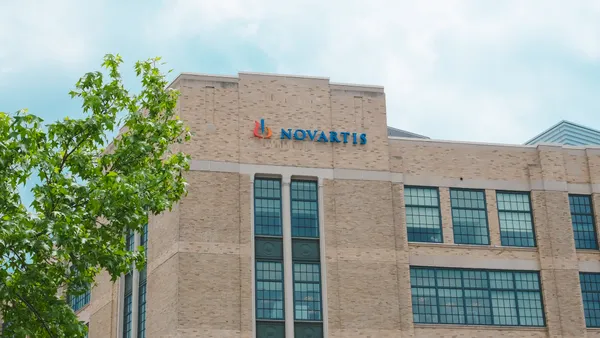
Data presented in December suggested that treatment, TERN-701, might be superior to Novartis’ fast-selling Scemblix. At the time, Terns disclosed that TERN-701 induced a “major molecular response,” or a vast reduction in the number of diseased blood cells, in 74% of people who got it after 24 weeks.
While Merck conducted due diligence, though, its scientific team saw updated results that could change how the Food and Drug Administration views TERN-701, said research chief Dean Li, on a conference call with analysts to discuss first-quarter earnings.
“As the data evolved and we were looking at very specific patient-level data,” the company began to believe the molecular response rate would end up “north of 50%,” Li said. “It’s very important to translate whatever the [trial] abstract says to what I would say is a more conservative [analysis] consistent with regulatory standards.”
Still, Li added that the Merck research team believes TERN-701 will be an important step forward. “We think that an MMR in that sort of range is extremely compelling,” Li said. Novartis’ Scemblix achieved a 25% MMR rate at 24 weeks in a similar patient population.
Regulatory filings have shown that, prior to Merck’s final proposal, an unnamed bidder made an informal offer as high as $61 per share, plus $9 per share in conditional “contingent value right” payments. Merck also made a $61 per share offer, minus the CVR, before conducting due diligence. Terns ultimately accepted a lower offer.
“This transaction demonstrates our disciplined approach to pursuing business development when compelling science and value align, and we are confident in our belief that TERN-701 can benefit patients while generating value for our shareholders,” said Merck CEO Rob Davis, on Thursday’s call.
The Terns deal comes amid a heightened investor focus on Merck’s pipeline as Keytruda’s patent protected life nears its end. Keytruda currently accounts for more than half of the company’s pharmaceutical sales. Davis has stated that the company isn’t looking for the next Keytruda, which he’s referred to as “lightning in a bottle,” and implied that Merck may need to lean on multiple medicines to sustain revenue growth.
Merck is pointing to several new and emerging products to help. One is a cholesterol-lowering drug called enlicitide. Others include the fast-growing blood pressure drug, Winrevair; a newer cancer medicine called Welireg; and a recently approved HIV pill called Idvynso. Two experimental medicines for lung cancer and influenza are critical to its prospects, too.