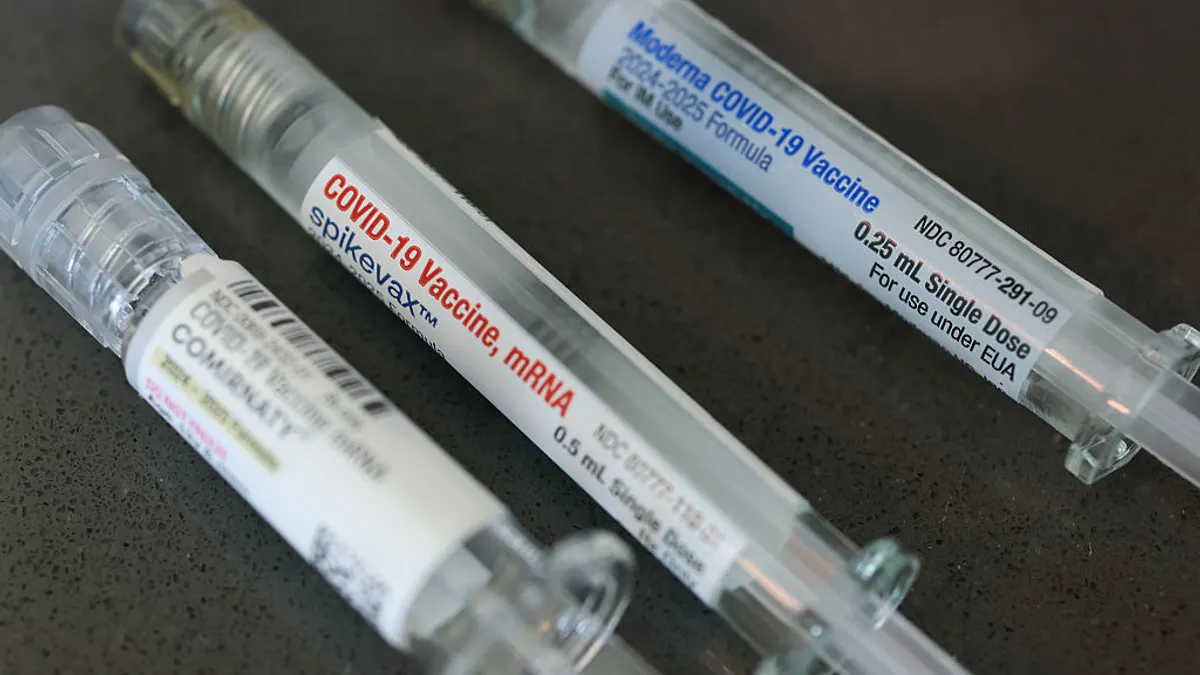
Food and Drug Administration scientists evaluating a potentially new messenger RNA flu vaccine from Moderna have expressed skepticism about the evidence supporting its benefits, according to documents filed days before a crucial advisory committee meeting.
On Thursday, the FDA will convene a panel of experts to discuss use of the shot, dubbed mFlusiva and in development for seasonal influenza. Panelists are set to vote on whether the benefits of vaccination outweigh the risks in people either between the ages of 50 and 64, or those who are 65 and older. Moderna hopes the discussion will set the stage for approval of a vaccine U.S. regulators controversially refused to review earlier this year before abruptly changing course.
Documents filed on Tuesday summarize the position of staff scientists and provide a window into how the agency views the data Moderna has compiled to date. They show that reviewers found no “major deficiencies” with the vaccine, but unearthed gaps in evidence that leave unclear how well it works, particularly in the elderly.
Moderna showed in testing that its shot reduced the likelihood of flu-like illness by 27% compared to a standard-dose vaccine in study results recently published in the New England Journal of Medicine. But staff reviewers pointed to key limitations in those findings. The trial only incorporated data from one flu season, raising questions about how the shot might perform in seasons with different viral strains. There wasn’t a large enough sample size to clearly show whether mFlusiva can protect against influenza B.
Moderna also didn’t definitively prove the vaccine’s effectiveness in “very frail” older adults or those with weakened immune systems — two groups particularly vulnerable to severe flu-related complications. And it doesn’t have data supporting mFlusiva use in people also receiving vaccines for other respiratory diseases, like COVID-19, reviewers wrote.
The limitations lower the “applicability of the efficacy data to a substantial portion of the intended patient population,” they added.
Staff scientists didn’t identify major safety concerns in the trial, but noted that their assessment was based on about six months of follow-up in healthier participants. Ongoing surveillance would be needed to detect rarer side effects that might emerge with broader use, they wrote.
The FDA doesn’t always follow the advice of its advisory panels, though it typically does. The agency is set to make a decision by Aug. 5.
Should the FDA approve mFlusiva, it’d mark a positive end for Moderna to what’s been an unusually tumultuous regulatory journey.
Moderna has been working on mFlusiva, as well as a related, combination COVID and flu vaccine, for multiple years now. But it withdrew an application for the combination vaccine last year following a request from the FDA for more data from the shot’s flu-preventing component. It subsequently accumulated that data and pushed toward an approval this year.
In February, though, the company received a “refuse-to-file” letter from the agency, meaning the FDA didn’t belive the company’s application warranted a review. Penned by former top vaccine official Vinay Prasad, that letter alleged that Moderna’s key trial wasn’t adequately controlled and should’ve involved a different comparator.
Moderna claimed to have been blinsided by the letter and argued it had gone against previous agency guidance — one of many times drugmakers cried foul over FDA communications during the tenure of former commissioner Marty Makary. However, amid public backlash, the FDA reversed its position only days later.
Moderna is seeking a traditional approval of mFlusiva in adults between 50 and 64 years of age, and an “accelerated” clearance in older individuals. It’s also agreed to conduct a post-marketing study in those 65 or older. And it’s now eyeing a clearance from different FDA leadership, as both Prasad and Makary recently left the agency as part of a White House-directed overhaul.
The company has long contended its vaccine might prove a unique weapon against influenza, as mRNA shots can be quickly designed to target newly circulating strains.