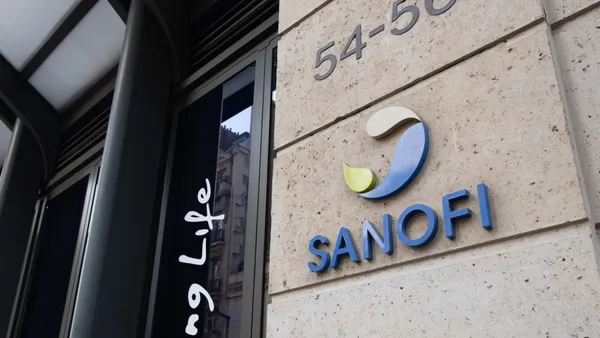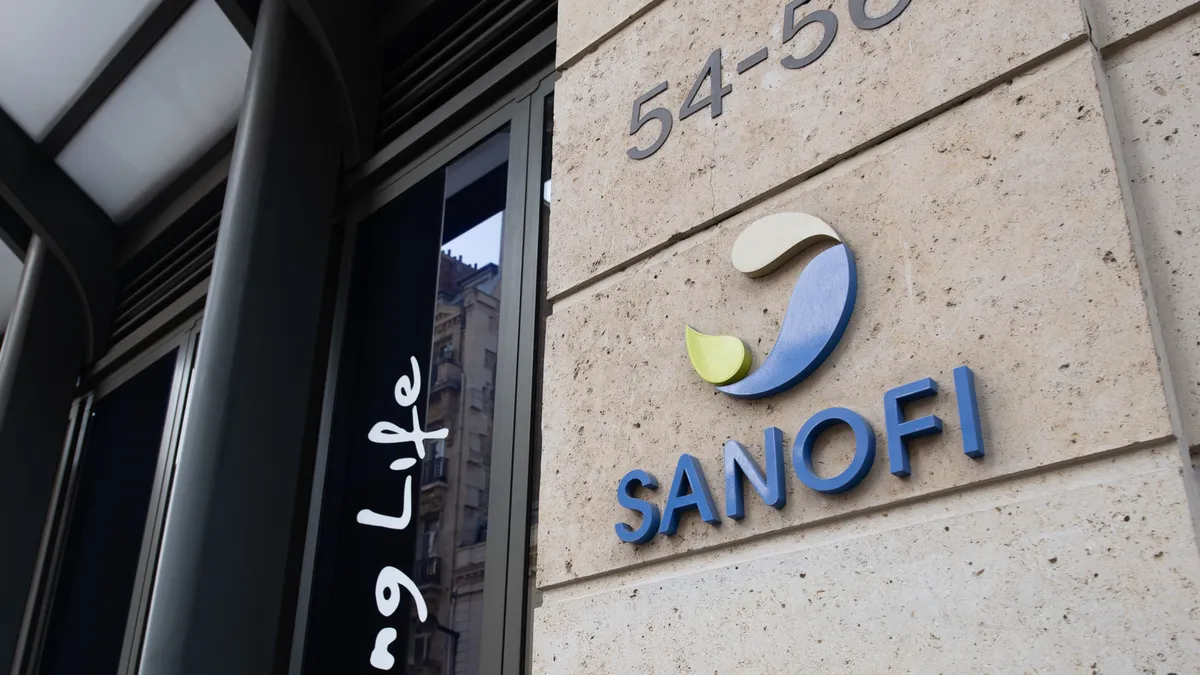
Sanofi has agreed to buy New Jersey-based drug developer Insmed through a $41 billion deal that is handily this year’s largest biopharma acquisition.
Per deal terms, Sanofi would pay $175 for each share of the target company. That’s a 26% premium to Insmed’s closing share price Monday and a 46% premium compared to last Thursday, which was right before Bloomberg News reported that Sanofi was considering this buyout.
Insmed sells two medications for different kinds of lung diseases. One, Arikayce, is an inhaled antibacterial agent that received Food and Drug Administration approval in 2018. The other, Brinsupri, reduces inflammation. It was cleared in 2025 as a treatment for select patients with a chronic condition known as bronchiectasis. Combined revenue from Arikayce and Brinsupri reached $524 million in the third quarter, and Insmed predicts the total for all of 2026 could go as high as $1.87 billion.
Insmed also has several research programs in the mid-to-late stages of human testing. Its most advanced evaluates Arikayce in patients with an uncommon lung infection that is caused by “mycobacteria” and more likely to affect people with pre-existing conditions like asthma, bronchiectasis or chronic obstructive pulmonary disease. Additionally, Insmed has an experimental medicine called TPIP — a “prodrug” of the active ingredient in United Therapeutics’ blockbuster Tyvaso — which it is developing for certain forms of pulmonary hypertension and lung scarring.
In a statement, Sanofi described the Insmed deal as “transformative” as well as complementary to its existing catalog of products for immune system disorders and rare diseases. Those two therapeutic areas accounted for more than half of the 36.6 billion euros — or roughly $42.4 billion — in net sales Sanofi recorded over the first nine months of this year. The company expects the acquisition to improve its “financial profile over the mid- and long-term” and expand its portfolio in “core focus areas.”
As for Insmed, the transaction “delivers immediate, certain cash value” for shareholders and “ensures the momentum we have built continues,” said CEO Will Lewis.
Sanofi investors appeared to support the deal, as shares of French pharmaceutical giant were up nearly 10%, to $51.27 apiece, by late morning Tuesday.
Several of the mergers and acquisitions Sanofi pursued over the past decade haven’t panned out as the company anticipated. It took billion-dollar-plus write-downs from its Bioverativ and Synthorx deals, for example, and hit major clinical setbacks for drugs central to its $3.7 billion purchase of Principia Biopharma.
Still, Michael Leuchten, a Jefferies analyst who covers Sanofi, wrote in a note to clients that his team really likes the Insmed acquisition. Not only does it hand Sanofi “two sizeable respiratory franchises with further expansion potential,” but it bolsters the company ahead of its top seller Dupixent losing key patent protections in several years. According to Leuchten, consensus estimates have Brinsupri and Arikayce generating $6.8 billion and $1.3 billion, respectively, by 2035.
“One stone kills so many birds,” he wrote.
Some argue the deal, which is the largest biopharma acquisition since Pfizer spent $43 billion on cancer drug specialist Seagen in 2023, could also be a positive sign for dealmaking more broadly.
It could “herald a return to biotech M&A, and perhaps signal an appetite for larger deals as well,” wrote Leonid Timashev, an RBC Capital Markets analyst who covers Insmed.
“We note that M&A tends to be seasonal (we see a historical pickup in January) — so we expect more deals are likely still ahead, as pharma patent cliffs continue to need resolution, and balance sheets have the firepower to make transactions,” Timashev added.
Sanofi expects the deal to close in the first half of next year and become accretive to its earnings per share by the end of 2028.