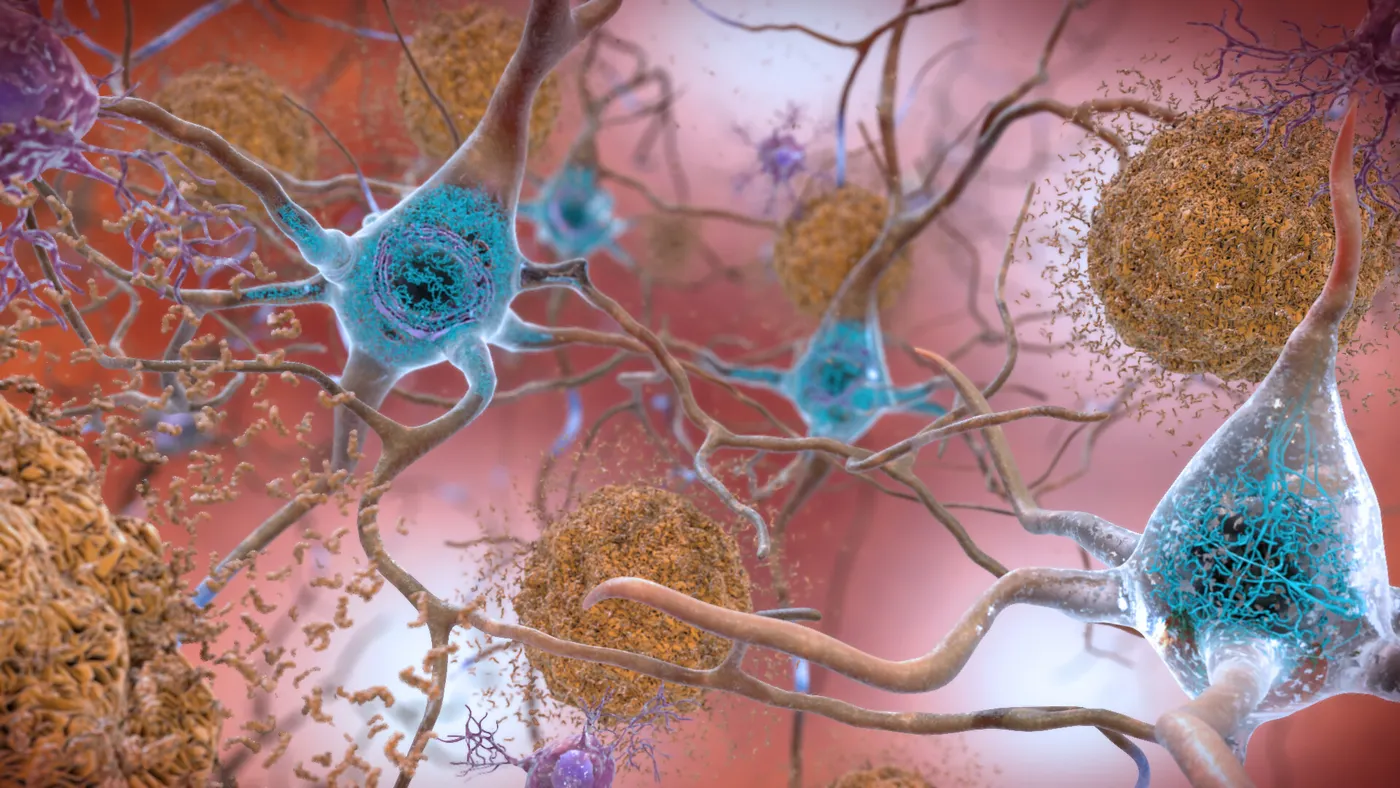
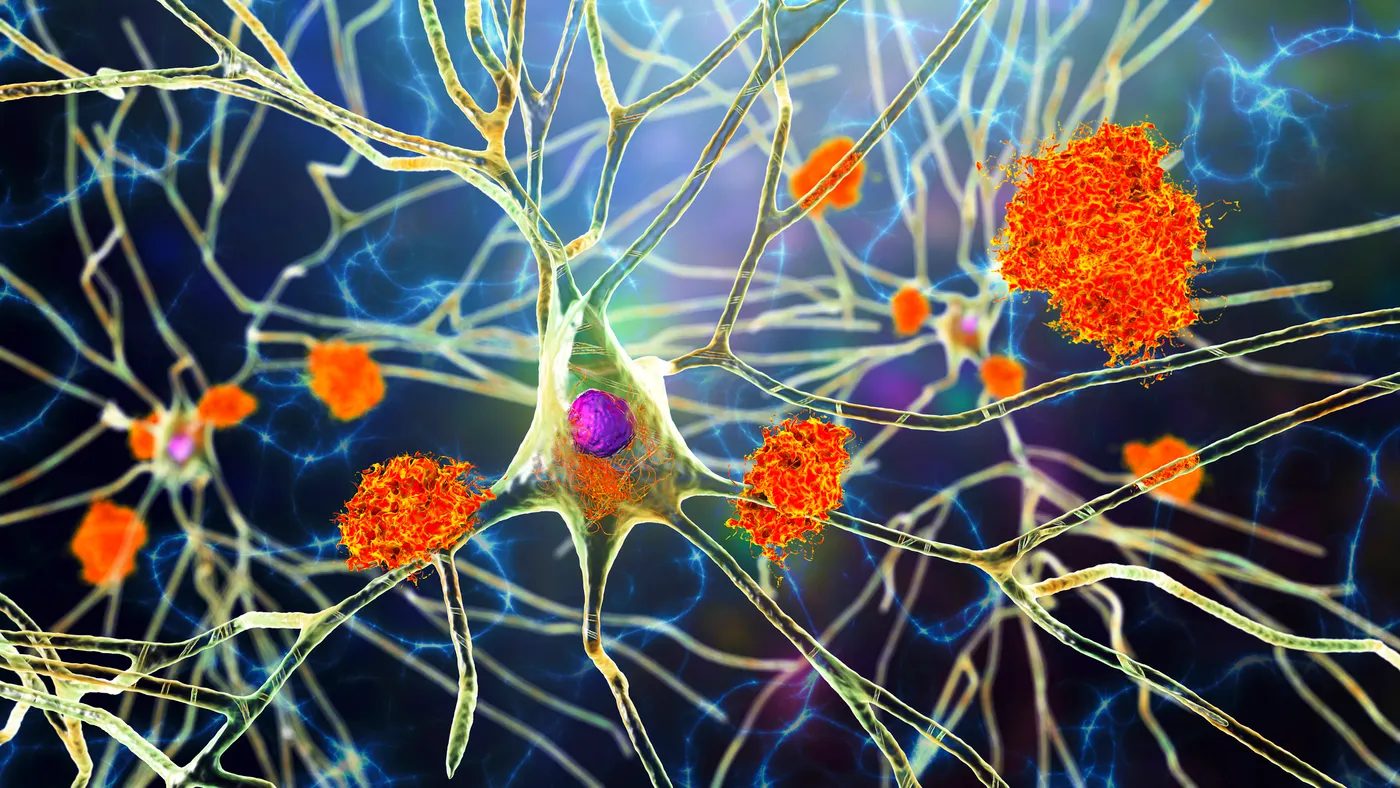
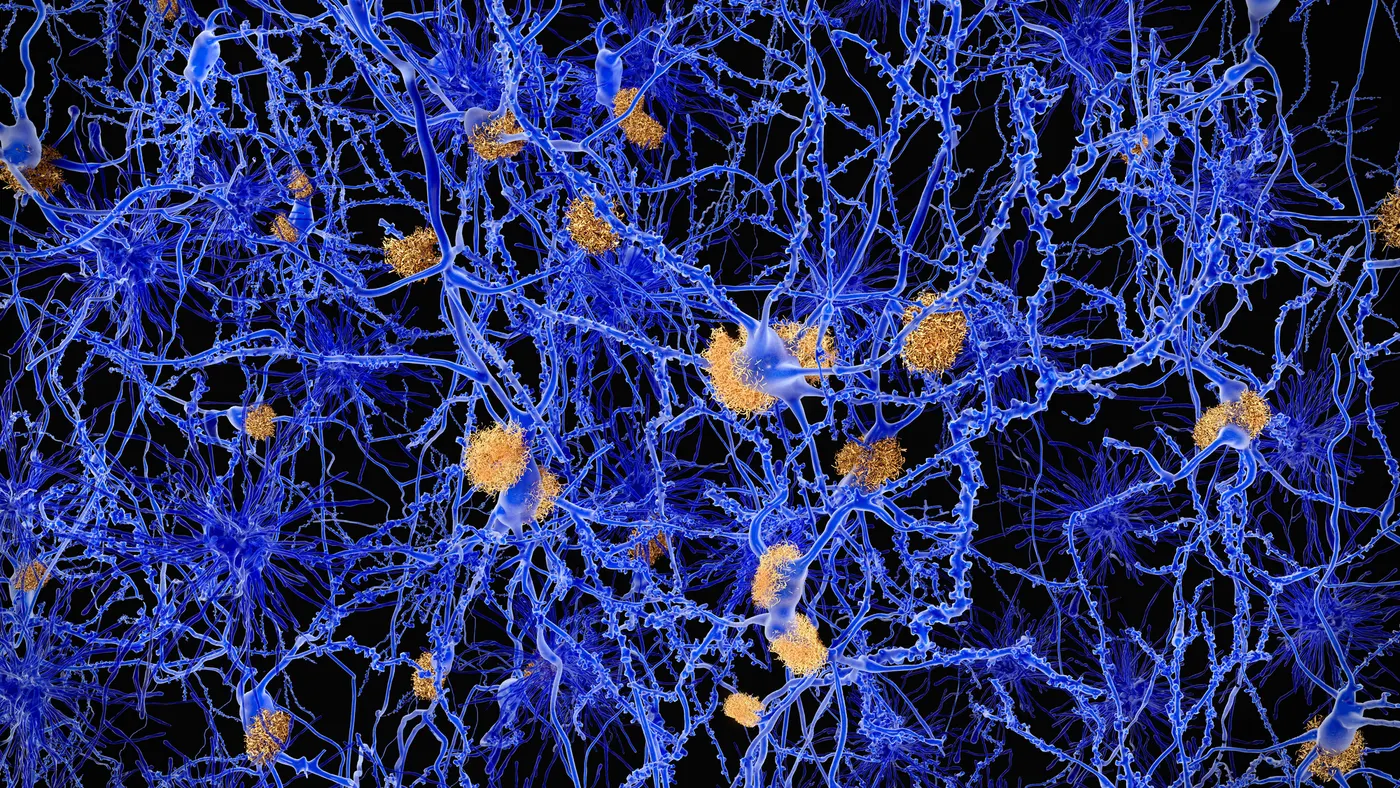
Amyloid protein clumps together to form plaques between neurons in the brains of people with Alzheimer's.
National Institute on Aging. (2017). "Beta-Amyloid Plaques and Tau in the Brain" [Image]. Retrieved from Flickr.
Note from the editor
Several years ago, there was extensive debate about whether drug companies were spending too much time and money probing what, at that point, had been a mostly fruitless hypothesis: that clumps of misfolded brain proteins known as amyloid beta were a root cause of Alzheimer's disease.
Fast forward, and now three medicines that target these proteins are approved by the Food and Drug Administration. Though there is still discourse around where Alzheimer's researchers should direct their efforts, the approvals of Aduhelm, Leqembi and Kisunla restored some faith across the pharmaceutical industry that therapies for what seemed to be an impenetrable disease can be successfully developed and brought to market.
Yet, in an area as complex and fraught as neuroscience, nothing is clear cut. Biogen and Eisai, the makers of Aduhelm and Leqembi, underestimated just how much healthcare systems would have to adapt for these drugs to get to patients. The challenges led to Aduhelm essentially being shelved, whereas Leqembi, which was approved at the outset of 2023, only recently began generating enough sales to satisfy Wall Street. Biogen, Eisai, and Kisunla's developer, Eli Lilly, also ran into delays getting their drugs approved in Europe.
Despite the obstacles, analysts continue to forecast billions of dollars in sales for both Leqembi and Kisunla. Their calculations hinge on the massive impact of this disease. Alzheimer's affects more than 7 million people in the U.S., and its economic toll, amplified by an aging population, could reach nearly $1 trillion a year by 2050.
That enormous problem also represents an equally large opportunity for drugmakers. Some of the industry’s most powerful firms, like Johnson & Johnson, Sanofi and Roche are vying to bring new Alzheimer’s therapies to market. Notably, the latter is running late-stage studies an amyloid-lowering drug, trontinemab, which it has said could one day surpass $3 billion in yearly sales.
Read on to learn how the latest deals, research and regulatory updates are shaping the field of Alzheimer’s drug development.
Biogen data highlight promise, questions surrounding tau-targeting Alzheimer’s drugs
The study provides the clearest evidence yet that medicines like BIIB080 might improve cognition, but leaves unclear why higher doses didn’t perform better.
By: Jacob Bell• Published July 14, 2026
Detailed findings from a closely watched clinical trial hint that a new kind of drug may offer similar benefits as approved medicines in early Alzheimer’s disease, a result that could boost the outlook for a long-studied but unproven area of scientific research.
The mid-stage “Celia” trial explored whether a Biogen drug codenamed BIIB080 would be any better than a placebo at slowing the mental or functional decline of Alzheimer’s patients showing early signs of cognitive impairment. Unlike in-use therapies such as Eli Lilly’s Kisunla and Biogen and Eisai’s Leqembi, which target harmful “amyloid” proteins, BIIB080 works by gumming up the genetic instructions cells use to create another Alzheimer’s-linked protein called tau.
Researchers evaluated three different doses of the experimental drug and, according to results presented in mid-July at a scientific conference, found each was more effective than the placebo after 18 months of treatment. These effects were most pronounced in the lowest dose arm, where clinicians reported a 26% slowing of decline on a widely used scoring system, the “CDR-SB,” that gauges how Alzheimer’s patients are faring both mentally and in daily living.
Notably, the pivotal study which led to Leqembi’s approval demonstrated a 27% slower decline on the CDR-SB over an 18-month period. There are, however, major differences between the two experiments. The main goal of Celia, for instance, was actually to show BIIB080’s effects correspondingly change as the dose goes up. Since the opposite occurred, the trial technically failed.
Biogen disclosed this failure in May, but said it would advance its drug into late-stage testing anyway because of the cognitive benefits and tau reductions that researchers observed. Along with the CDR-SB, the study used a handful of other tools to further track cognition and function. In the lower-dose group, scores on several of these tests declined at least 23% and, by one measure, as much as 50% slower, though Biogen acknowledged the statistical significance for a majority of these endpoints was “nominal” compared with placebo.
The company also said its drug was generally well tolerated, with most adverse events being mild to moderate and not leading patients to stop treatment or withdraw from the study. Among the participants who completed the core portion of the trial, more than 90% chose to continue on into an “extension” phase.
The results raise questions, like why higher or more frequent dosing didn’t spur greater effects, or why certain patients — both in the placebo group, but more so in the drug arms — experienced “confusional states” after treatment.
They may also stir debate about the ultimate reach of tau-targeting therapies. Alzheimer’s drug developers have long hypothesized that such medicines may be most useful later in the disease compared to their amyloid-lowering counterparts, since misfolded amyloid starts to accumulate years, if not decades, before toxic clumps of tau spread over the brain and drive symptoms.
That BIIB080 appeared to slow disease progression in these patients with mild cognitive impairment could strengthen the case for incorporating tau drugs earlier in the treatment plan.
“This is really the first time anyone has shown tau reduction … leads to cognitive benefit at an effect that looks comparable to amyloid lowering,” said Diana Gallagher, who heads Biogen’s development units for Alzheimer’s, dementia, multiple sclerosis and immunology.
The possibility that doctors could have two types of Alzheimer’s-impacting medicines in their toolkits would be “amazing,” Gallagher added, and “open up a lot of fascinating questions” about when patients will most benefit from being on one therapy versus potential combinations.
In an early July note to clients, B. Riley Securities analyst Mayank Mamtani wrote that the Celia readout would be the key “de-risking event” for the field of tau drug development, which has seen several seeminglypromising therapiesfail in clinical testing. It would also set the bar for fellow companies in the space, namely Denali Therapeutics and Arrowhead Pharmaceuticals.
Analysts at Cantor Fitzgerald, meanwhile, crunched the numbers on a series of scenarios to determine whether Biogen’s investment in BIIB080 — which is also known as diranersen — is sound. They estimated a Phase 3 program would cost around $580 million, inclusive of milestone payments to Ionis Pharmaceuticals, which originally developed the drug before handing over rights per terms of an agreement inked in 2018.
That spending would make strategic sense, according to Cantor analyst Joshua Schmidt, provided BIIB080 comes to market and follows a sales trajectory similar to Leqembi and Kisunla. However, Schmidt’s team still has concerns Biogen is again “making a very large bet on a neurodegenerative disease program that may be associated with a lower probability of success than the rest of its pipeline.”
“So the case for BIIB080 will likely be left up to the eye of the beholder,” Schmidt wrote. “From our perspective, we still wonder why [Biogen], of all companies, would want to reopen its past can of worms when the company seemingly has better investment opportunities” in immunology and elsewhere.
Article top image credit: National Institute on Aging. (2017). "Beta-Amyloid Plaques and Tau in the Brain" [Image]. Retrieved from Flickr.
An Alzheimer’s startup emerges with $175M in venture backing
Korsana Therapeutics is studying a treatment originally developed by hub-and-spoke biotech Paragon Therapeutics.
By: Gwendolyn Wu• Published Feb. 18, 2026
Korsana Biosciences, a biotechnology company making a treatment for Alzheimer’s disease, officially emerged from stealth Feb. 18 with $175 million to round out its portfolio of drugs for neurodegenerative conditions.
The startup is built around a program called KRSA-028, an antibody that targets the buildup of a sticky protein called amyloid beta in the brain. Korsana is betting its drug can help clear amyloid plaque, like already approved treatments for Alzheimer’s such as Eli Lilly’s Kisunla and Eisai and Biogen’s Leqembi, while sidestepping adverse side effects such as brain swelling and micro-bleeds.
With KRSA-028, Korsana is aiming to deliver more of the drug past the blood-brain barrier, a historically difficult obstacle for developers using monoclonal antibodies to treat neurodegenerative conditions. Very little of a drug makes it past that barrier, reducing efficacy, and increasing dosage to overcome that can cause safety issues.
Korsana is relying on technology to help shuttle its drug through using less frequent subcutaneous administration, which Wall Street analysts have previously said could drive uptake for Leqembi. (Kisunla is only available as an intravenous infusion, while patients on Leqembi can progress to weekly subcutaneous administration, approved in 2025 by U.S. regulators, after 18 months of intravenous infusions.)
“Only two disease-modifying therapies have been approved to treat Alzheimer’s, and both carry safety warnings, offer only modest efficacy, and impose a high burden of care,” said Korsana president and CEO, Jonathan Violin, in a statement. “Patients deserve better options than what is currently available.”
Korsana plans to have proof-of-concept data for its drug by the end of 2027.
KRSA-028 was developed by Paragon Therapeutics, a so-called hub-and-spoke biotech that launches spinouts focused on a single asset. Its roster of previous “spoke” companies include Apogee Therapeutics and Crescent Biopharma.
As of mid-February, Korsana had two other unnamed programs in development for neurodegenerative conditions.
The company was first established with a $25 million seed round in 2024, backed by Fairmount and Venrock Healthcare Capital Partners. Its Series A round, co-led last September by Wellington Management and TCGX, brought in another $150 million from the J.P. Morgan Life Sciences Private Capital, Janus Henderson, Sanofi Ventures, Foresite Capital and more.
Korsana is led by Jonathan Violin, a partner at Fairmount and the former CEO of Viridian Therapeutics.
Article top image credit: Getty Images
GSK ends brain drug alliance with Alector
Clinical setbacks derailed what was once a potentially $2.2 billion deal that marked GSK’s return to neuroscience.
By: Jacob Bell• Published July 9, 2026
A collaboration between GSK and the California-based biotechnology company Alector fizzled following major setbacks for the experimental brain drugs at the center of the deal.
The companies first linked up in July 2021. For $700 million up front, GSK snagged rights to two Alector medicines for neurodegenerative diseases. One, codenamed AL001 and later called latozinemab, had already advanced into a late-stage study, where researchers were evaluating it in patients who, because of select mutations, either had a kind of dementia or were at least at risk of developing it. The other medicine, known as AL101 or nivisnebart, was at the time in early-stage safety testing.
Alector could have received up to $1.5 billion more if its drugs hit certain development, regulatory and commercial milestones. However, both programs ultimately stumbled. Results released in October 2025 showed latozinemab didn’t significantly slow disease progression in that large study. And by late April 2026, findings from a so-called interim futility analysis had convinced Alector to discontinue a Phase 2 trial of nivisnebart in patients with early Alzheimer’s disease.
According to a securities filing, GSK notified Alector on July 6 that their partnership was over. The termination should be fully settled by Jan. 2, 2027.
Well before Alector’s drugs faltered, GSK had already hedged its bet by tweaking the original deal. In May 2023, the companies amended their agreement such that Alector become responsible for funding more of the shared development costs tied to nivisnebart. Accordingly, the initial transaction price decreased from $700 million to nearly $572 million, with the difference recorded as refund liability.
Alector shares lost about 95% of their value over between mid-2021 and mid-2026. They fell another 7% following the GSK update.
For GSK, the Alector deal marked a major return to a research area it hadn’t meaningfully invested in for more than a decade. Later in 2021, the British pharmaceutical giant and the University of Oxford unveiled plans for a new center meant to both speed and improve the success rate of drug development, with an initial focus on brain diseases like Alzheimer’s, Parkinson’s and ALS. Since then, GSK has inked heavily-backloaded partnerships with a few biotech startups, hoping to find new therapies for various neuron-destroying illnesses.
Article top image credit: Getty Images
Sanofi gains experimental Alzheimer’s drug through Vigil buyout
Already a Vigil Neuroscience investor, Sanofi has agreed to pay a nearly 250% premium on the rest of the biotech’s outstanding shares.
By: Jacob Bell• Published May 22, 2025
Sanofi in May agreed to spend $470 million to take control of a young biotechnology company and its experimental drug for Alzheimer’s disease.
The French pharmaceutical giant invested $40 million into Vigil last June, and in exchange got an exclusive right to be first in line for deal talks if Vigil chose to license out its platform of small molecule drugs that amplify a protein called TREM2.
Neuroscience is one of Sanofi’s core “strategic” research focuses, alongside cancer, rare diseases and the immune system. Yet, in terms of product sales, it pales in comparison to those other three areas. Sanofi’s portfolio lists just one neurology drug, the multiple sclerosis therapy Aubagio, which last year accounted for less than 1% of the 41 billion euros in net sales recorded by the company’s biopharma unit.
Sanofi is trying to grow this pool with a few experimental medicines that have progressed to the later stages of development. One, frexalimab, is what Sanofi touts as a “pipeline-in-a-product” asset, since the company believes it has the potential to treat a range of illnesses, from MS to lupus to diabetes. Another, riliprubart, is being evaluated against “CIPD,” a rare disorder that harms the peripheral nerves, leading to arm and leg weakness.
A third, tolebrutinib, has been tested across different types of MS and was approved in Europe in June. Sanofi got ahold of tolebrutinib through its $3.7 billion purchase of Principia Biopharma in 2020.
Notably, all of these medicines work by regulating the immune system, which is characteristic of Sanofi’s approach to neurology.
The Vigil deal follows this approach, too, as TREM2 alerts the brain’s resident immune cells to threats like the toxic “abeta” plaques that are a hallmark of Alzheimer’s. When this protein is impaired or loses its function, it can increase the risk of nerve cell injury, inflammation and death.
“TREM2 represents a compelling target at the intersection of immune dysregulation and neurodegeneration,” said Houman Ashrafian, Sanofi’s head of R&D.
The acquisition also supports Sanofi’s strategy of “leveraging our expertise in immunology” to solve health problems with “critical unmet need,” Ashrafian added.
In a note to clients, Stifel analyst Paul Matteis argued the timing of the deal was "interesting," given a TREM2-targeting drug from Alector and AbbVie had recently failed in a mid-stage study. That setback "significantly diminished enthusiasm for the target," according to Matteis, so while there were reasons to think Vigil's drug could fare better, "it was going to be hard to have conviction in this until we saw [Phase 2] data."
Article top image credit: Permission granted by Sanofi
In reversal, European regulators clear Lilly Alzheimer’s drug
Lilly’s appeal of an earlier, negative recommendation from a key EMA committee worked out in its favor, and led the European Commission to approve the drug, Kisunla.
By: Jacob Bell• Published July 25, 2025
A key committee that helps decide what new medicines enter the European market changed its mind last July about a closely watched drug for Alzheimer’s disease, and put its support behind the therapy.
The reversal was a win for Eli Lilly, which developed the drug and had already secured marketing approvals in Japan, China, the U.K. and the U.S., where it’s sold under the brand name Kisunla. Lilly classified Kisunla as one of the new products that could even further grow the company, which has ballooned in value thanks to an emerging class of weight loss and diabetes treatments.
Analysts, too, have big expectations, predicting peak annual sales will reach into the billions. But for Kisunla to have a shot at such success, Lilly has had to convince healthcare regulators that the drug’s potential to slow down the progression of Alzheimer’s outweighs its known safety risks. Like two other Alzheimer’s medicines sold by Biogen and Eisai, Kisunla can cause swelling and small-scale bleeding in the brain — a slate of side effects collectively known as “ARIA.”
ARIA was a main reason why that key committee from the European Medicines Agency sided against Kisunla during its initial review of Lilly’s marketing application. The group highlighted, for instance, how clinical testing had found nearly 37% of participants given the drug experienced these effects, versus just under 15% of those on a placebo.
Reviewers did consider whether to recommend Kisunla for people who lack a certain gene believed to increase the risk of ARIA, but ultimately concluded there wasn’t enough supportive evidence to warrant authorization.
Following that rejection, which came in March 2025, Lilly said it would appeal the committee’s decision. While such tactics don’t often work out — an analysis from RBC Capital Markets found a reversal rate of just 20% over the past decade or so — there was reason to think the odds might be better in this case. That’s because Eisai had just won an appeal for its drug Leqembi, which had raised similar safety concerns with the EMA.
Lilly’s bet paid off, as the committee’s updated opinion was that Kisunla should be authorized as a treatment for early symptomatic Alzheimer's disease in certain adults who have one or no copies of that risk gene. The European Commission formally approved the therapy last September.
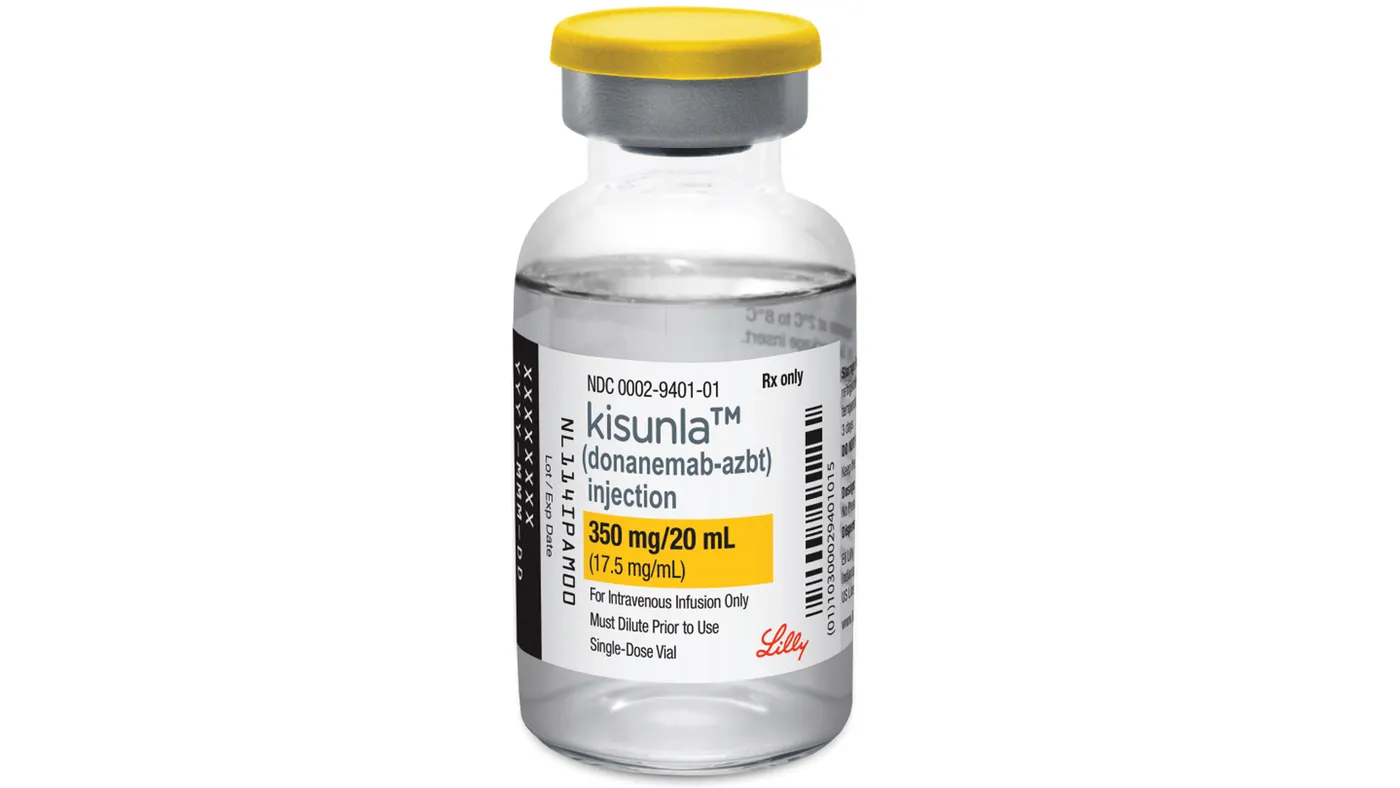
Article top image credit: Permission granted by Eli Lilly
NewAmsterdam says cholesterol drug may also combat Alzheimer’s
A “sub-study” of a late-stage clinical trial found the drug, obicetrapib, significantly reduced levels of a certain type of tau protein linked to Alzheimer’s development.
By: Jacob Bell• Published June 9, 2025
Findings from a large clinical trial strengthened the case that an experimental drug for cardiovascular illness could also be useful in combating Alzheimer’s disease.
The drug, known as obicetrapib, is designed to block a protein that regulates cholesterol levels. Three late-stage studies have shown patients treated with it experienced significant reductions in LDL — or “bad” — cholesterol. The drug’s developer, NewAmsterdam Pharma, disclosed near the end of last year data from the latest of those experiments, titled “Broadway,” which suggested obicetrapib may also offer some protection from heart disease-related complications like strokes.
In June 2025, NewAmsterdam highlighted results from a pre-planned “sub-study” of Broadway focused on biological markers of Alzheimer’s.
There, the thinking is that obicetrapib’s lipid-lowering effects may safeguard neurons. Researchers believe high levels of LDL cholesterol in the brain contribute to the accumulation of amyloid and tau, the two proteins most closely linked to Alzheimer’s. And notably, the gene APOE4, which creates a protein that transports cholesterol throughout the brain, is the strongest genetic risk factor for the disease.
NewAmsterdam said the sub-study evaluated 1,727 patients, including 367 who carried the APOE4 gene. The main measure researchers looked at was a type of tau protein called “p-tau217.” Over a yearlong treatment period, levels of this protein diminished significantly across both the broader group and the APOE4 segment, according to NewAmsterdam.
Previously, the company ran a small, mid-stage study wherein 13 patients at the early stages of Alzheimer’s were given obicetrapib and followed for about six months. The experiment showed reductions in two cholesterol derivatives with ties to the disease.
The new findings differentiate obicetrapib from other drugs and “strongly support a potential preventive strategy for Alzheimer's disease,” NewAmsterdam’s CEO Michael Davidson said.
The outcome stoked excitement on Wall Street, too. Matt Phipps, an analyst at the investment firm William Blair, wrote in a note to clients that there are “clearly caveats to this analysis” since the sub-study wasn’t conducted in Alzheimer’s disease patients. Even so, taken together with the data from that smaller trial, his team thinks these latest results are “intriguing” and may ultimately provide “significant long-term upside” to NewAmsterdam’s stock price.
Jefferies analyst Dennis Ding echoed that idea in his own note. While investors have been “lukewarm” on the opportunity in Alzheimer’s because of the slow uptake of Biogen and Eisai’s products, “this could be an interesting call option over time” and might attract interest from strategic dealmakers.
Others were even more bullish. Roanna Ruiz, of Leerink Partners, argued that the Broadway results not only help obicetrapib stand apart from other oral drugs and “PCSK9s” — a separate, closely watched class of cholesterol-lowering medicines — but they also allow NewAmsterdam to “pursue the blockbuster Alzheimer's market.”
TD Cowen’s Tyler Van Buren went as far as to write the data suggest obicetrapib “can potentially be the first preventative therapy for Alzheimer's disease patients.”
Article top image credit: Getty Images
Roche weighs whether speedy approval path is open for latest Alzheimer’s drug
In an investor presentation, executives hinted at the possibility of seeking an accelerated approval of trontinemab if it can significantly lower levels of amyloid in a Phase 3 trial.
By: Jonathan Gardner• Published Oct. 31, 2024
Roche may seek an accelerated U.S. approval of its experimental Alzheimer’s disease drug trontinemab if the therapy continues to show in testing it can significantly lower levels of a protein linked to cognitive decline, executives said in a presentation to investors in late 2024.
The Food and Drug Administration has been willing to grant speedy approvals to Alzheimer’s drugs that can reduce the amount of sticky amyloid protein in the brains of people with the condition. Roche could lean on that precedent to seek an abbreviated approval path, as the company plans to look for an opportunity to get trontinemab to market before the final readout from a Phase 3 trial, said Hanno Svoboda, the drug’s lifecycle leader.
Two Alzheimer’s drugs, Eisai and Biogen’s Leqembi and the now-withdrawn Aduhelm, gained initial approvals based on their effects on amyloid, although the FDA rejected a similar request from Eli Lilly before eventually clearing Kisunla. Trontinemab began Phase 3 testing in 2025, and previous study results suggested it could clear amyloid more quickly than Kisunla.
Unlike trontinemab’s predecessors, the drug is designed to more easily slip past the blood-brain barrier, which could theoretically lead to more powerful and precise drug effects at a lower dose.
The drug’s apparently speedy effects could allow Roche to evaluate a potential “low-frequency, patient friendly” maintenance dosing regimen to keep amyloid levels from rebounding, Svoboda said.
The results also indicated trontinemab treatment led to lower rates than other drugs of an imaging abnormality called ARIA that indicates brain swelling.
Article top image credit: Getty Images
In Alzheimer’s, Bristol Myers sees big promise beyond amyloid
Bristol Myers’ neuroscience heads are trying to make a name in brain drugs for a company best known for its cancer and cell therapy work.
By: Jacob Bell• Published May 21, 2026
Bristol Myers Squibb, like many of its big pharma peers, grew to be one of the world’s largest and most powerful drugmakers via deals.
More recently, the company has tried to find success in a new frontier. Neuroscience has long been considered one of the most challenging arenas of drug research, but Bristol Myers executives say they’re eager to establish a reputation there.
They already have a foothold, too, as a $14 billion acquisition that closed in 2024 gave the company a first-of-its-kind medicine for schizophrenia. While sales of that medicine, Cobenfy, have so far been modest, the company sees it as the backbone to a potential psychiatry franchise. Clinical trials are currently testing it as a treatment for bipolar mania as well as the psychosis and agitation associated with Alzheimer’s disease. That psychosis study is “highly anticipated by investors,” according to William Blair analyst Matt Phipps, and should produce results before the end of 2026.
BioPharma Dive spoke to Ken Rhodes and Laura Gault, the respective heads of neuroscience research and development at Bristol Myers, about the kinds of mechanisms they see as worthy investments. They also offered insights about the state of Alzheimer’s and psychiatry drug research and what needs to change for those fields to propel forward.
The following conversation has been edited and condensed for clarity.
BIOPHARMA DIVE: A recently published paper stirred a lot of conversation about the amyloid hypothesis. When thinking about the spectrum of potential ways to treat Alzheimer’s, what stands out to Bristol Myers?
GAULT: We are really looking to establish a diversified and balanced pipeline across neuroscience, but also within Alzheimer's disease. We're trying to have that balance between symptomatic and disease-modifying approaches, because they certainly have different risk profiles and [vary in the] cost and time that you put into the programs.
Amyloid is the only validated target to date for Alzheimer's disease. As we think about moving into that early space before patients become symptomatic … I think it's perfectly reasonable to target amyloid at this point.
We’re already in tau. Clearly, a lot of data suggests it is intimately involved in the progression of the disease, so we're looking forward to seeing that. And because we believe in tau, we are interested in potentially building out with more compounds that would target it.
In terms of thinking about other compounds, we certainly follow the literature. There's been a lot written, probably over the last 10 to 15 years, about the role inflammation plays in Alzheimer's. We're really interested in that, and thinking about how to develop a pipeline that might address that aspect of Alzheimer's.
RHODES: The causal biology linking amyloid to Alzheimer's disease is incontrovertible. Patients who have mutations that give you more amyloid production get Alzheimer's disease at earlier ages. And we see earlier intervention gives patients a better treatment response and clearly a beneficial outcome.
There are lots of reasons to believe in amyloid-targeting therapy. It’s one of those areas in Alzheimer's disease drug development where we have fantastic tools to make sure we're enrolling patients who have amyloid pathology in our trials, and we can use amyloid imaging and now plasma-based biomarkers as a way to determine whether or not our therapies are impacting the underlying disease biology.
What's different about our tau program is it targets a region of tau most intimately associated with formation of nerve fibrillary tangles and most closely associated with the spread of tau pathology and the progression of cognitive impairment. We believe, of all the epitopes that have been tried and not been successful, we're in the region that gives us the best chance to prove the tau hypothesis.
What outside of tau and amyloid has caught your attention as a potentially worthwhile investment? For example, you have one program going after the protein “EIF2b.”
RHODES: Neuroinflammation. Pick up any recent paper on Alzheimer's disease genetic associations, you'll find the next, latest and greatest genes all impact inflammatory processes in the nervous system. Pick up any recent paper reporting biomarker linkage to Alzheimer's disease progression, you'll find markers associated with inflammatory biology.
Laura Gault, Bristol Myers' head of neuroscience development
Permission granted by Bristol Myers Squibb
That gives us a strong grounding in causal human biology to support going after neuroinflammation as a way to modify the course of Alzheimer's disease or provide symptomatic relief.
EIF2b is another one of those targets and pathways around the integrated stress response that has strong grounding and pathology in the brains of Alzheimer's patients. That, for us, was a good reason to go after it.
GAULT: You're not going to become a leader by being a follower. So, while amyloid is probably more derisked than some of the newer targets, we’re taking a comprehensive approach [and] are willing to move into a new area if we believe it's supported by science.
It sounds like you’re saying Bristol Myers isn’t necessarily sitting on its hands waiting for someone else to discover the next genetically validated target. You’re doing some of that work yourself and scouring the field for the best ideas.
RHODES: One thing we're also heavily invested in is making sure we have the tools in place to do a good clinical experiment and not head down any of the paths that weren’t productive in earlier Alzheimer’s disease clinical trials. Do we have the biomarker tools to know our drug is reaching the brain, that it's engaging the target biology, that we can measure? Do we have a good, rational basis for knowing we're studying the right doses?
Those later-stage Alzheimer’s experiments are usually complicated and incredibly expensive. What do you look for, other than the obvious safety and effectiveness, when deciding whether to push a molecule into more arduous studies?
RHODES: We think a lot about how to do the best experiment. We [want to] really know the mechanism, know that we're engaging it, and have a good basis for interpreting the outcome of the trial, whether it's positive or negative.
It’s crucially important to have all the tools in place so that, when we hand candidates over to Laura’s team, they have what they need to actually do that good experiment. We focus a lot on: How do we get as early a read as possible on whether we're on the right track?
GAULT: Taking a molecule that hasn't been in humans and going to [proof-of-concept testing], that's a huge step. There are smaller steps we can take before we get to that big, expensive study: showing the drug gets into the brain, showing the drug is engaging the target, showing that when that target is engaged, it's doing what we would expect it to do based on how we understand the biology.
As you go through development, and you look at each of these steps, you find reassuring pieces of evidence. Each of those is increasing your probability of success a bit. Each of those is increasing our willingness to invest further in the program.
There have been debates about a potential efficacy ceiling for amyloid antibodies. How are you thinking about the next disease-modifying Alzheimer’s drug? Is it a more powerful anti-amyloid therapy, or is it something that pairs really well with other drugs? How are you going to beat what’s available?
GAULT: The easy answer to your question is yes, both.
To say that we’ve reached the ceiling on amyloid and what it can deliver when you target it, I think is not correct for a couple of reasons. One is, the way that we've looked at the impact of these anti-amyloid antibodies is by looking over relatively short periods – 18 months. When you continue to follow people, over time the difference between placebo and drug widens.
So, in a way, what we see in the clinical trials is just the beginning of the effect.
It's also the case that the current medications are what we call naked antibodies, so they don't have anything attached that helps them easily get across the blood-brain barrier. In those circumstances, a very small amount actually crosses, probably 0.5%. There's a whole generation of antibodies in development, trontinemab from Roche being in the lead, that are attaching these anti-amyloid antibodies to a transporter [so they can cross this] barrier and increase levels.
When those are up and running, I think it's reasonably likely to see we haven't reached an efficacy ceiling.
Do we think that an anti-amyloid agent is going to be the full answer to Alzheimer's? That is an interesting question. I would say, once somebody is symptomatic, probably not.
As you get later in the course of the disease and patients are having symptoms, that's when you see the other pathologies coming into play. You've got a lot of inflammation at that point. You have tau accumulation. Expecting that an amyloid-lowering drug alone is going to cure the disease or stop the progression is probably not reasonable. You see the field believes that generally, because they're taking additional bets on tau and in other areas.
RHODES: What we're seeing now, with the advent of these shuttle technologies, is much more antibody in the brain. Molecules are entering through the capillary network, instead of through larger vessels where there tends to be a lot of amyloid.
The benefit-risk profile — in terms of clearing amyloid from the brain without some of the side effects that have been associated with earlier anti-amyloid therapies — seems to be greater. It may let us push to higher doses. It may let us more rapidly remove amyloid plaque without some of those risks.
The other point, which is, in many ways, the most important one, is when we look at how we're using anti-amyloids today, we're treating Alzheimer's patients [who are] almost at the maximum of amyloid accumulation.
We can always ask the question: is that just too late to really get the maximum benefit from an amyloid-targeting therapy? I firmly believe if we can walk back the initiation of treatment to much earlier … then you can start to realize the maximum benefit. How much? I don't think we've seen the ceiling yet.
Early testing then becomes vital. But that still remains challenging. How do you factor such obstacles into your decisions? Until testing gets better, does it make sense to throw a bunch of amyloid programs at the wall hoping any of them stick?
Ken Rhodes, Bristol Myers’ head of neuroscience research
Permission granted by Bristol Myers Squibb
RHODES: The first question we have to answer is: How do we identify those pre-symptomatic patients at risk for developing disease, and can we get a sense of how quickly they might progress? This is where all the biomarker discovery work happening across the Alzheimer's disease space … is so critical to the future of developing therapies.
Just imagine a future where you go to your doctor for an annual checkup and get a panel of plasma biomarkers that not only tells you your risk for diabetes or cardiovascular disease, but gives you a risk score for Alzheimer's disease. Using those biomarkers, you could decide with your doctor whether to start you on a potential therapy that could prevent or delay the time to which you might develop the disease. Incredible investments are being made in biomarker discovery.
And they are going to be absolutely essential, because I don't think we can run a 10-year clinical study in patients if we don't know their risk of disease progression. That would be an extremely large and expensive trial to run. But I don't think those types of studies are too far off, given the way the biomarker field is evolving. I'm pretty optimistic.
We're already seeing some of our peer companies starting to try and run trials in this very early population. I think we'll get there.
One area that has even fewer biomarkers than Alzheimer’s is psychiatry, which you invested heavily in by acquiring Cobenfy. How are you viewing the translational research aspect of psychiatric disorders?
GAULT: In psychiatry, I can't point to a large dataset that's available to help us understand a biomarker approach. For BMS and for other companies interested in this space, we're going to need to collaborate in a pre-competitive way to establish those datasets to help guide decision making.
That said, there are some biomarkers in the psychiatry space that can be used today. EEG is an example where you can look preclinically, in animal models, and see changes in the brain circuitry that are elicited by administration of a drug. Then you look in people to see if there are corresponding changes. It helps you understand if you're getting the drug into the brain, and if you're engaging the downstream target in the way you would like to.
EEG is something used already by some companies to be successful. We're certainly thinking about that for elements of our portfolio. There are other things — functional MRI, resting state MRI — that may give some view into the circuitry of the brain and how it's operating and how your drug changes things.
RHODES: This initiative in the pre-competitive space … is going to be extremely valuable. It's early, though I think the correlations they're trying to draw between blood-based markers, cerebrospinal fluid markers, EEG and other endpoints that could help with the translational piece are going to prove to be extremely valuable.
Cobenfy-related programs account for about half of your neuroscience pipeline. On Wall Street, there have been concerns about the drug’s commercial viability. Has Cobenfy’s performance caused you to change or tailor your interest in psychiatry and what drugs you’re willing to invest in?
GAULT: It hasn't changed at all. We have a high degree of confidence in Cobenfy and what it can deliver. We're excited to continue to build that breadth in our pipeline in psychiatry and neurology moving forward.
We'll learn from Cobenfy as these trials read out. But at this point, there is no reason not to be confident that the data will be positive.
Article top image credit: Permission granted by Bristol Myers Squibb
The state of alzheimer's research
Three FDA-approved Alzheimer's drugs targeting amyloid proteins have restored industry confidence in developing treatments for this complex disease. With Alzheimer's affecting over 7 million Americans and economic costs projected to reach nearly $1 trillion annually by 2050, big drugmakers are racing to capitalize on this therapeutic opportunity.
included in this trendline
Biogen data highlight promise, questions surrounding tau-targeting Alzheimer’s drugs
An Alzheimer’s startup emerges with $175M in venture backing
GSK ends brain drug alliance with Alector
Our Trendlines go deep on the biggest trends. These special reports, produced by our team of award-winning journalists, help business leaders understand how their industries are changing.