Dive Brief:
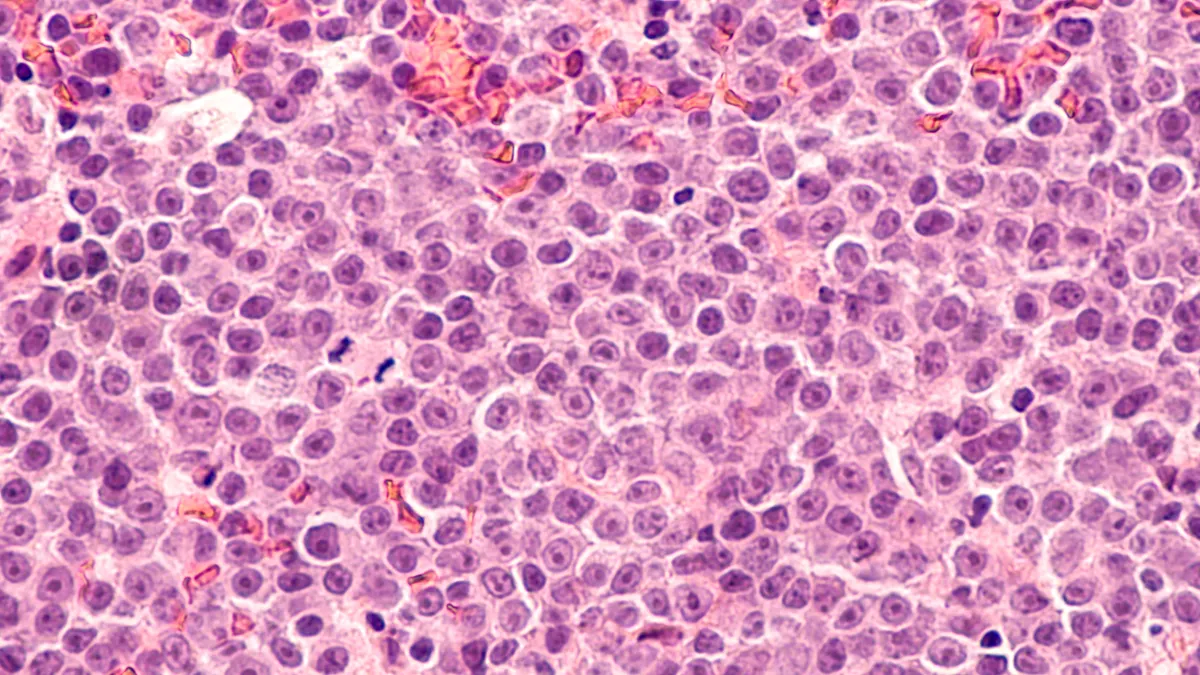
- A combination of Genmab and AbbVie’s bispecific antibody Epkinly and standard chemotherapy cut the risk of disease progression or death by nearly half when compared to chemo alone in a Phase 3 trial in newly diagnosed lymphoma patients, the companies said Monday.
- The data in diffuse large B-cell lymphoma surpassed investor expectations, bested a rival Roche treatment and could significantly propel sales of Epkinly, one Wall Street analyst said. Epkinly is now on track to become the first drug of its kind to gain approval in first-line DLBCL, the most common form of lymphoma.
- Genmab splits ownership rights to Epkinly with AbbVie and reported $312 million in global net sales on the therapy in the first half of the year. Company shares jumped as much as 14% following the news, which came during trading hours of Genmab’s U.S.-listed shares on Monday.
Dive Insight:
Epkinly is one of many bispecific antibodies that have begun to transform cancer care, particularly in blood malignancies like lymphoma. The drug and others like it latch onto one protein on diseased B cells and another found on T cells, stimulating an immune attack on tumors.
These treatments are also associated with immune-related side effects that have made them challenging to deliver outside of academic medical centers, as inpatient monitoring is sometimes recommended. Still, many healthcare providers have developed ways to evaluate patients’ side effects remotely, helping expand use.
Drugmakers have additionally been pushing to make bispecific cancer drugs available earlier on. Epkinly, for instance, initially gained an accelerated U.S. approval in the third-line setting in 2023. The new findings could yield a standard clearance in newly diagnosed patients.
The trial enrolled 900 people at intermediate or high risk of death. They were randomized to receive a widely used chemotherapy combination called “R-CHOP” as well as either Epkinly or a placebo. The drug’s main objective was to extend lives or slow disease progression. By that measure, those who got Epkinly had a 51% relative risk reduction, investigators found.
That number exceeded investor expectations of around a 40% relative risk reduction, some analysts wrote. And though cross-trial comparisons can be misleading, the data also topped what was delivered by a Roche product, the antibody-drug conjugate Polivy, in clinical testing.
Genmab and AbbVie said they will discuss the results with regulators and present them at a future medical meeting.
The findings are a “blockbuster affirming” moment, Leerink Research analyst Asthika Goonewardene wrote in a note previewing the trial results. TD Cowen analyst Yaron Werber, meanwhile, wrote following the readout that Epkinly “should become the undisputed” standard of care, enabling it to, eventually, record sales of $3 billion a year.
Jefferies analyst Benjamin Jackson wrote in a separate note that his firm’s forecast of $1.4 billion in peak sales in first-line disease alone “could prove conservative.” He cautioned, though, that achieving those figures “will ultimately depend on the partnership's ability to gain market share.”
Other competitors are looming, among them Roche’s Lunsumio, which has completed a Phase 2 trial. AstraZeneca’s Calquence, a different type of drug, is being tested in a Phase 3 trial in frontline disease. Results are expected early next year.