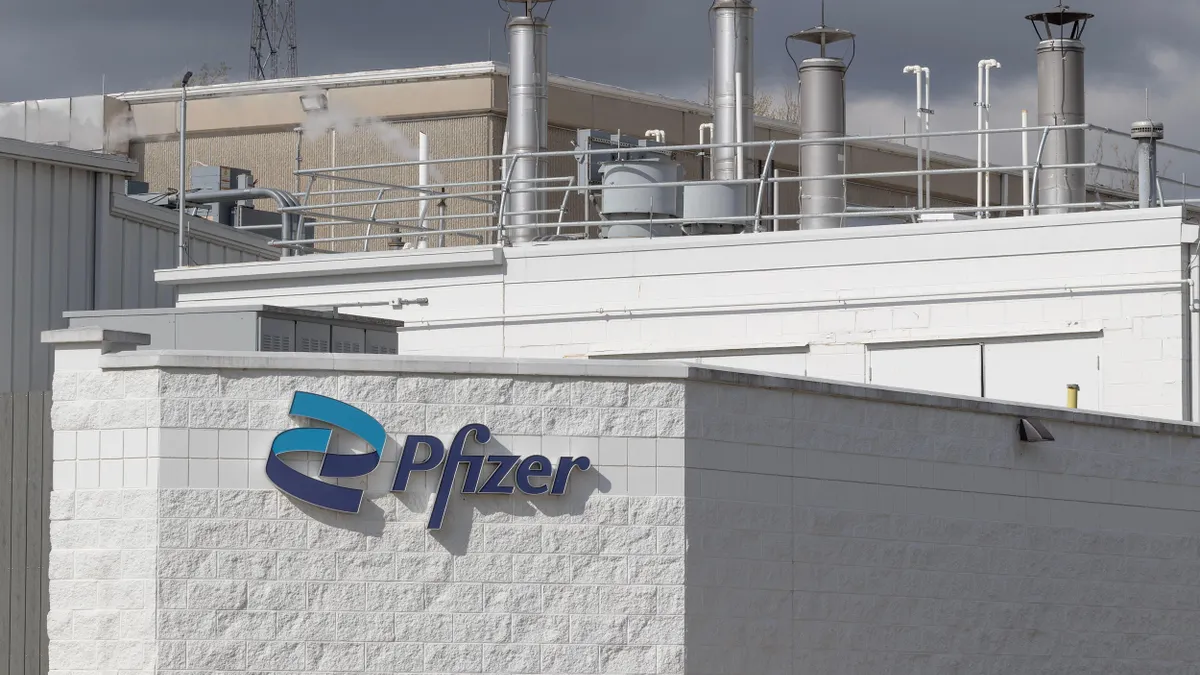
Pfizer is the latest multinational pharmaceutical firm to turn to China for help discovering new medicines, striking late Thursday an expansive alliance with Innovent Biologics potentially worth more than $10 billion.
The deal involves up to 12 cancer drugs, eight of which are early-stage prospects from Innovent, while the remaining four are “Pfizer-proposed” discovery programs. All are newer types of “antibody-drug conjugates” or “multispecific” antibodies — technologies that are becoming more popular in treating cancer.
Innovent will handle discovery work and early research, with Pfizer taking over global development after Phase 1 testing. Pfizer will get worldwide rights, and cover all the costs for four programs. It’ll gain ownership outside of greater China to another four of those drugs, and then will equally split rights and development costs with Innovent on the other four prospects in the deal.
All told, Innovent is receiving $650 million up front and is eligible for another $9.85 billion in downstream payouts should a variety of milestones be met. The Suzhou, China-based company would get royalties on the sales of any approved medicines emerging from the deal, too.
The alliance is the latest example of the growing relationship between U.S. and European drugmakers and their China-based counterparts. Over the last few years, an explosion of dealmaking has occurred as the fast rise of China’s biotechnology sector has yielded a wealth of drug prospects that can be quickly readied for human testing. BioPharma Dive data show that more than 60 licensing deals were struck last year, and more than two dozen have followed in 2026.
These deals are causing consternation in biotech circles and sounding alarm bells in Washington D.C., as they’ve threatened the U.S.’ long-held edge and given China growing influence over pharmaceutical development. Yet they’ve continued apace without interference and, of late, have started to broaden in scope, with companies in China and the U.S. forming pacts that cater to their respective advantages, discovering medicines and selling them globally.
Since last July, six pharmaceutical firms — GSK, Takeda, AstraZeneca, Eli Lilly, Bristol Myers Squibb and now Pfizer — have inked multidrug partnerships worth at least $8 billion, data show. Innovent has been involved in three of those deals, which, combined, give the biotech the chance to earn upwards of $30 billion.
“By combining Innovent’s discovery and early clinical development with Pfizer’s global research and development and commercialization capabilities, we have an opportunity not only to strengthen our pipeline, but to accelerate the delivery of breakthroughs that can redefine standards of care and make a meaningful difference in patients’ lives,” said Jeff Legos, Pfizer’s chief oncology officer, in a statement.
Prior to this latest transaction, Pfizer had already been particularly active, striking three other one-off agreements since the start of 2025. The Innovent deal marks its biggest bet yet on China-discovered medicines, as well as a way to sizably build up an oncology portfolio it views as important to its future business.
Pfizer and Innovent didn’t provide specific details on the programs involved in their deal. But they did say the assets include antibody-drug conjugates with “novel differentiated” toxic payloads, and multifaceted antibodies with “unique” features and designs.