Bionyra, a biotechnology company building new biologics to treat immune diseases, emerged from stealth Monday with $165 million.
Co-founded last year by Sofinnova Partners and Frédéric Marrache, formerly the head of immunology research and development at Sanofi, the company is sprinting into clinical testing with three assets it licensed from China and U.S.-based companies for conditions like inflammatory bowel disease and atopic dermatitis.
Two of its drugs are already in Phase 1 studies. BYN-002 is a monoclonal antibody that targets TL1A, an important target drugmakers are chasing to treat IBD. Marrache said the experimental asset has an extended half-life that could make it more effective than approved therapies.
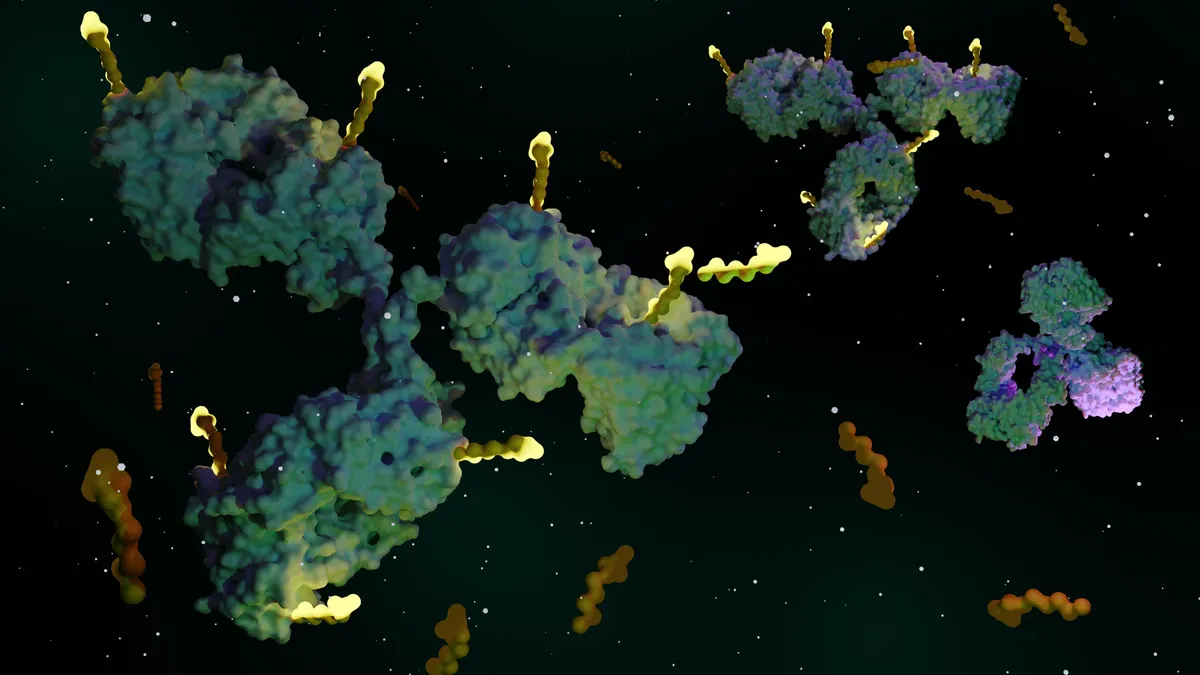
The other is BYN-003, a bispecific antibody that combines TL1A with a subtype of another popular anti-inflammatory target, IL-23. “It builds, as a backbone, on BYN-002,” said Marrache, who claimed that BYN-003 is the only bispecific molecule for these kinds of diseases that “already has some level of clinical validation for one of its building blocks.”
Its last asset, BYN-001, is an anti-IL-25 monoclonal antibody that it plans to study in atopic dermatitis and other inflammatory conditions. Bionyra is planning on making BYN-001 a quarterly or twice-yearly injection, which Marrache said “sets up very well” opportunities to combine it with approved therapies.
Several classes of drugs have been approved to treat immune diseases, among them IL-23 inhibitors such as Skyrizi and Tremfya, anti-integrin therapies such as Entyvio and JAK inhibitors like Rinvoq. But all come with their own challenges. Some patients may not or only partially respond to treatment. The Food and Drug Administration has put black box warnings on JAK inhibitors, leaving them as a last line of treatment for patients.
Still, up and coming immune drugmakers see opportunities to offer something different. Pharma has backed that approach, paying billions to acquire startups making bispecific antibodies and other biologics to more effectively treat conditions like IBD and psoriasis.
Marrache, who spent nearly a decade overseeing Sanofi’s growth in immunology R&D, said he sought targets that his former company wasn’t necessarily pursuing. “One of the key drivers for this project was accelerating the development of drugs, and I think the biotech space does have an edge here when it comes to getting things done,” he said.
The $165 million Series A round was co-led by Sofinnova and Jeito Capital, both of which have made sizable investments in immune drugmakers in recent years. Other investors include Arkin Bio, Sanofi Ventures, Sixty Degree Capital, Vives Partners and Apollo Health Ventures.
“You’re clearly on the next generation of biologics, so here are these very established lines where we will try to beat the efficacy ceiling,” said Mehdi Ainouche, a partner at Jeito.