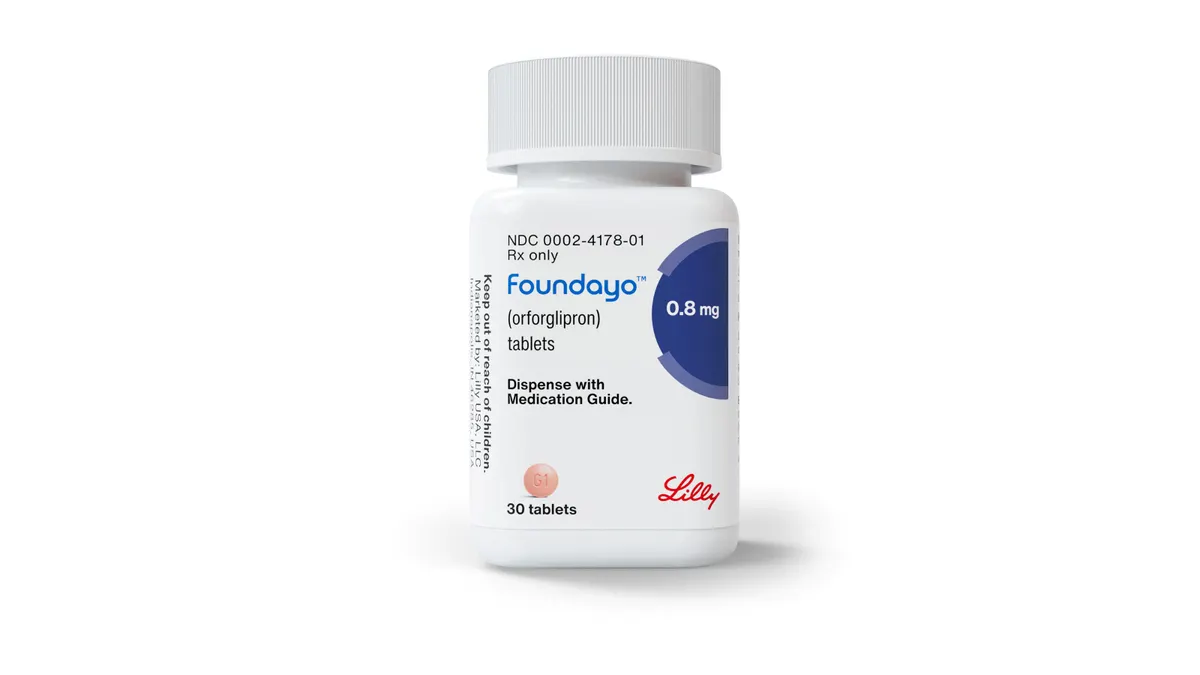
Eli Lilly must evaluate whether its new obesity pill Foundayo poses any liver-related safety risks in ongoing clinical trials as a condition of its Food and Drug Administration approval, according to newly disclosed federal documents.
The FDA approval letter asks Lilly, in a nearly completed study of people with diabetes, to assess and statistically analyze any unexpected cases of elevated liver enzymes meeting certain clinical safety criteria, liver harm and discontinuations due to liver-related side effects. The letter also requests that Lilly submit data related to “unexpected serious risk” of heart attacks and other cardiovascular problems.
The letter comes amid the launch of the second GLP-1-targeting obesity pill in the U.S. in four months. Novo Nordisk’s Wegovy pill entered the U.S. market in January, igniting a furious marketing battle. Novo is looking for any edge to protect its first-mover advantage, especially as the company’s long-term outlook dims. Safety could be one factor it leans on.
That might not be enough, though, according to at least one analyst.
“Given the comments within the approval letter are not reflected within the Foundayo label, in addition to the existing body of clinical evidence behind [Lilly's] oral product, we do not expect this to drive incremental demand for Novo's oral Wegovy,” wrote Michael Leuchten, a Jefferies analyst who covers Novo, in a note to clients.
In a statement, Lilly said the FDA’s requirements are “consistent with the agency’s standard approach to ongoing safety evaluation of newly approved medicines.”
“No hepatic safety signals have been observed for Foundayo across the Phase 3 program to date,” the company noted.
A Lilly webpage intended for prescribers points to data from four Phase 3 trials in diabetes as well as Phase 2 trials suggesting there was no elevated risk of liver enzyme increases in people who got various doses of Foundayo when compared to a placebo, nor when compared to semaglutide, the active ingredient in Wegovy.
Regulators are seeking liver data from “Achieve-4,” an outcomes trial in people with diabetes intended to detect any difference between Foundayo and long-acting insulin in the risk of heart attacks, stroke, hospitalization for angina or cardiovascular death. Investigators are due to wrap up the trial this month and submit a report to the FDA in July.
The FDA decided data from “observational” studies that don’t include a placebo or comparator drug would be sufficient to determine whether there is increased liver risk. The agency is seeking data on liver enzyme elevations, any cases meeting a criteria called “Hy’s law” — a combination of biological markers that suggest the liver has been harmed — and cases of people who’ve stopped taking Foundayo because of liver impairment.
Leuchten poses that the FDA may have asked for the data because Foundayo was first approved for obesity before diabetes, unlike all other GLP-1 drugs currently on the market. Diabetes approvals require longer-term outcomes trials to be completed first to determine whether they’re safe for the heart and liver, clearing the way for subsequent obesity approvals, he wrote.