Dive Brief:
- The federal government set the maximum prices that Medicare will pay beginning in 2028 for 13 more high-expenditure drugs, expanding the number of medicines subject to cost control measures enacted under the Inflation Reduction Act.
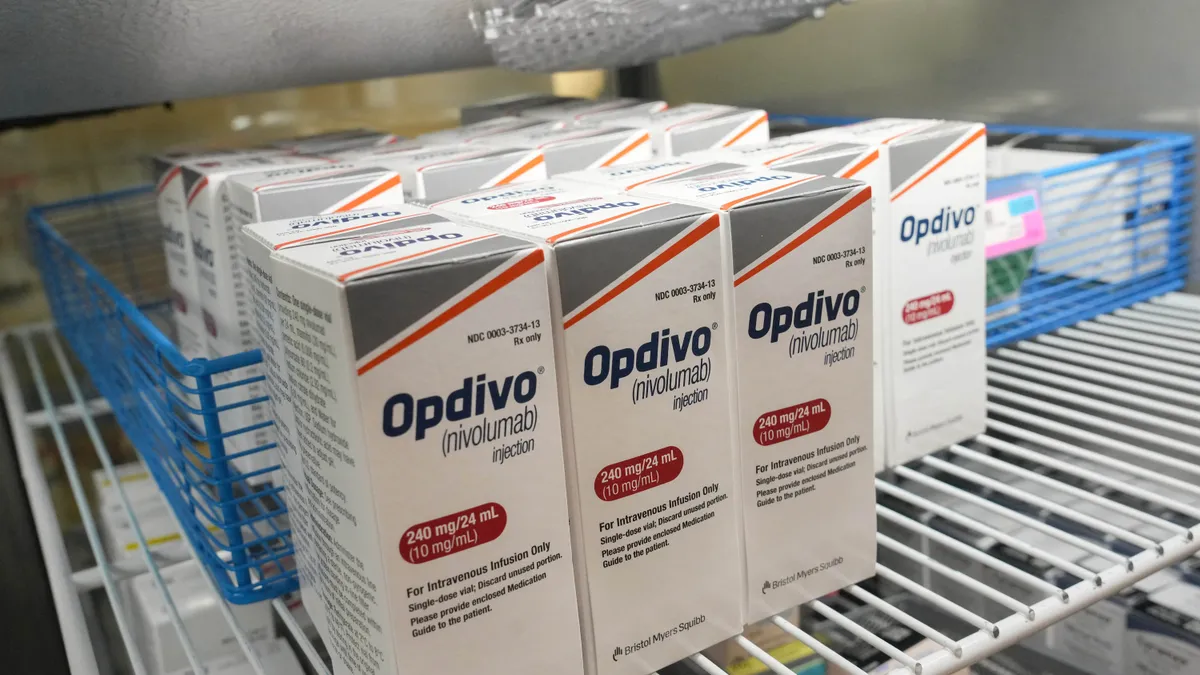
- Drugs subject to new price controls include products nearing or at the end of their patent-protected exclusivity and soon subject to generic or biosimilar competition. Older drugs include Eli Lilly’s old GLP-1 Trulicity, Bristol Myers Squibb’s rheumatoid arthritis drug Orencia and Novartis’ psoriasis drug Cosentyx.
- The 13 drugs are part of the third round of price negotiations conducted between drugmakers and the Centers for Medicare and Medicaid Services under the Inflation Reduction Act, the law signed in 2022 by former President Joe Biden. President Donald Trump has separately negotiated cuts intended to equalize prices between other countries and the U.S., but many of those may expire after Trump leaves office.
Dive Insight:
The Inflation Reduction Act started with Medicare price cuts on 10 drugs that took effect this year, expanding to 15 in 2027 and 2028, and 20 in 2029. The program could be expanded in the future under a Congress controlled by the Democratic Party seeking to reduce consumers’ drug costs.
Although 15 were in the initial cut of drugs being negotiated in the 2028 round, Pfizer’s Xeljanz and Roche and Novartis’ Xolair were removed because a generic drug entered at a lower price, and AbbVie’s Botox was excluded under a court order that said it was exempt under the law because it contains human plasma.
Boehringer Ingelheim’s diabetes drug Tradjenta, meanwhile, was placed on the list for a second year as part of a price renegotiation that allowed the company to raise its monthly price by $3.
Medicare drug price cuts for 2028
This round was the first to include drugs — Entyvio, Orencia and Cimzia — that are largely covered under Medicare Part B, the medical-care part of the program that pays for medicines injected or infused in physicians’ offices.
CMS estimated that, had the negotiated prices been in effect in 2025, Medicare expenditures for these drugs would have been $9.2 billion, or 45%, lower. If price rebates under Medicare Part D are included in the calculation, the expenditures would have been $5.5 billion lower, or 33%.
“Every year, millions of seniors leave the pharmacy empty-handed because they can’t afford their medication,” said CMS Administrator Mehmet Oz, in a statement. “The Trump administration is committed to use every tool at our disposal to negotiate fairer, more affordable prices to ease the burden on Medicare beneficiaries and help them get the care they need.”
The Medicare-set prices may not be in place for long for some drugs. Orencia’s main patent expired years ago, and Dr. Reddy’s Laboratories has asked the Food and Drug Administration to approve a biosimilar. Trulicity’s main patent expires in 2027 and Cosentyx’s in 2029, while biosimilar manufacturers are working on alternatives to both.