Eli Lilly is springing for yet another company acquisition, announcing Monday the purchase of a startup aiming to advance on currently available treatments for a kind of blood cancer.
Lilly will shell out up to $2.3 billion to acquire Ajax Therapeutics, a biotechnology company with a presence in New York as well as Cambridge, Massachusetts. The price tag includes an unspecified sum of guaranteed cash, as well as certain milestone payments tied to clinical and regulatory targets.
The deal is centered around an experimental drug Lilly believes might represent an improvement upon “JAK inhibitors.” Several of these therapies are used to treat cancers like myelofibrosis and polycythemia vera, or immune conditions such as rheumatoid arthritis. But they don’t change the course of the disease and, in recent years, have been linked to serious safety concerns. Lilly noted in a statement that many myelofibrosis patients discontinue treatment because their medication has stopped working.
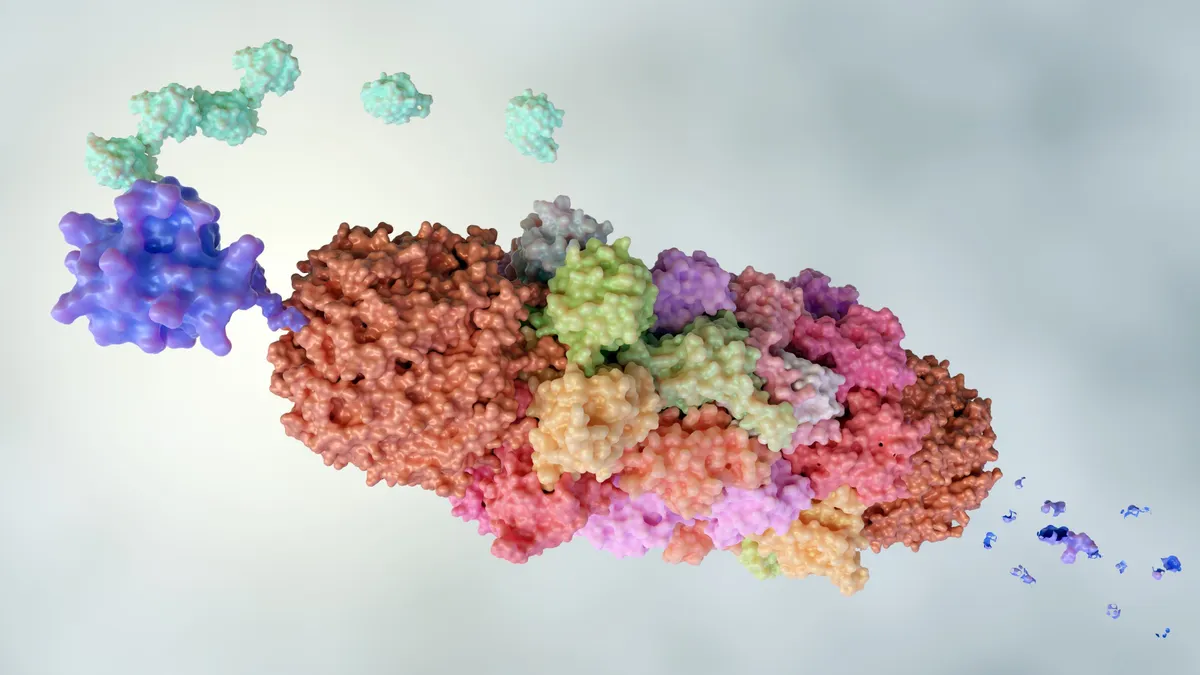
Ajax has designed a medicine that works differently. Whereas multiple approved therapies for myelofibrosis, like Incyte’s Jakafi, affect the JAK2 enzyme in an “active” state, Ajax’s AJ1-11095 binds to a different, “inactive” conformation. This specific feature, the company has said, should enable the drug to ward off resistance mechanisms that limit the effectiveness and staying power of other JAK inhibitors.
Lilly was a founding, strategic investor in Ajax and participated in a $95 million Series C round the startup closed in 2024. In its statement Monday, Lilly noted how Ajax’s drug could deliver “deeper and more durable efficacy” than existing treatments or provide a new option for people who stop responding to those therapies. A Phase 1 trial is underway in myelofibrosis patients who’ve previously been treated with a different JAK blocker. Lilly intends to pick a dose to move into further development this year.
Lilly previously developed a JAK2 inhibitor that didn’t work out, and Ajax hasn’t yet presented the kind of proof-of-concept data suggesting its therapy is different, wrote RBC Capital Markets analyst Trung Huynh in a Monday note to clients.
Still, the drug’s mechanism is “scientifically grounded and the strategic rationale is clear,” Huynh wrote.
The acquisition extends a dealmaking surge for Lilly, which has become the world’s most valuable pharmaceutical company due to the fast-growing sales of its obesity and diabetes drugs. Since the start of 2026, Lilly has acquired 5 companies working on medicines for cancer, immunological diseases and brain disorders. Four of those deals have come since the end of March.
Those transactions align with Lilly’s “land grab M&A playbook” of acquiring “differentiated, mechanistically compelling” assets early on, before data readouts that can make them more expensive, Huynh wrote.
Those transactions have come during an overall acceleration in industry acquisitions that have put 2026 on track to become one of the sector’s most active years ever for M&A, according to a recent report from the investment bank Stifel.
Two other deals — Sun Pharma’s acquisition of Organon and Ligand Pharmaceuticals’ buyout of Xoma Royalty — have already been announced this week.