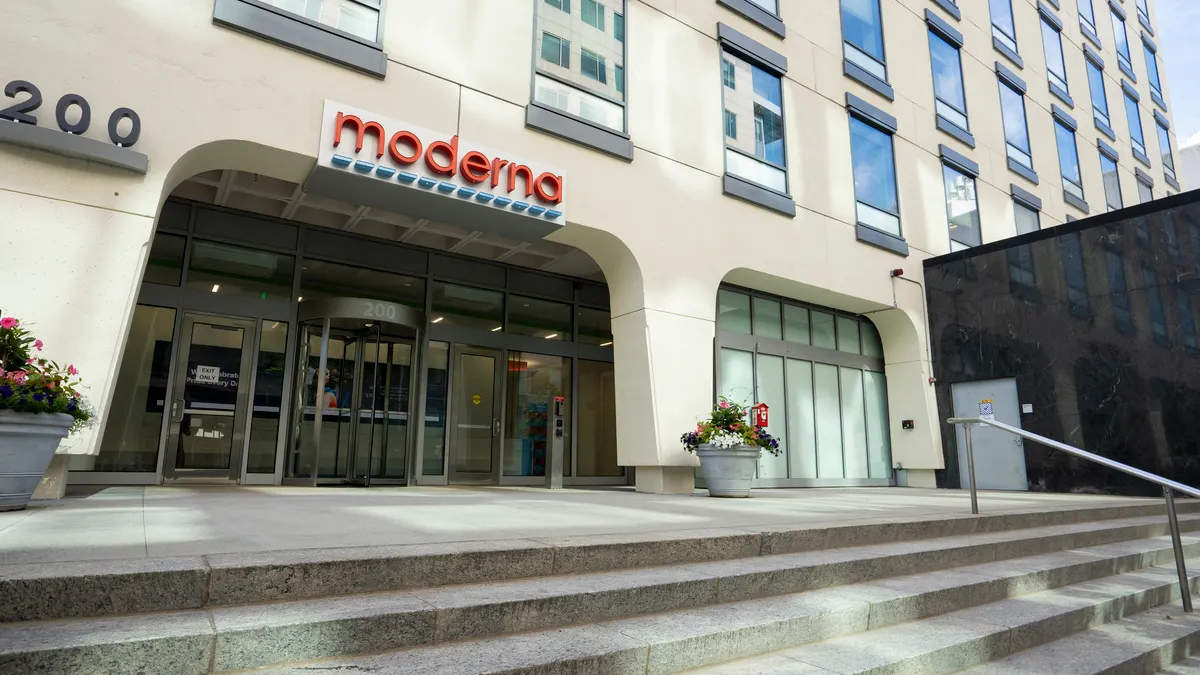
After bringing to market one of the world’s first COVID-19 vaccines, Moderna spent years watching its stock price steadily crumble. Sputtering sales, slashed revenue projections and trouble finding another lucrative product eroded investor confidence in the company’s direction. For much of 2025, shares once worth more than $400 apiece changed hands at less than $30.
An emerging kind of individualized cancer vaccine Moderna is developing with Merck & Co. appears to have restored Wall Street’s faith. On Wednesday, the partners said their vaccine, intismeran, succeeded in a highly anticipated Phase 3 trial in melanoma. While they didn’t disclose specific data, the findings nonetheless suggest that intismeran could become a multibillion-dollar melanoma treatment and potentially work against other tumors, too.
“This is a major win,” wrote RBC Capital Markets analyst Trung Huynh in a note to clients Wednesday.
The results represent a "landmark moment,” added TD Cowen analyst Tyler Van Buren, in a separate note.
Moderna’s share price rocketed by more than 170%, adding nearly $45 billion to the company’s market value in a single day. Shares of partner Merck and Moderna rival BioNTech, which is working on similar kinds of vaccines, also spiked by double digits. Some analysts revised their revenue projections for intismeran and expressed newfound optimism in the plethora of other trials Moderna and Merck are running. Yet others warned that investors’ euphoric response overshot intismeran’s actual sales potential — and may have overestimated the vaccine’s therapeutic impact, too.
Moderna shares bounce back after multiyear slump
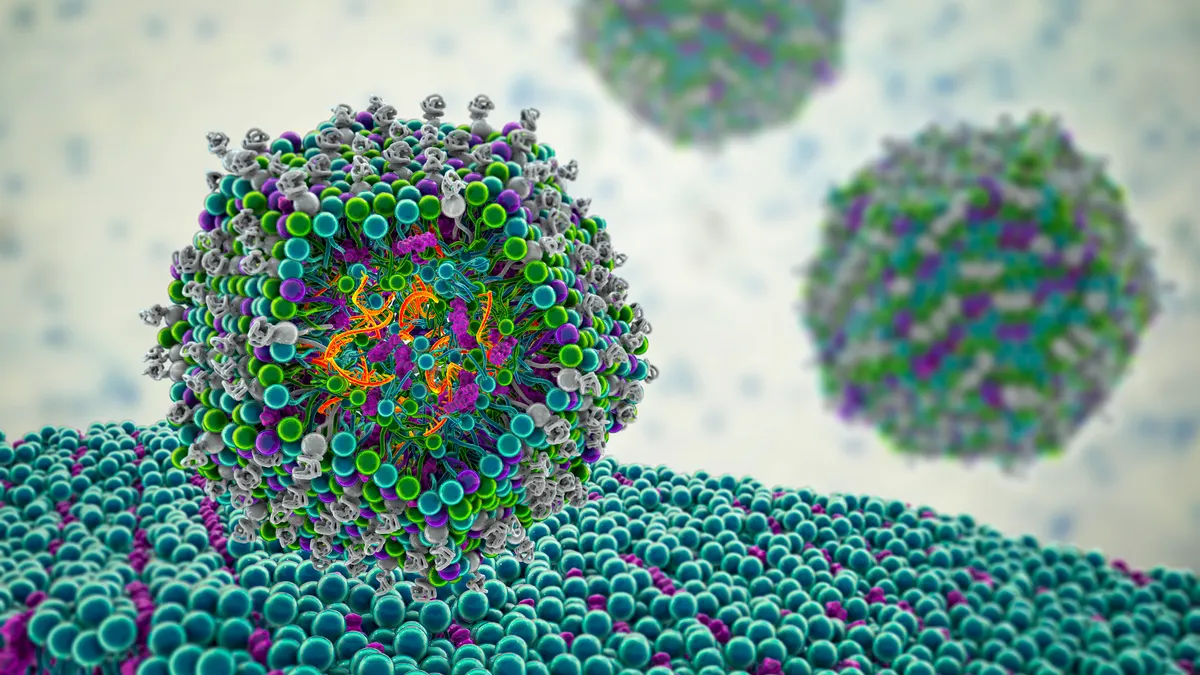
Intismeran is designed to spark immune responses against 34 unique protein flags, or “neoantigens,” found on the surface of a person’s tumor. Moderna and Merck tested it alongside the widely used immunotherapy Keytruda in the “adjuvant” setting following surgery to remove the tumor. The hope was that the combination might delay cancer recurrence longer than Keytruda alone.
Many drug combinations have failed to top immunotherapies like Keytruda over the years. And cancer vaccines have never succeeded in late-stage testing. But mid-stage results from Moderna and Merck suggested intismeran might be different. Data presented at the American Society of Clinical Oncology meeting earlier this year showed that the intismeran-Keytruda combination roughly halved the risk of relapse or death after five years of follow-up.
It’s unclear whether the combination replicated those results in the Phase 3 study. Detailed data will be presented at a future medical meeting. Still, the massive stock surges Wednesday — amounting to around $92 billion in collective gains — indicate Wall Street believes intismeran will become a pillar of melanoma care.
William Blair analyst Myles Minter upgraded his rating on Moderna’s stock. He also projected that the company could eventually earn $5.4 billion in peak annual sales in melanoma alone from its 50-50 revenue split with Merck on intismeran. Van Buren, meanwhile, called the readout a “significant validation” of the underlying technology intismeran is built on and predicted “impressive” results given that the trial was stopped at the first interim data check.
They and other industry watchers also lifted expectations for the nine ongoing trials Moderna and Merck are running. Mid-stage results in kidney and bladder cancers could come later this year or in 2027. A late-stage trial in lung cancer, one of the world’s most prevalent tumors, is underway as well. The sprawling development program now has “a halo” over it, wrote RBC’s Huynh.
Still, some analysts cautioned that Wednesday’s stock surge room left little, if any room for error. Evercore ISI’s Cory Kasimov, for instance, noted how Moderna’s new valuation “already prices in substantially more conviction than the data disclosed thus far supports.” Moderna management has said a 20% reduction in the risk of cancer recurrence or death is the “clinical benchmark” for the program. Kasimov’s team, though, believes that result would be a “meaningful step down” from previous results and that a 35% to 40% risk reduction would be “clearly differentiated.”
Leerink Partners analyst Daina Graybosch called the market reaction “overly optimistic" and claimed it had set expectations that will be “difficult to meet.” Those stock gains imply intismeran will generate far more in the adjuvant setting than Keytruda currently does. The per-patient manufacturing costs for a therapy like intismeran are likely higher than with a standard biologic drug. And predicting success in other indications might be a flawed assumption, she wrote.
Melanoma is “uniquely suited to a vaccine,” Graybosch added.