Dive Brief:
- An experimental cancer immunotherapy from Regeneron failed a late-stage study in melanoma in a surprise setback for the big biotechnology company’s oncology business.
- A regimen involving the prospect, fianlimab, and Regeneron’s marketed medicine Libtayo didn’t significantly delay cancer progression compared to Merck & Co.’s Keytruda in patients with unresectable metastatic melanoma. A high-dose combination held tumors in check for a median of 11.5 months, compared to 6.4 months for Keytruda recipients, a difference that narrowly missed statistical significance.
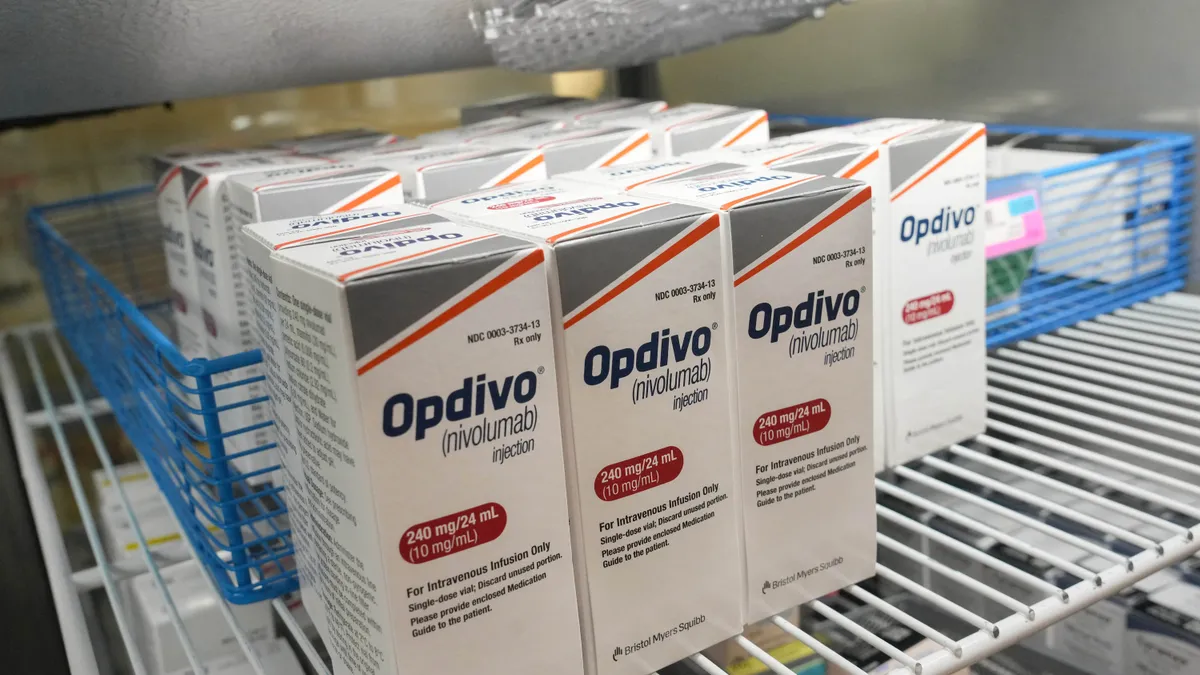
- Regeneron didn’t provide additional details but will present them at a future medical meeting. Another Phase 3 study testing fianlimab against Opdualag, a similar cancer immunotherapy sold by Bristol Myers Squibb, is ongoing. Company shares fell by double digits early Monday, erasing billions of dollars in market value.
Dive Insight:
Regeneron is one of the biopharmaceutical sector’s most valuable companies thanks to the runaway success of the eye drug Eylea and the anti-inflammatory medicine Dupixent. But it’s facing gnawing investor questions about what’s next. A high-dose version of Eylea hasn’t been selling as quickly as Wall Street had hoped, and multiple research setbacks and manufacturing-related delays have heightened pressure on the company’s pipeline to deliver.
Oncology is one area Regeneron has long looked to for future growth. The company has two cancer drugs approved, and one of them, the immunotherapy Libtayo, now generates more than $1 billion in annual sales. The hope has been that fianlimab, a different kind of immunotherapy, might elevate that figure even higher as a complementary treatment that could amplify Libtayo’s effects.
Fianlimab is aimed at a protein, “LAG-3,” that’s long been pursued by drugmakers as an immunotherapy target despite mixed clinical results. Earlier this month, Regeneron reported that Phase 2 results in lung cancer didn’t support further development. But Bristol Myers’ similar medicine, Opdualag, succeeded in melanoma, leading Wall Street analysts to expect fianlimab might similarly come through in a big Phase 3 study in the same indication. Analysts at RBC Capital Markets have estimated that positive results would yield a market opportunity worth anywhere from $1.6 billion to $1.8 billion.
The setback announced Friday, then, comes as a “disappointment” as “most had expected [fianlimab] to work,” wrote RBC’s Brian Abrahams in a Sunday research note. The failure could cause “skeptics to more vocally question the company’s overall direction and strategy,” Abrahams wrote.
Regeneron has late-stage studies underway for a new kind of blood thinner, and important pivotal tests are ongoing for other drugs in myeloma, obesity and certain immunological conditions. Yet the targets for many of those therapies are also being pursued by others, leading to some grumbling as to whether the company should be focusing on more “novel concepts” or a “different mix” of low- and high-risk programs, Abrahams added.
A handful of Eylea biosimilars could launch later this year, too, which could further depress Regeneron’s core franchise, wrote Leerink Partners’ David Risinger.
“We hope management will pursue external business development opportunities to enhance the company’s long-term growth outlook,” Risinger wrote.