Dive Brief:
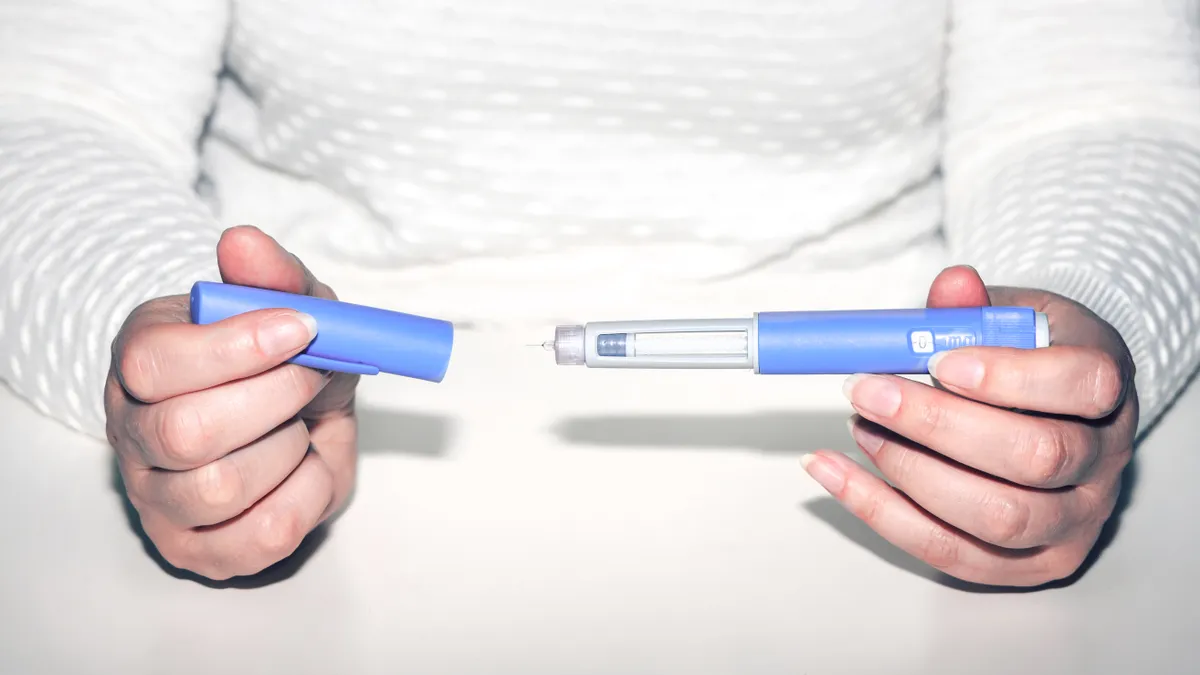
- Novo is beefing up its arsenal of metabolic disease drugs once again, announcing Tuesday it is paying Hengrui Pharma $300 million up front for rights to a weekly pill intended to compete with Eli Lilly’s sector-leading obesity shot Zepbound.
- Per deal terms, Novo is offering the prolific China-based drug developer up to $2.6 billion if the prospect, “HRS-1596,” achieves certain development, regulatory and commercial milestones. The partnership hands Novo rights to the pill outside of China, Taiwan, and other nearby commercial territories.
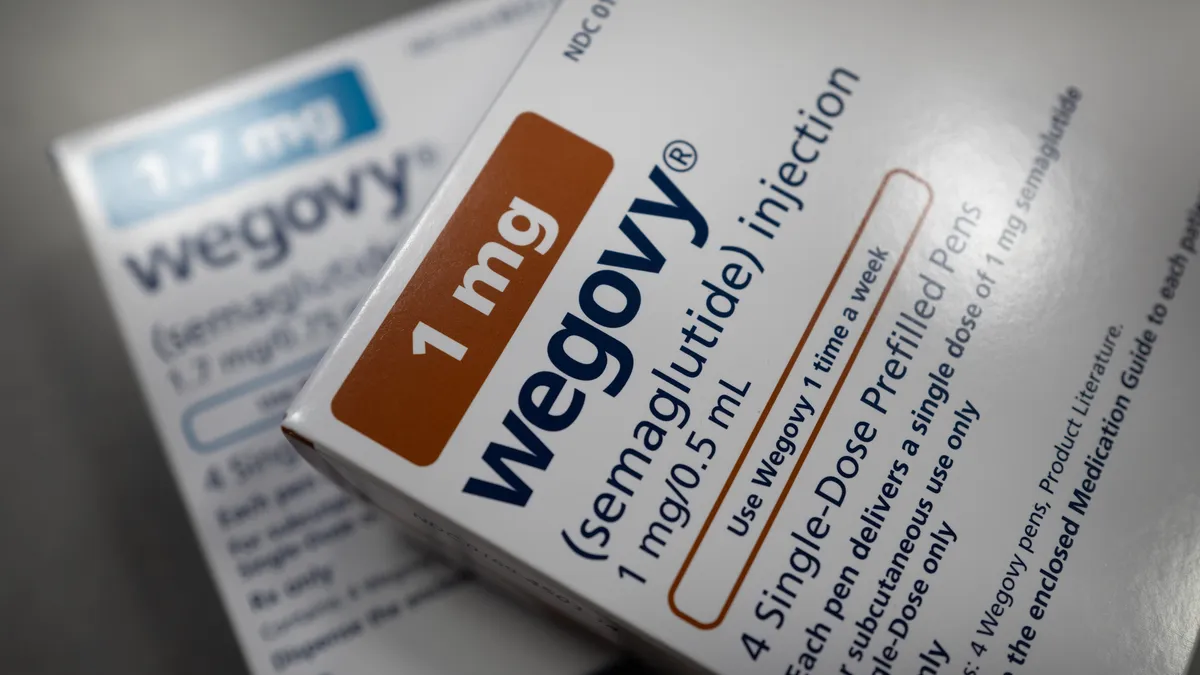
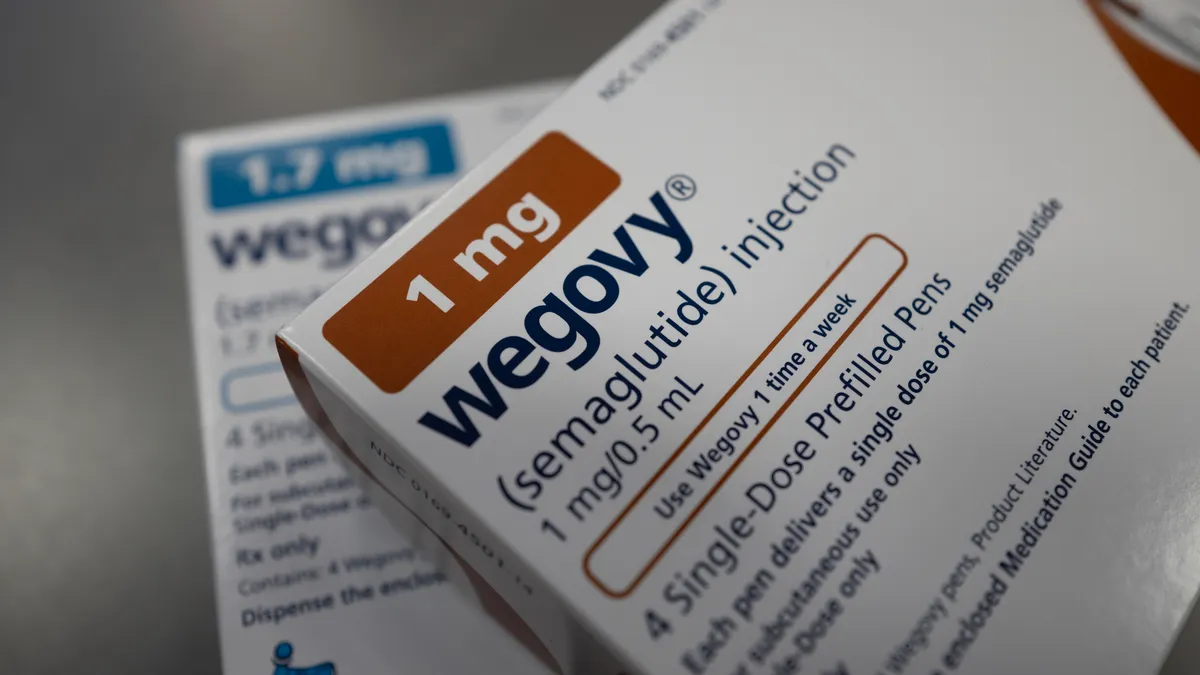
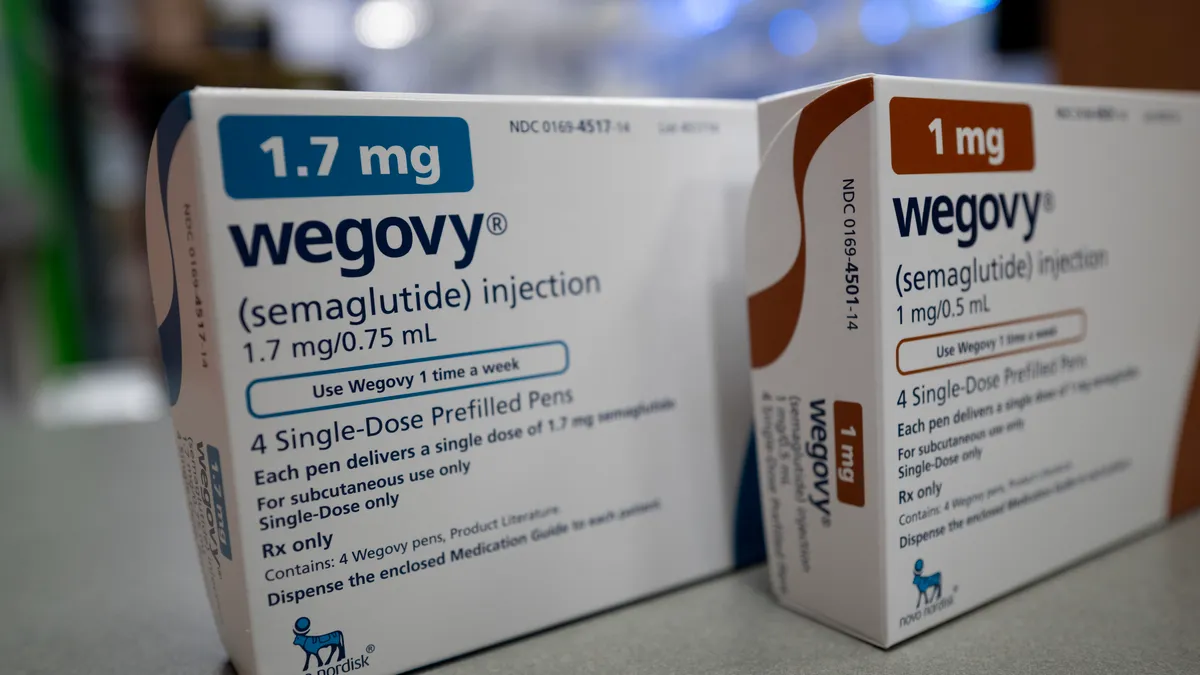
- The deal comes as Novo is seeking to calm investor fears about its future. Novo’s Wegovy could face generic competition in the early 2030s, and Zepbound has already steadily cut into the company’s share of the lucrative obesity drug market. HRS-1596 may not address those concerns, as it has yet to be tested in humans and could be years away from a regulatory clearance.
Dive Insight:
Novo has spent the past year or so trying to reclaim ground it lost to Lilly. That strategy has included installing a new CEO and set of boardmembers, laying off thousands of workers and signing a series of deals to acquire next-generation weight loss medicines.
In obesity, Novo and Lilly have established that GLP-1-targeting drugs can stimulate substantial weight loss. But newer medications could be more tolerable, convenient or involve less-burdensome maintenance regimens to keep weight down.
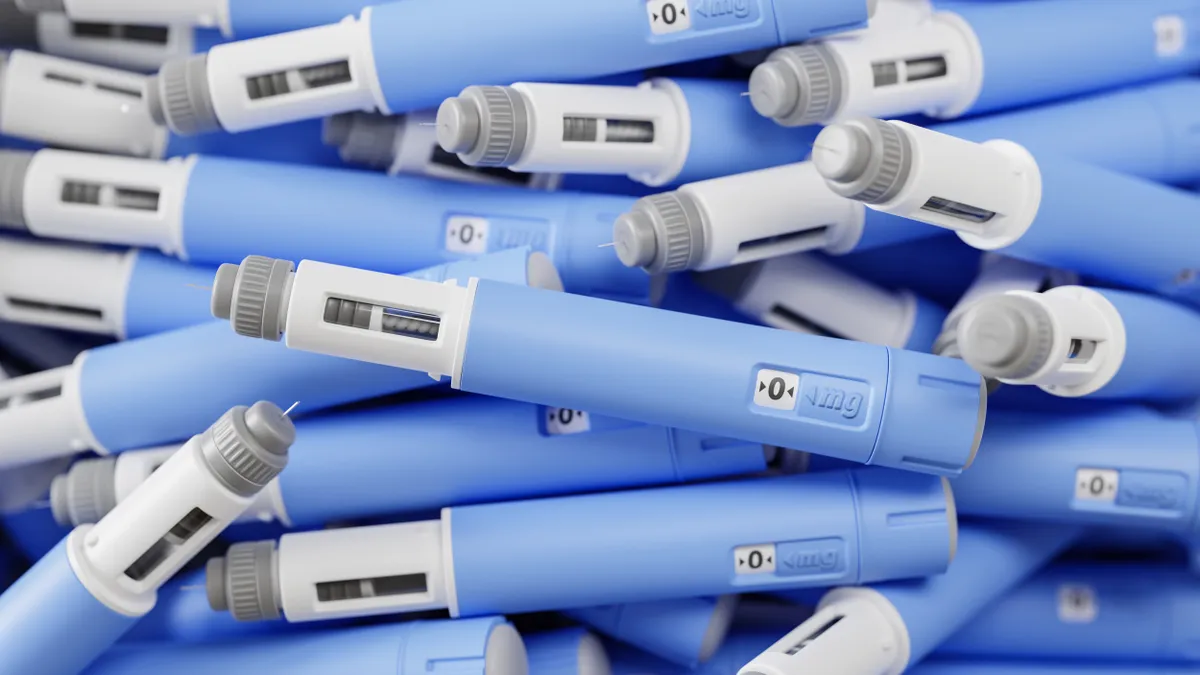
HRS-1596 could be one such advance, as it’s an oral medication that could be dosed less frequently than the daily pills now available. But HRS-1596 has a long way to go, as the drug — which, like Zepbound, acts on GLP-1 as well as a second metabolic hormone called GIP — was described in a statement as “Phase 1 ready.”
Earlier this month, Novo purchased from biotech Kallyope three experimental obesity drugs that work differently than existing weight loss medicines. It also made a deal with a biotech called Orbis Medicines for a type of peptide drug that could be packaged into a pill more easily.
Hengrui, meanwhile, has in recent years emerged as a popular pharmaceutical partner. Data compiled by BioPharma Dive show that the firm has signed six licensing deals with U.S. or European drugmakers since the start of 2025, the most of any China-based biopharmaceutical company. And prior to that, Hengrui became the main source of an obesity drug pipeline amassed by high-flying startup Kailera Therapeutics.
Leerink Partners analyst David Risinger, who covers Kailera, wrote in a client note that Kailera might have had right of first refusal on HRS-1596. He also noted that because the drug hasn't been tested in humans, there is “limited data available to assess its profile.”