Dive Brief:
- Novo hopes to launch more than five “multi-blockbusters” by 2030 and have its current pipeline deliver more than $23 billion in annual sales in 2035 as the company prepares to absorb the loss of patents for its foundational obesity and diabetes medicine semaglutide.
- Outlined at a “capital markets day” on Monday in London, the strategic plan is a move by Novo to win back investor confidence after losing its leadership position in obesity to rival Eli Lilly. The erosion of Novo’s market share has led the company to lose more than two-thirds of its value over the last couple of years.
- Novo’s plans didn’t appear to excite investors, though, as shares fell another 8% in Monday morning trading. Upcoming drug launches like the next-generation obesity shot CagriSema may not be able to provide the immediate growth Novo shareholders hope for.
Dive Insight:
Novo ushered in a new era for obesity care when its daily GLP-1 shot for diabetes, liraglutide, was cleared for weight loss as Saxenda 12 years ago. Much has changed since, as weekly injections have soared in popularity and Lilly has overtaken Novo with a dual-acting medication it markets as Zepbound for obesity and Mounjaro for diabetes.
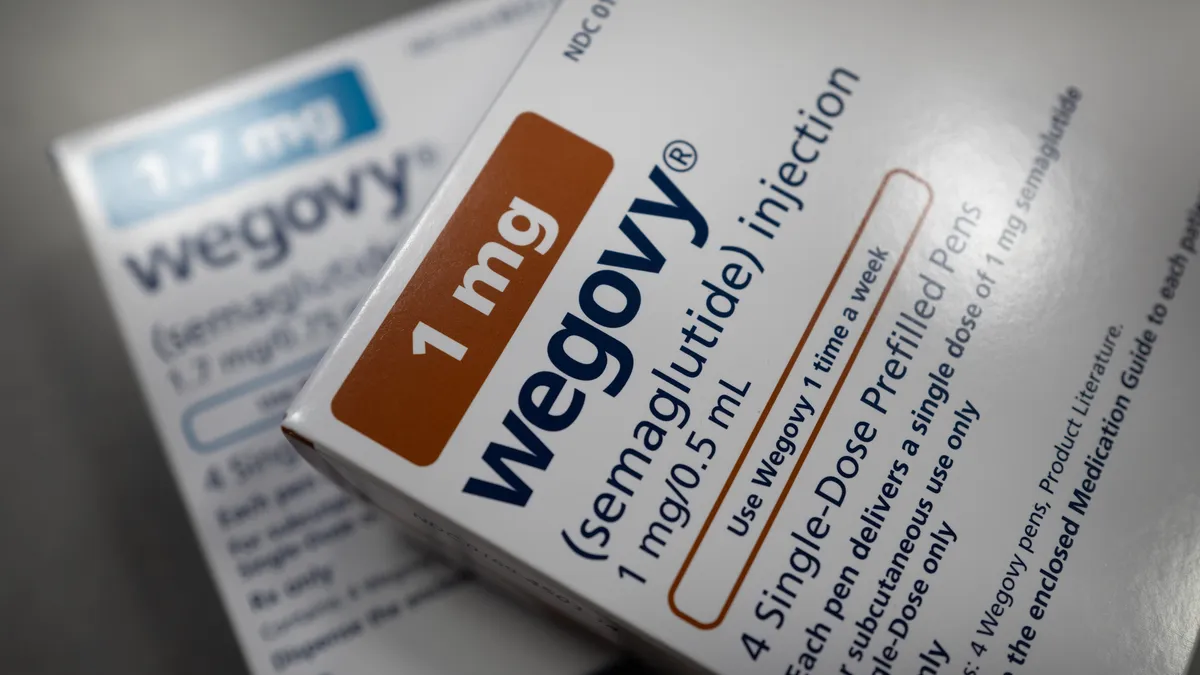
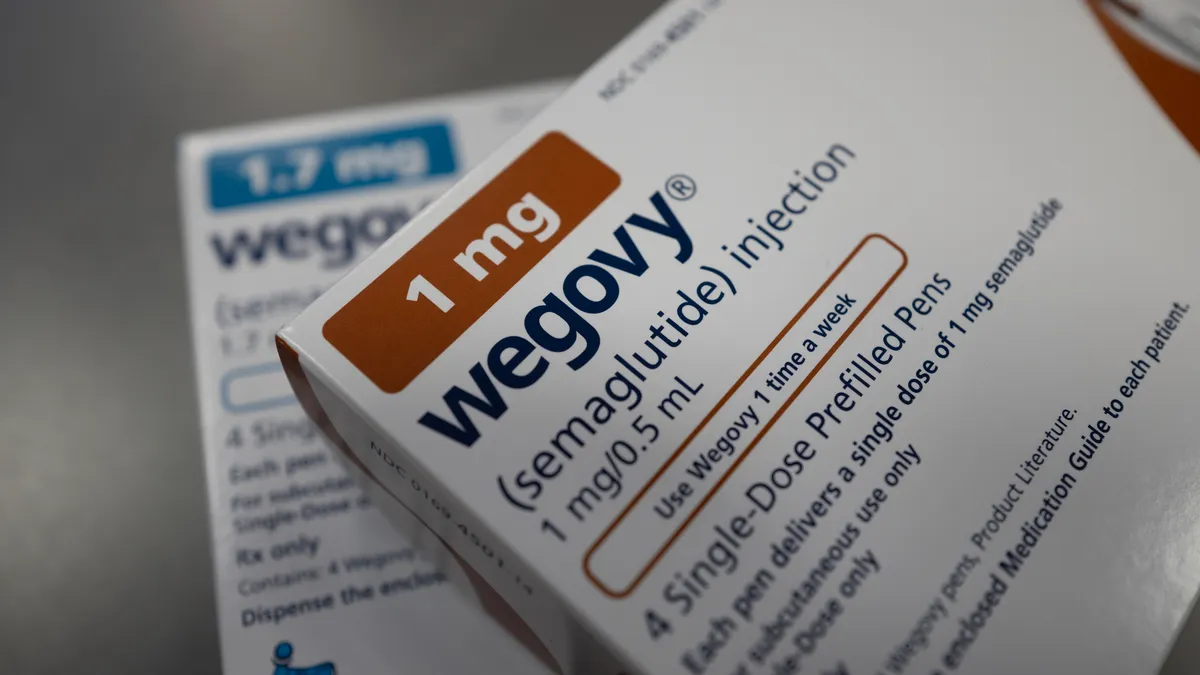
Lilly’s ascent has been fueled in part by trial data showing Zepbound spurs more weight loss than Novo’s Wegovy — a claim Novo has contested. Novo has also battled investor doubts surrounding CagriSema, which was beaten by Zepbound in one trial. On Monday, the company touted new results showing CagriSema was superior to Zepbound in another trial, though that study compared CagriSema to the second-lowest dose of Lilly’s drug.
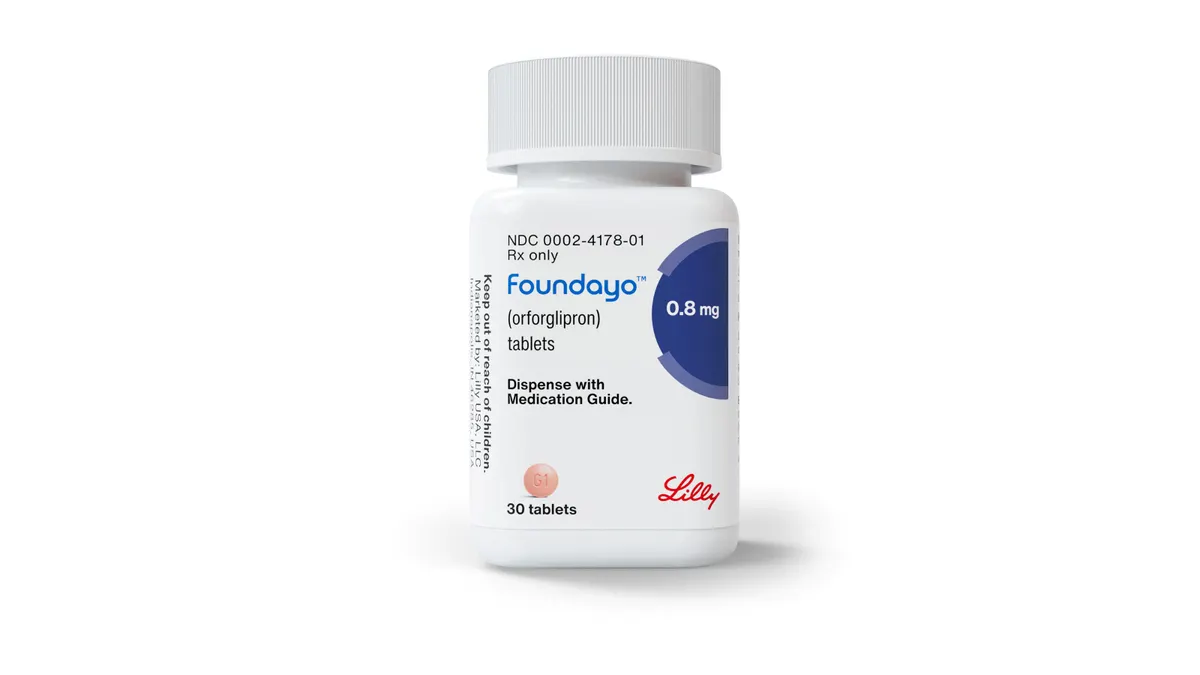
Additionally, Novo wasn’t able to clearly capitalize on beating Lilly to market with the first GLP-1 pill for weight loss. Lilly responded months later with the approval of Foundayo, and sales of Novo’s Wegovy pill missed Wall Street’s expectations between April and June.
Amid the share slide, Novo has installed a new CEO in Mike Doustdar, reshaped its board of directors, and laid off 9,000 workers. And leading up to Monday’s presentation, the company primed investors by announcing a deal with AI specialist Anthropic, rebranding itself and partnering with startup Orbis Medicines. The company acquired a trio of obesity drug prospects from another young company, Kallyope, too.
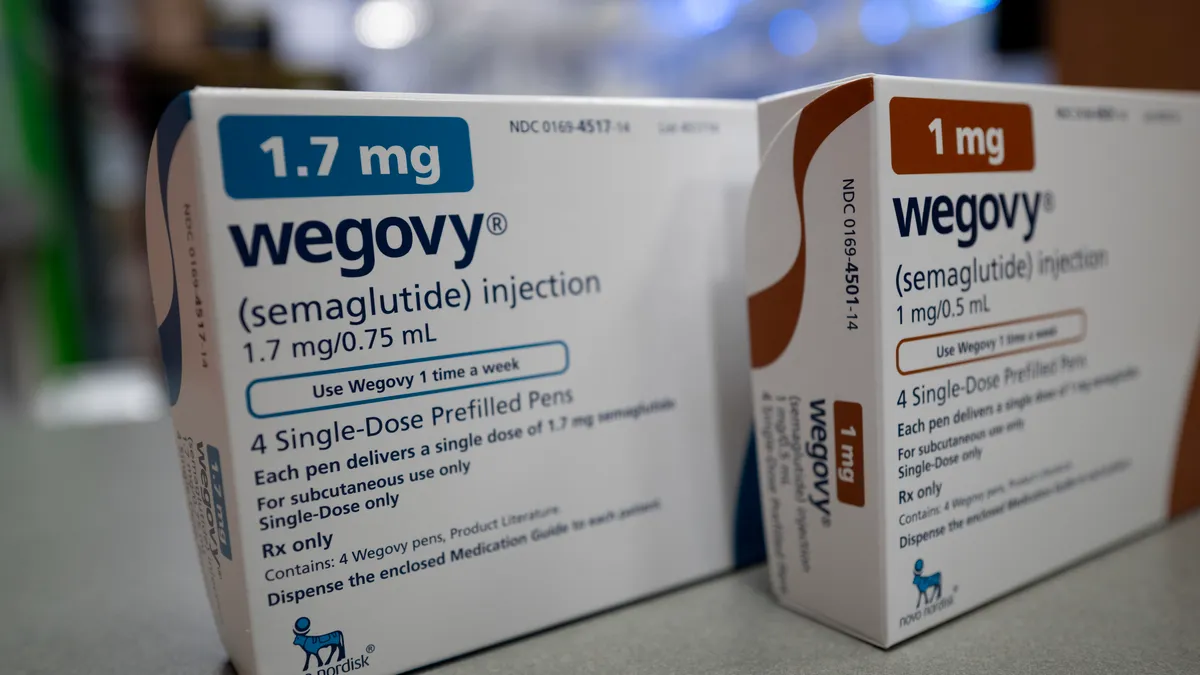
But Novo’s near-term outlook remains shaky. Semaglutide, the active ingredient in Wegovy, will lose patent protection in the U.S. in 2032. Novo projects that sales growth will be “in line” with its peers from 2026 to 2030.
Beyond CagriSema, the only Novo drug under review by the Food and Drug Administration is a prospective hemophilia treatment. And most of its obesity pipeline is in Phase 2 development or earlier.
The company also recently suffered a setback with a highly touted prospect called ziltivekimab for heart disease.