Dive Brief:
- Roche and Ionis Pharmaceuticals said Wednesday their experimental drug for the kidney disorder IgA nephropathy succeeded in a Phase 3 clinical trial, hitting its main goal at an interim data check.
- Called sefaxersen, the drug led to “statistically significant and clinically meaningful improvements” in the amount of protein in participants’ urine, an important marker of kidney health, the companies said. They didn’t provide specific details, but said the data will be presented at an upcoming medical meeting and shared with regulators. They’ll also continue monitoring enrollees for two years to monitor changes in kidney function.
- If approved by regulators, sefaxersen would face competition from multiple drugs launched over the last few years for IgA nephropathy, among them Novartis’ Fabhalta. Drugmakers have priced those therapies, which could slow disease progression and help patients avert expensive kidney dialysis or transplants, at around $400,000 to $500,000 a year.
Dive Insight:
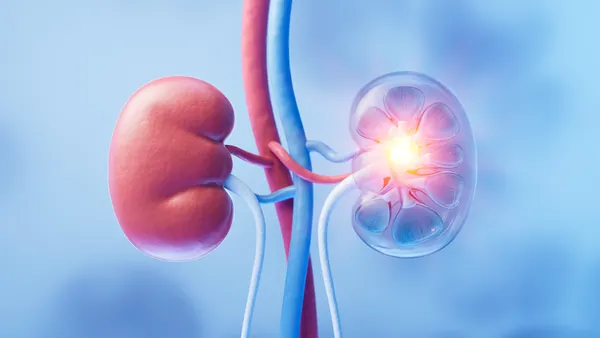
IgA nephropathy is an autoimmune disorder that occurs when rogue antibodies enter the kidneys and form clumps that cause inflammation and impede organ function. It’s recently become a hotbed for drug research, thanks to a better understanding of the disease’s biology and the need for better treatments.
Sefaxersen acts on a similar biological pathway as Fabhalta. That target, “complement factor B,” drives inflammation and kidney tissue damage in IgA nephropathy. Fabhalta directly binds to that protein, whereas sefaxersen, an antisense oligonucleotide, suppresses its production by binding to a messenger molecule in the liver.
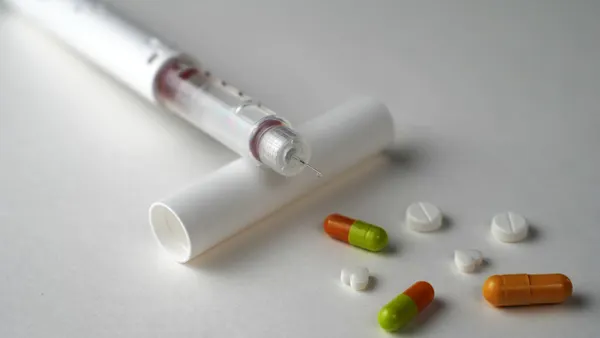
Roche and Ionis are pitching sefaxersen as a more convenient alternative to Fabhalta. Their drug is self-injected once monthly, while Fabhalta is a twice-daily pill. The shot emerged from one of multiple partnerships between the two companies that has also seen them collaborate on experimental drugs for Huntington’s and Alzheimer’s disease.
But sefaxersen, if approved, would have other competitors to deal with too. Since late last year, the Food and Drug Administration has granted accelerated clearances from Otsuka Pharmaceutical and Vera Therapeutics that act on different protein targets. Another drug from Vertex Pharmaceuticals could soon follow.
IgAN remains a “large but competitive market,” spanning a “multitude of targets and dosing regimens,” wrote William Blair analyst Myles Minter. Sefaxersen’s monthly dosing via an autoinjector is “relatively competitive,” with only Vertex’s drug having a similar profile. But the data presentation will be crucial in assessing the drug’s comparative benefits and safety, Minter added.
Sefaxersen is one of several pipeline assets identified by RBC Capital Markets analyst Trung Huynh as “underappreciated” by Roche investors. The Swiss pharma giant’s base business is growing slowly as it absorbs patent expirations for key products. But in a recent research note, Huynh contended that sefaxersen, along with the breast cancer drug giredestrant and the multiple sclerosis treatment fenebrutinib, could boost earnings in the years ahead.
An approval would also provide a boost for Ionis, which has seen its share price pressured by multiple setbacks this year. Ionis is due up to $400 million in milestone payments related to sefaxersen and would get sales royalties if the drug is cleared.