The Food and Drug Administration on Friday approved a particular kind of protein-degrading medicine for the first time, green-lighting biotechnology firm Arvinas’ Veppanu for use in treating certain people with a common form of breast cancer.
Formerly known as vepdegestrant, Veppanu is approved for a subgroup of adults whose metastatic, estrogen receptor-positive, HER2-negative breast cancer has progressed after at least one endocrine therapy. The clearance makes the treatment available specifically to people who fit that criteria and have mutations to a gene called ESR1.
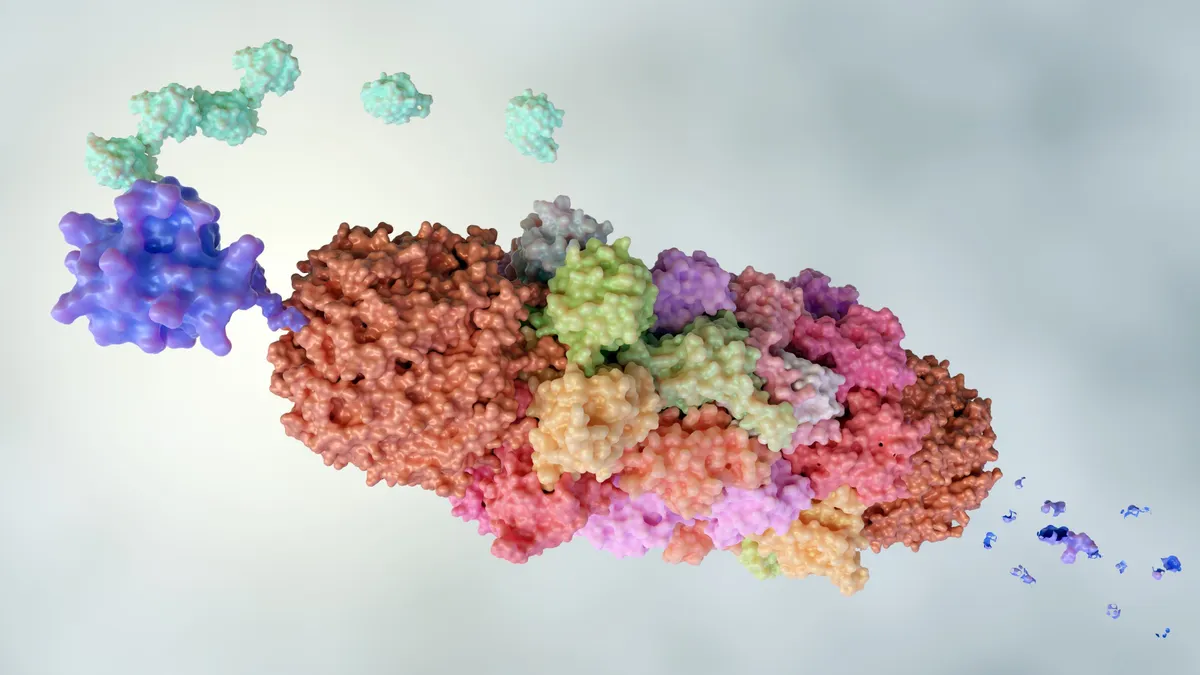
Veppanu is what’s called a “PROTAC,” or proteolysis-targeting chimera. The drug works by taking unwanted proteins — in Veppanu’s case, estrogen receptors — that are linked to disease and trashing them via the cell’s natural waste disposal system. Most approved medicines, by contrast, bind to a molecular target and block or amplify its activity.
“This milestone demonstrates that targeted protein degradation can translate into meaningful clinical impact,” said Arvinas CEO Randy Teel, in a statement.
The therapy also adds a new option for people with “minimal second-line treatment options once standard therapies are no longer effective,” said Erika Hamilton, a study investigator and the director of breast cancer research at the Sarah Cannon Research Institute, in the company’s statement.
Yet Veppanu faces an uncertain future. The drug was co-developed by Arvinas and Pfizer under a longstanding partnership, and, initially, the companies set out to prove that it might help treat an extensive group of breast cancer patients in multiple lines of cancer care. But the data the companies ultimately compiled found that Veppanu appeared most helpful in a subset of breast cancer patients with ESR1 mutations, which are known to help tumors develop resistance to treatment.
Veppanu also came along at a time when different types of oral, hormone-degrading cancer drugs were being developed for breast cancer, too. Two, from Eli Lilly and Menarini, are already on the market. Another from Roche could follow. Arvinas’ medicine didn’t clearly set itself apart from those therapies, leading to a share sell-off and investor skepticism about Veppanu’s commercial potential. In a February note to clients, Andrew Berens of Leerink Partners wrote that he was “not convinced” Veppanu is superior to other drugs in its class, while Evercore ISI’s Jonathan Miller described the program as an “overhang” on Arvinas’ stock.
The situation led Arvinas and Pfizer to seek to license Veppanu to a third party and split the resulting economics. Arvinas has said that a partnership deal was expected by the FDA’s June 5 decision deadline, but CEO Teel noted in earnings call earlier this year that the companies were “well-situated” in case they did not find a collaborator by then. On Friday, Arvinas and Pfizer said they are “on track to announce [the selection]” of that new partner.
Arvinas is now more focused on other “PROTAC” drugs in its portfolio, which include experimental treatments for Parkinson’s disease, spinal-bulbar muscular atrophy and various cancers.
The approval “strengthens our confidence in the breadth and versatility of our exciting clinical pipeline across oncology, neurodegenerative and neuromuscular diseases,” Teel said in a statement.
Arvinas’ share price climbed about 7% on the news.