Bristol Myers Squibb is turning to one of China’s most prolific pharmaceutical companies for help finding new medicines, announcing Tuesday a multifaceted alliance with Hengrui Pharma that involves 13 early-stage drug prospects and could be worth more than $15 billion.
Over the last few years, large drugmakers have increasingly turned to China in search of drugs they can quickly advance through testing. Regulatory flexibility, low supply chain costs and an explosion of biotechnology investment have yielded a trove of drug candidates that can quickly get to human testing and, in many cases, are being designed to one-up medicines either in development or on the market.
The result has been an acceleration of licensing deals involving China-originated medicines, reshaping the world’s pharmaceutical pipeline and changing the way new startup companies are built. Data compiled by BioPharma Dive show that more than 60 deals were struck between U.S. or European drugmakers and their China-based counterparts last year, and another two dozen or so have already followed so far in 2026.
These deals have sounded alarm bells among U.S. biotechs and lawmakers in Washington, D.C. about China’s fast-growing influence on U.S. drug development. But as of yet, that concern hasn’t translated into government support or significant regulatory change. In the meantime, these alliances have started to broaden in scope, with companies in the U.S. and China inking the kind of wide-ranging deals that cater to their respective advantages developing and selling medicines globally.
Bristol and Hengrui’s pact is the latest example. The partnership includes four of Hengrui’s experimental cancer drugs, four of Bristol’s immunology prospects and five “innovative” assets the two companies will jointly discover and advance. Bristol gets rights to Hengrui’s four drugs everywhere but mainland China, Hong Kong and Macau, while Hengrui gains ownership of Bristol’s medicines within those territories. Hengrui also has the option to co-develop and sell certain assets with Bristol. It’ll lead early clinical development to “accelerate proof of concept” for those programs, too, the companies said.
Bristol is paying Hengrui $600 million upfront, $175 million a year later and could add a second “contingent” $175 million payout in 2028. If all deal options and milestones are eventually paid, the value of the partnership will balloon to $15.2 billion. The companies didn’t reveal which drug prospects are involved in the collaboration, only saying that they’re “high-value programs” in areas of "significant unmet medical need.”
“This broad strategic collaboration reflects a highly synergistic collaboration between two global innovators with complementary strengths. By leveraging Hengrui’s growing R&D capabilities and proven efficiency in discovering and advancing innovative therapies, we are poised to advance the best of both pipelines,” said Frank Jiang, Hengrui’s executive vice president and chief strategy officer, in a statement.
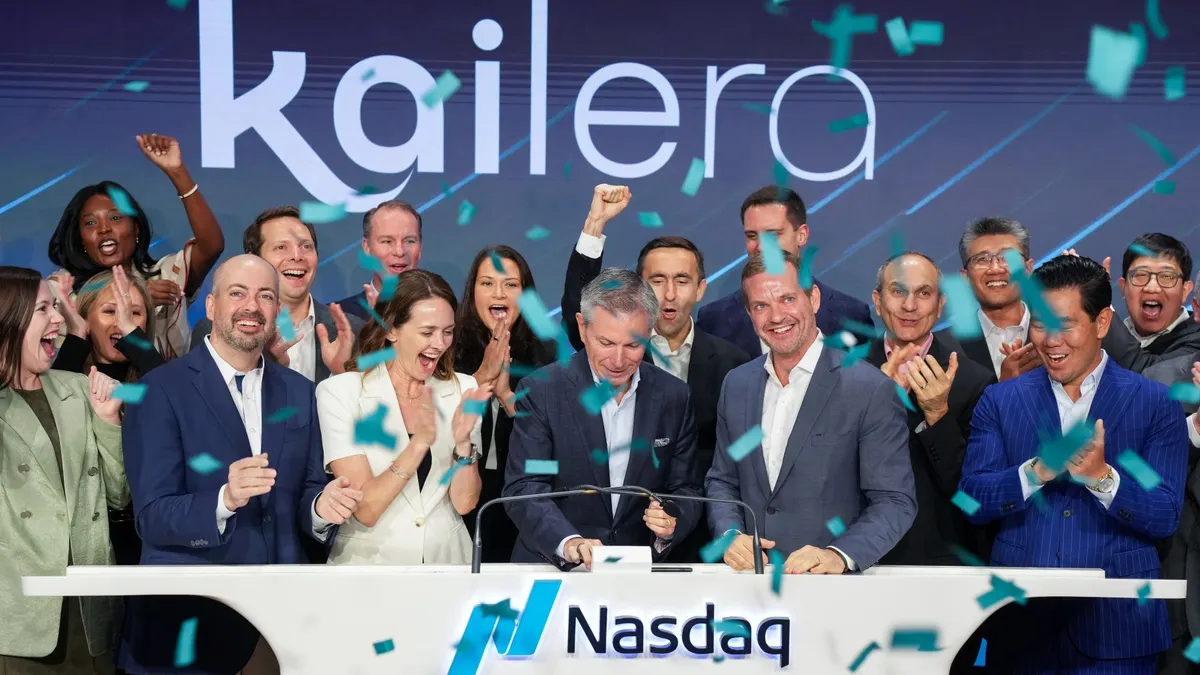
The pact is at least the fifth cross-border alliance Hengrui has been involved in since the start of 2025, BioPharma Dive data show. It’s also partnered with GSK, Merck KgAA, Merck & Co. and startup Braveheart Bio. Before that, Hengrui licensed a portfolio of obesity drugs to Kailera Therapeutics, which just went public in one of the sector’s biggest-ever initial public offerings.