Dive Brief:
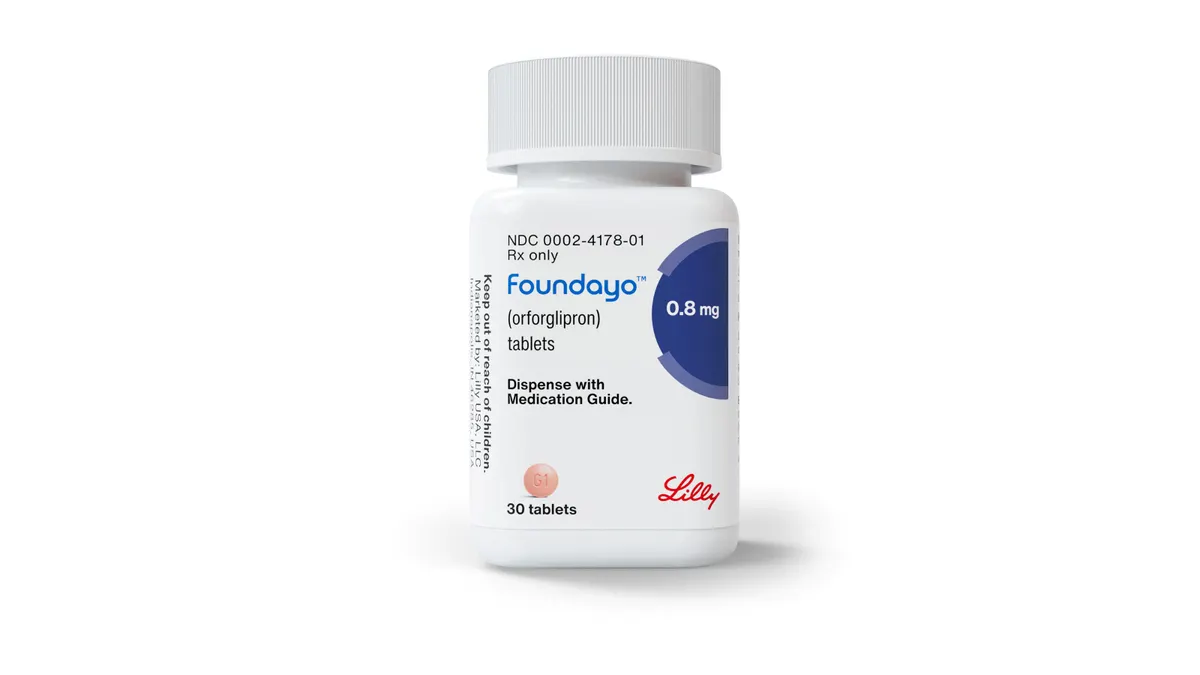
- Eli Lilly’s new obesity pill Foundayo met the main goal of a heart safety trial in people with diabetes, putting people who take it at no greater risk of heart attacks and other cardiovascular events than people who received long-acting insulin, the company said Thursday.
- The Indianapolis-based drugmaker also said people who got Foundayo were at no greater risk of liver harm than those who got insulin, fulfilling a post-marketing requirement of the pill’s Food and Drug Administration approval for obesity. The trial additionally hinted that the pill might reduce the risk of death from any cause, although that finding would need to be confirmed in additional testing.
- Lilly said it will seek an approval for Foundayo in diabetes by the end of the second quarter and utilize a national priority review voucher that could lead to a speedy clearance. A regulatory OK in diabetes would open up a new front in a commercial war with Novo Nordisk, which has marketed a diabetes pill called Rybelsus since 2017.
Dive Insight:
Drugs that act on the metabolic hormone GLP-1 were first sold for diabetes. The first, Lilly and Amylin Pharmaceuticals’ Byetta, was approved in 2005 to help control blood sugar. Only in more recent years have their weight loss benefits become clearer.
Still, the available injectable GLP-1 drugs generate more money as diabetes treatments than they do in obesity. obesity. And, for Lilly, an oral GLP-1 medicine for the condition would fill out an existing hole in the company’s portfolio.
In the latest trial, investigators enrolled 2,749 people who had diabetes and elevated blood sugar while taking up to three other treatments. Those recruits were randomized to receive either Foundayo or insulin glargine, a once-daily injection. They were followed up for up to two years to test for the occurrence of heart attacks, strokes, hospitalization for angina or a fatal cardiovascular event.
Foundayo met the study’s main objective, proving statistically “non-inferior” to insulin by that measurement. Among those who remained on treatment, Foundayo was associated with a statistically significant improvement in blood sugar and body weight over insulin.
Proving an experimental diabetes drug doesn’t pose any greater risk than already-approved medications is one of the key steps before gaining regulatory support, along with obtaining data on how well therapies comparatively lower blood sugar and other disease complications. Those cardiovascular safety trials tend to be small and relatively short compared to the lengthy “outcomes” trials that seek to prove the new drug is safer. Such studies typically enroll more than 10,000 volunteers and last around three to four years.
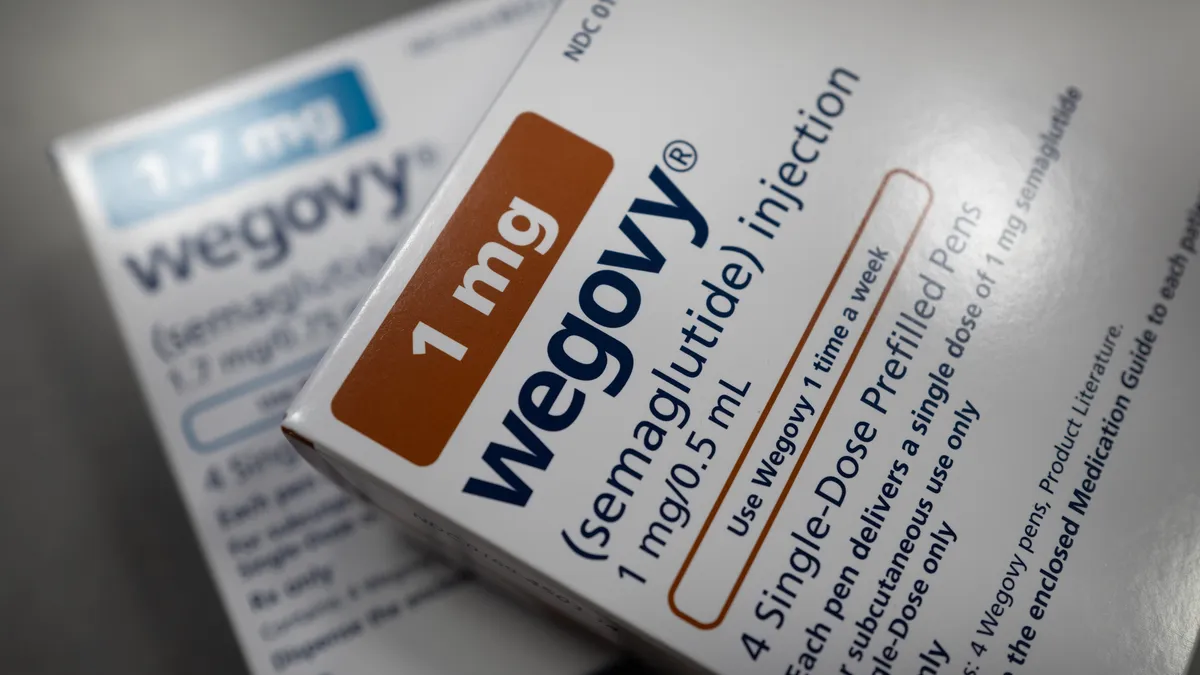
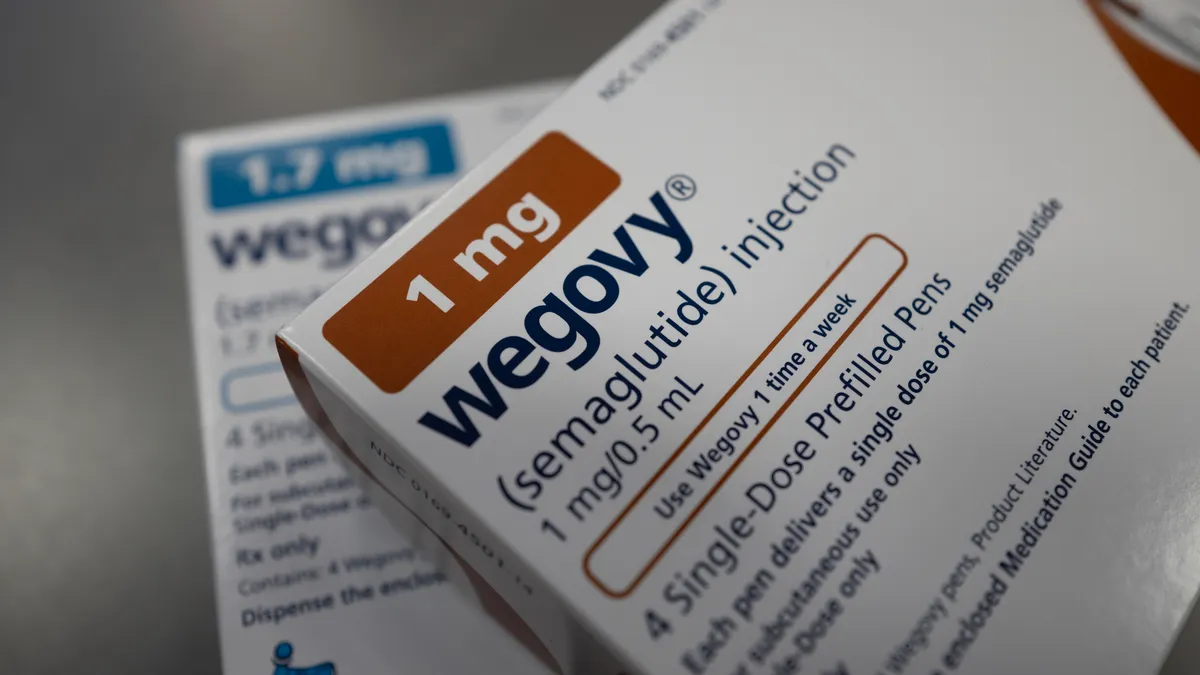
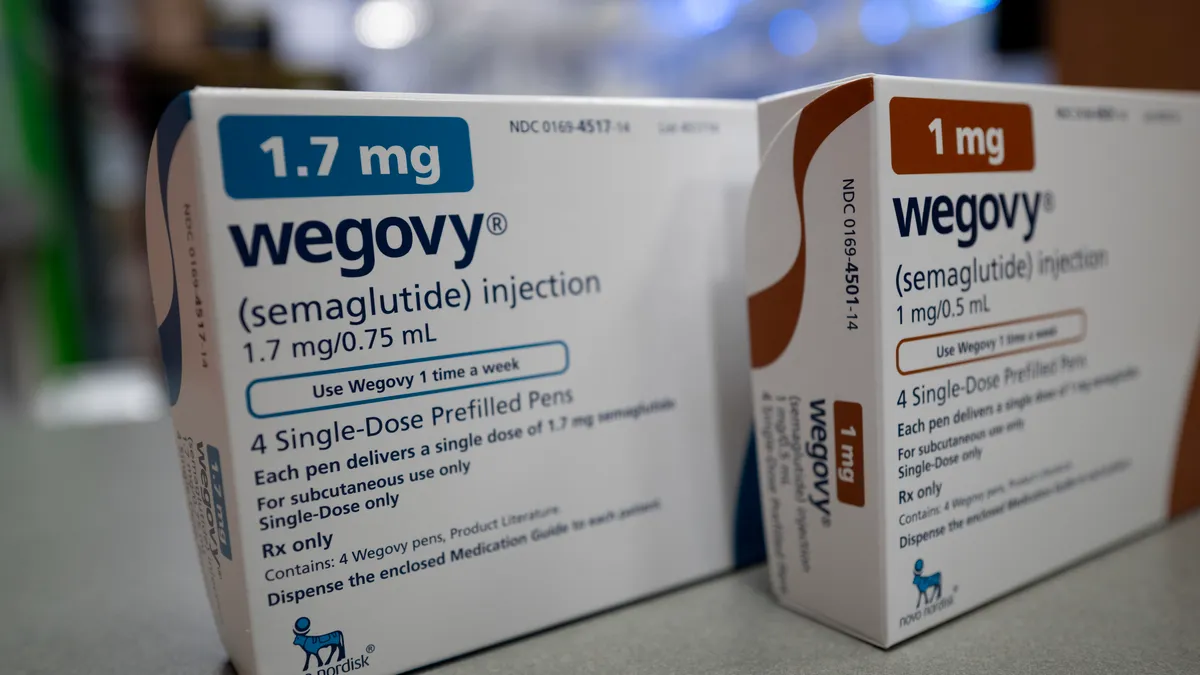
In obesity, only Wegovy can make the claim on its prescribing information that use reduces the risk of cardiovascular complications or death, thanks to the results of a placebo-controlled study. But tirzepatide, the active ingredient in Zepbound and Lilly’s diabetes treatment Moujaro, did prove it was non-inferior to an older GLP-1 drug called Trulicity on cardiovascular outcomes in people with diabetes.