Dive Brief:
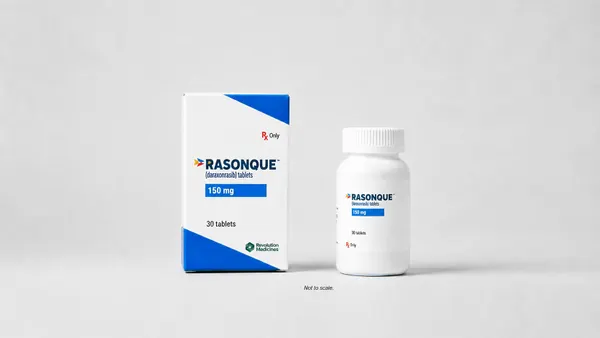
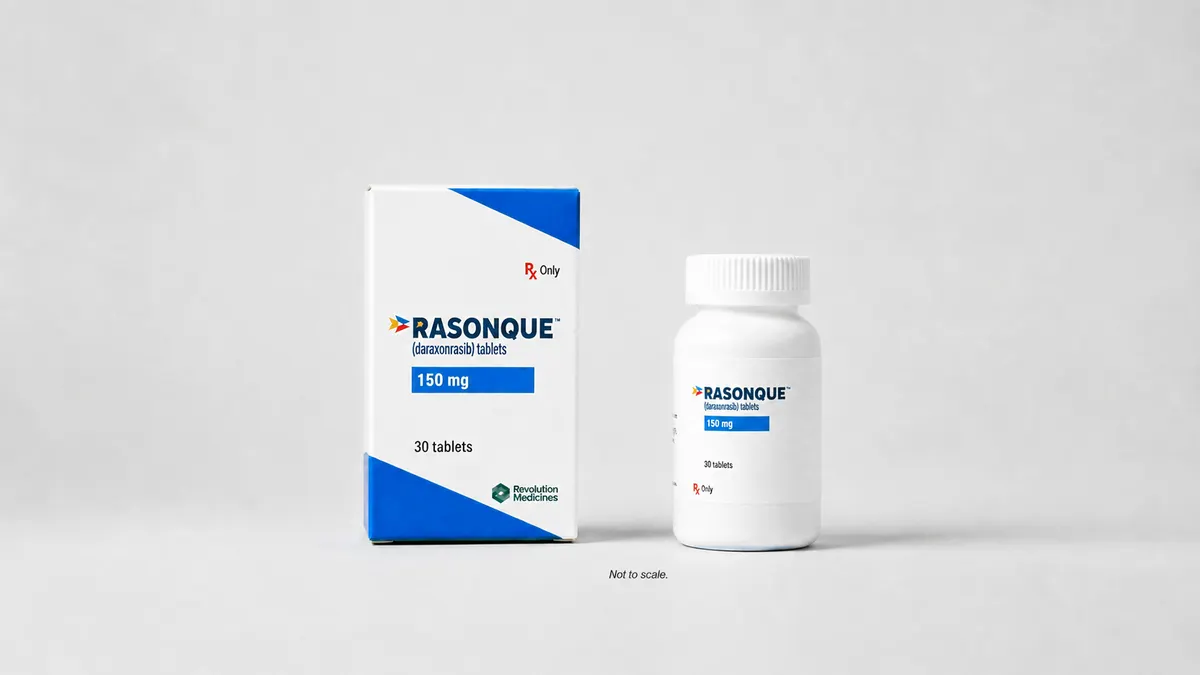
- Revolution Medicines surpassed already sky-high expectations for the launch of its new pancreatic cancer treatment Rasonque, posting $198 million in revenue in the third quarter.
- Investors had been looking for sales in the $50 million to $100 million range, according to analyst reports. The company won an unusually fast approval from the Food and Drug Administration on Aug. 26, so the data covered just five weeks, making Rasonque’s early start “the best oncology drug launch in history,” TD Cowen analyst Tyler Van Buren wrote in a note to clients.
- More than 5,000 patients in the U.S. received treatment with Rasonque in the period through Sept. 30, Revolution said late Wednesday. About 40% of the 2,700 prescribers were from academic settings, with the rest from community practices.
Dive Insight:
Rasonque represents a major breakthrough in oncology, targeting mutations associated with a variety of tumor types. The company this year unveiled unprecedented research showing that the medication could almost double survival times for patients with metastatic pancreatic ductal adenocarcinoma.
Revolution priced Rasonque accordingly, setting a list price of $39,800 for a 30-day supply, well above analyst expectations and far outpacing the cost for Merck & Co.’s Keytruda, the top-selling cancer medication in the world. So far, most insurers are paying, with health plans that cover more than 90% of patients reimbursing claims for the drug, the company said.
“The launch far exceeded our expectations,” RBC Capital Markets analyst Leonid Timashev wrote in a note to clients. “Not only is there significant growth expected in the near term, but the time to peak for Rasonque is likely to be short — pulling forward revenues and significantly improving” the value of the stock, he said.
It’s possible that some 10,000 patients will take Rasonque by the end of the fourth quarter, Timashev wrote. He’s now forecasting $426 million in Rasonque sales in that period alone and says the drug could pull in more than $3 billion next year. Van Buren, of Cowen, increased his revenue forecast for the year’s final three months to $460 million.
Still, there are some uncertainties. Third-quarter revenue included transitioning patients from an early access program, which is now complete. That gave sales figures an “initial bolus” that’s gone, and many of those patients were sicker and may discontinue treatment earlier, Timashev noted. Company officials sounded a similar note of caution.
“These early results are highly encouraging,” Anthony Mancini, Revolution’s chief global commercialization officer, told analysts and investors on a conference call. “At the same time, with only five weeks of commercialization activity, it’s too early to draw conclusions about the normal trajectory of the launch.”
The company is also studying the drug’s use in other settings, which could help offset investor questions about future upside, Stifel analyst Laura Prendergast wrote in a note to clients. Revolution “is on the cusp of majorly disrupting” standard of care for pancreatic adenocarcinoma, she wrote. “We expect other indications to follow in years to come.”