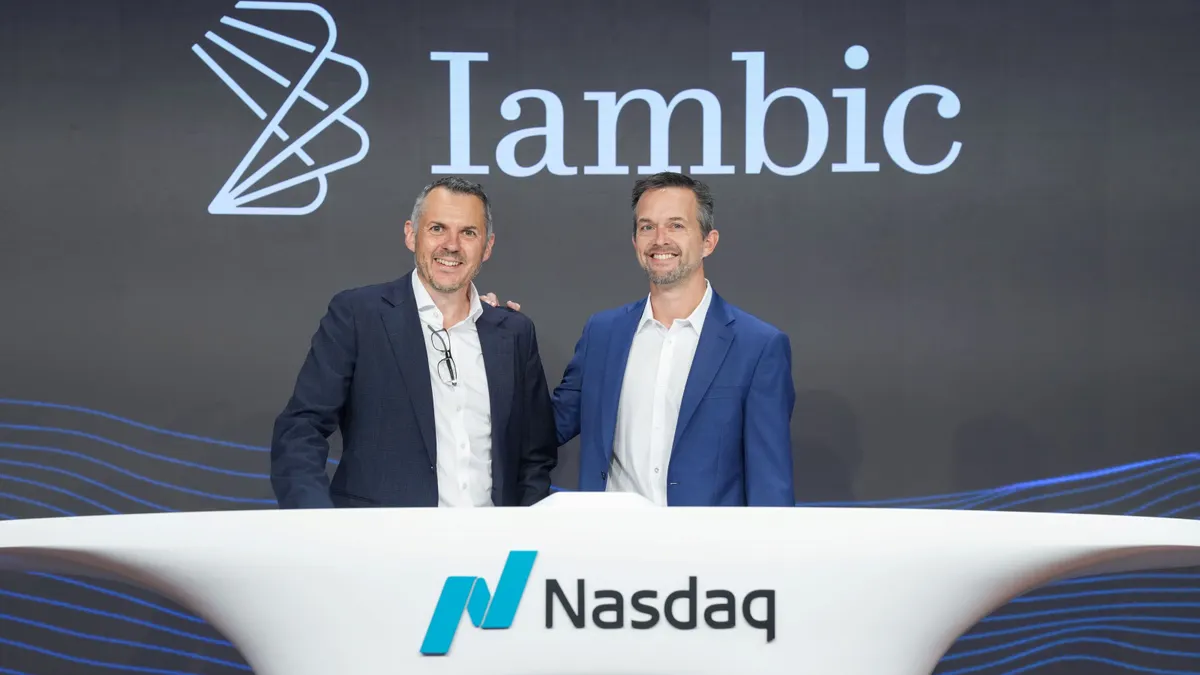
Swiss immune drug developer Windward Bio on Thursday secured $175 million in its initial public offering, marking the biotechnology sector’s 30th so far this year.
The company, which formed just two years ago, met the projections it set earlier this week, selling about 10.3 million shares at $17 apiece. Windward starts trading on Friday under the ticker symbol “WWB.”
Sanofi, which had previously invested in Windward, purchased another $50 million in shares in a private stock sale. Prior to Windward’s IPO, the biotech had banked $365 million in venture funding.
Windward is testing a potential competitor to Tezspire, an asthma treatment that generated nearly $2 billion combined for its developers AstraZeneca and Amgen last year. Called WIN378, Windward’s top program is an “ultra-long-acting” injectable drug that, like Tezspire, targets an inflammatory protein known as TSLP. WIN378 is designed with certain enhancements that Windward believes might yield “improved potency” and less frequent dosing than Tezspire. Whereas AstraZeneca and Amgen’s blockbuster treatment is taken monthly, WIN378 could be dosed as little as twice a year, the company said in a regulatory filing.
The company is studying its lead drug in patients with severe, uncontrolled asthma and moderate-to-severe chronic obstructive pulmonary disease. Interim data from the mid-stage portion of a Phase 2/3 trial in asthma showed that WIN378 was well-tolerated. It also helped trial participants expel more air while breathing out — a key measure of lung function — while lowering levels of a marker associated with airway inflammation. WIN378 also helped deplete counts of eosinophils, a type of white blood cell that can be overproduced when the immune system goes into overdrive.
Windward began the Phase 3 part of its asthma trial in September and anticipates reporting results next year. A mid-stage study in COPD, meanwhile, started in June and should produce data in 2027 as well.
The biotech is also developing a second treatment called WIN027, a bispecific antibody that targets TSLP and IL-13, another popular target for immune drugmakers. Windward said it expects Phase 1 findings from healthy trial participants in the first half of 2027. It recently launched two Phase 2b studies of WIN027 in people with COPD. A third trial in atopic dermatitis patients could also begin next year.
TSLP-targeting therapies are a crowded field, and Windward is competing with companies such as AbbVie, Pfizer, Upstream Bio and Generate Biomedicines. Some of those drug developers are working on multifaceted antibodies not unlike WIN027.
Both of Windward’s programs were licensed from Chinese drugmakers. WIN378 came from Kelun Biotech, which co-developed the treatment with Harbour BioMed. WIN027 was part of a deal with Qyuns Therapeutics. Windward paid $70 million up front in cash and equity to obtain those prospects, and is on the hook for another $1.6 billion in potential payments to those companies contingent on hitting certain R&D and sales milestones.
Windward chose to go ahead with its initial public stock sale as Rezera, the Boston biotech formerly known as NodThera, postponed its own offering “due to market conditions,” according to IPOScoop, a website tracking IPOs.
This year has been the busiest on record for drugmaker IPOs since 2021, with more than $8 billion raised among companies going public, according to BioPharma Dive data. Windward is also the ninth immune drug developer to price an IPO in 2026, a pace that now surpasses every year since 2018.