Even in the darkest of times, biopharmaceutical investors and executives usually express optimism in January, when thousands gather in San Francisco for the annual J.P. Morgan Healthcare Conference to discuss where the industry is headed.
As the 2026 meeting begins, though, they have reason to feel hopeful. Several indicators of sector health, from stock performance to deals and financings, turned positive in the second half of 2025. The generalist investors that abandoned biotech during a lengthy downturn tiptoed back. In a series of outlook reports late last year, multiple investment banks that follow the sector predicted that the run should continue, at least in the near term.
Still, sentiment could change quickly. Regulatory uncertainty still hangs over the sector, as does the threat of meaningful drug price reform. Initial public offerings haven’t yet picked up. Competition from China is pressuring U.S. biotechs to adapt. And vaccine makers are now facing a combination of shifting standards and hesitancy from the public that could imperil future research.
Here are 5 questions biopharmaceutical companies face in 2026:
Will biotech’s recovery last?
For the biotech sector, 2025 was a tale of two halves.
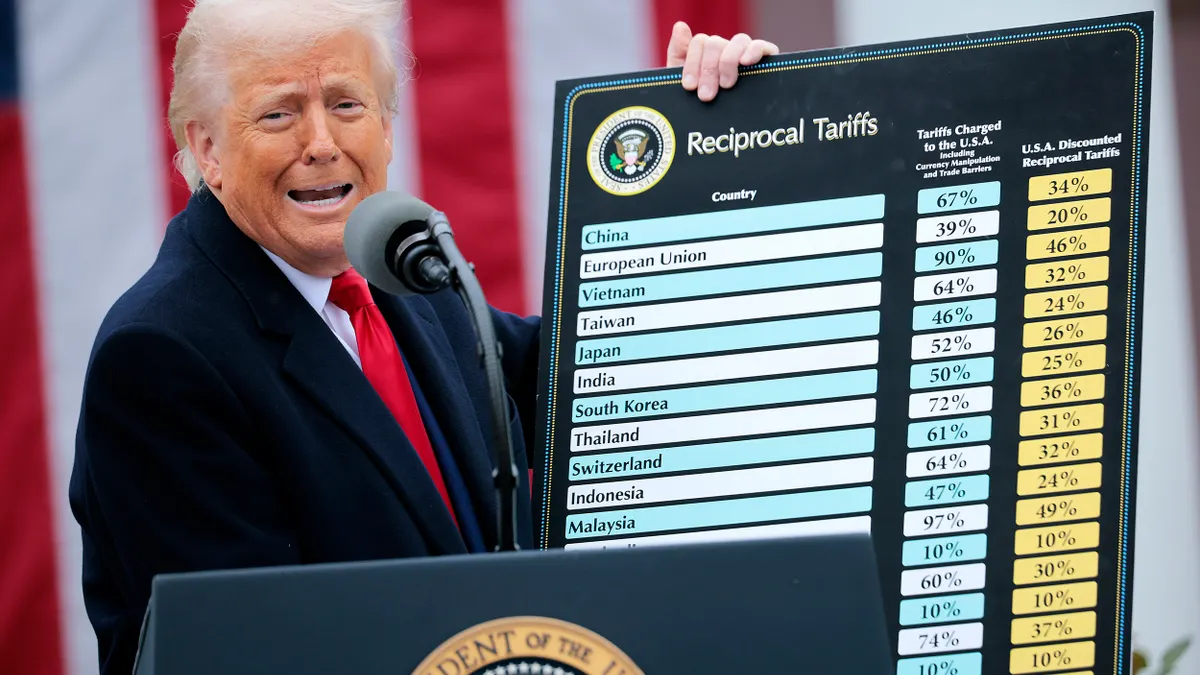
Early on, regulatory and geopolitical uncertainty slowed M&A activity and venture funding, both of which had appeared poised for a rebound. A spurt of initial public offerings in January and February was followed by a lengthy dry spell. Fears over Trump administration tariffs and drug pricing initiatives, as well as a seemingly unsteady Food and Drug Administration, made biotech appear an even riskier investment than usual. Even the "perception of instability is instability in its own way," Omega Funds founder Otello Stampacchia told BioPharma Dive in August.
But things have changed since then. The tariff and drug pricing policies revealed by the Trump administration proved manageable for drugmakers. Interest rates began declining. Several biotech companies produced positive study results and were either acquired or successfully launched their own drugs. “It's transitioning from a cash-guzzling sector to an increasingly profitable one,” Cantor Fitzgerald analysts wrote in an October note.
Along the way, dealmaking returned, as did investors’ willingness to fund private and publicly traded drug companies. In lockstep, the XBI, an index fund that analysts look to as an indicator of the sector’s health, skyrocketed. Since bottoming out in April, shares have nearly doubled to trade at around $125 apiece, levels not seen since the pandemic.
The sudden and strong momentum has stirred debate as to whether the rally will fade or continue in 2026.
In a year-end report, RBC Capital Markets analysts noted how ongoing regulatory volatility, now-bloated biotech valuations and crowding into certain therapeutic areas could make further gains tougher to achieve.
A slowdown in M&A, or run of negative readouts, would likely deflate stock values that are currently pricing in “much more optimism for success,” they wrote. “Less-than-perfect results” could bring valuations down “across the board.”
Still, there are reasons for optimism. In that same report, RBC analysts noted how the rise in private funding and positive performance from 2025’s small IPO class should fuel a long-awaited rebound in new biotech stock offerings in 2026.
Venture financing levels should continue to climb, too, as investors funnel returns into their portfolio and maturing but still-private companies look to secure additional funds, said Monica Vnuk, Sanofi’s global head for partnering and business development.
Many investors are looking for long-term bets that can hit value-boosting milestones as their drugs progress. High-quality companies will likely continue securing so-called megarounds worth $100 million or more, she added.
Absent a notable shift on drug pricing policies, then, biotech’s rise should continue “as long as the sector continues to reward strong clinical results,” William Blair research analysts wrote in a 2026 outlook report.
"There are headwinds, and some uncertainties remaining at the FDA, pricing and overall, just a very competitive space," Vnuk said. "But the good news is that there’s a lot of innovation.” — Gwendolyn Wu
Will the dealmaking upswing continue?
The biopharma industry has its own tradition around this time of year: deal watchers prophesying a rise in mergers and acquisitions. Their logic typically goes one of two ways. Either M&A activity was so anemic in recent months that there’s nowhere to go but up, or it was so strong that the tides are bound to continue.
Heading into 2026, experts have adopted the latter rationale. BioPharma Dive data show that at least 28 acquisitions worth $50 million or more were inked from July through December, a substantial uptick from the 20 announced in the first half of the year and the 15 seen during the same six-month period in 2024. The prevailing thought is this pace will carry on.
“More deals are getting done,” said Shankar Musunuri, CEO and co-founder of gene therapy developer Ocugen, in a Deloitte report published last month. “That is good for the market overall and for a company like ours, because those of us on a growth trajectory require considerable capital.”
Deloitte, having surveyed biopharma leaders for its report, found 45% view M&A as a top near-term strategic priority. These leaders noted, too, a growing appetite to expand their research pipelines and bring in early-stage assets.
PwC, in its own recent report, highlighted how patent expirations will put $47 billion worth of pharmaceutical sales at risk over the next four years, which should press buyers to spend more of their “ample capital” and even consider offering heftier premiums.
“M&A will pick up in 2026, and the winners will be those who deploy capital with precision, speed, and foresight,” said Roel van den Akker, PwC’s US Pharma & Life Sciences Deals Leader.
To that end, greater uncertainty in the markets has pushed bankers and lawyers to get more creative with how they structure deals to get them over the finish line. Novo Nordisk, for instance, employed an unusual two-step payment scheme in its unsuccessful bid to usurp Pfizer and take control of obesity drug company Metsera.
Another key element of Novo’s — and Pfizer’s — proposals were “contingent value rights,” an old tool that dealmakers have recently leaned on to help buyers and sellers agree on price. In the back half of last year, about a third of the bigger-ticket deals tracked by BioPharma Dive made use of CVRs. — Jacob Bell
How will the U.S. respond to China’s biotech ascent?
Over the last few years, China’s fast-growing biotechnology sector has reshaped the world’s biopharmaceutical pipeline and, in the process, challenged the U.S.’s long-held advantage.
A combination of lower development costs, regulatory flexibility and government support have birthed a homegrown ecosystem of companies that can quickly catch, and in some cases speed ahead of, their U.S. counterparts. Those companies have assembled a vast inventory of drug prospects for pharmaceutical companies to pluck and venture investors to build new companies around.
BioPharma Dive data shows more than 60 deals were struck last year between China-based drugmakers and U.S. or European companies. Analysts from the investment bank Jefferies estimated, at one point, that those deals involved a full third of the industry’s licensing spending in 2025. More and more of those drugs aren’t just superior versions of existing medicines, as has been the case in the past.
“China continues to adapt and evolve very quickly,” said Vnuk, of Sanofi. “There’s still a lot of ‘me-too’s,’ but they're good quality ‘me-too’s,’ and now we're seeing more first-in-class [drugs] and significant potential for best in class.”
The dramatic shift has triggered alarm bells among U.S. drugmakers and lawmakers in Washington, D.C. Multiple bipartisan commissions warned Congress about China’s fast progress and growing influence on U.S. drug development. At a congressional hearing in November, John Crowley, the head of Biotechnology Innovation Organization, predicted the U.S. could lose its edge “within two to three years” without drastic changes. Pfizer CEO Albert Bourla has publicly campaigned for government support.
That support hasn’t yet meaningfully materialized. Though the FDA has taken steps to streamline some areas of drug development, China still has significant advantages in costs and regulatory speed. A reported draft executive order designed to stymie in-licensing deals from China hasn’t been announced. Tariff threats from the U.S. have “barely dent[ed]” Chinese drugmakers, too, Jefferies analyst Cui Cui wrote in September. Trump administration cuts to scientific research and delays in grant funding haven’t helped matters, either.
Some, then, suggest that the U.S. should respond more amicably. An expert panel hosted by Cantor Fitzgerald analysts in September argued for embracing “hybrid models” of co-developing drugs in different geographies, enabling companies in the U.S. and China to capitalize “on their respective advantages.” Biotech’s future “may not hinge on where innovation originates,” the Cantor team wrote, but “how we build, share and scale it across borders.”
Vnuk, of Sanofi, has a similarly upbeat take. China’s emergence “is an opportunity for pharmas to replenish their pipelines” and for international investors to back “another set of companies in another geography.”
“I look at it through a positive lens,” she added. — Ben Fidler
Will the FDA tumult subside?
Last year brought unusually dramatic upheaval to the Food and Drug Administration.
The U.S. biotech industry’s chief regulator cycled through several heads of its main drug review offices and withstood mass layoffs and resignations. Commissioner Martin Makary and top deputy Vinay Prasad came under fire for a reportedly “toxic” work environment, continual staff departures and slipping review timelines. They’ve also bypassed normal federal rulemaking channels in outlining new agency policies and championed exceptionally fast development standards for some medicines, while simultaneously demanding a dramatically higher bar for others.
Makary, for example, reportedly drew the ire of longtime FDA oncology leader Richard Pazdur for a program that awarded special vouchers to drug programs aligning with certain “national priorities.” Some lawmakers have criticized that program as a tool for currying political favor, and published reports have indicated that the White House has been involved in selecting winners. Likewise, Makary has also proposed that a single Phase 3 trial, rather than two, could be used to gain approval for most drugs, a loosening of standards that could raise the risk of safety issues not being identified before a drug is broadly used.
Prasad, meanwhile, has directed the main drug office he heads to heighten safety and efficacy standards for certain treatments under his purview. Among the changes include additional testing requirements for vaccines and controlled trials for cancer cell therapies, which could discourage further development of those products. He’s also overruled agency reviewers multiple times and reportedly intervened in other cases in which he’s been skeptical of company data.
Biotechs faced other surprises, too. Pazdur retired only weeks after being tapped to lead the agency’s other top drug office, and has since been replaced by an agency outsider, Tracy Beth Hoeg. Makary has been on the hot seat. And several companies have reported shifts in regulatory guidance that have frustrated Wall Street, leading some analysts to call the agency as unpredictable as it’s ever been.
As 2026 begins, then, biopharma’s market run could hinge on how stable the FDA proves to be. In a recent report, Leerink Partners analysts noted how “leadership turnover, policy uncertainty and operational disruption” are creating “unpredictable risk” for the sector. Agency instability could direct M&A interest more heavily toward companies with more advanced drug programs, they added.
The RBC team warned that more approval delays could be ahead, while more “flip-flopping” on drug submissions and politically-influenced regulatory conditions may add to the ongoing perception of unpredictability. “This is all clearly weighing on investors,” they wrote, with nearly half of those polled by the firm citing the regulatory climate as the “biggest” issue facing the sector. — Jonathan Gardner
How will vaccine policy change?
Since being appointed the head of the Department of Health and Human Services last year, Robert F. Kennedy Jr. has weakened support and access for many routine vaccinations. That plan could accelerate in 2026, with potentially dire consequences for public health.
Kennedy last year abruptly fired all members of a key Centers for Disease Control and Prevention committee that guides U.S. vaccine policy and replaced many panelists with vaccine skeptics or people without relevant experience. That group went on to soften COVID shot endorsements, recommend splitting MMR and varicella immunizations and called for a preservative that’s long been a target of anti-vaccine groups to be taken out of flu vaccines. Finally, the panel, known as ACIP, dropped in December a universal recommendation that newborns be vaccinated against hepatitis B — a longstanding precedent credited with nearly eliminating, in the U.S., infections known to lead to cirrhosis or liver cancer later in life.
The FDA, too, has shifted its standards. In 2025, the agency set stricter approval frameworks for COVID vaccines and issued narrower clearances for their use than in past years. Its leaders have also reportedly been digging through the vaccine safety monitoring system VAERS to claim vaccination caused the deaths of multiple children. The results of that investigation could be used to justify substantive changes to the way vaccines are regulated, according to a leaked memo from top vaccine regulator Prasad.
ACIP’s rulings were challenged by several medical organizations and ignored by certain states and insurers. Ousted members even called for a separate entity to be formed, citing the “fundamental distrust” the group has engendered. The FDA’s use of VAERS has also drawn blowback from nearly every living agency commissioner, and hasn’t yet produced credible evidence.
Still, the moves have exacerbated growing doubts about immunizations that have steadily eroded uptake and triggered outbreaks of preventable diseases. And they’ve indicated that, going forward, there may be a “tightening regulatory bar” for vaccines, which could negatively impact development and shift emphasis towards drug treatments, RBC analysts wrote in their December report.
Those trends are gaining momentum. President Trump in early December demanded a review of the childhood immunization schedule. ACIP a few weeks later raised concerns about the use of aluminum as an immune-boosting adjuvant, and the safety of giving multiple shots at once — despite the lack of meaningful data that either causes harm. And at the very start of 2026, federal health officials scaled back the number of recommended shots for children going forward, a drastic policy shift made outside the typical rigorous decisionmaking process.
“We see policy changes/public commentary from the administration continuing to erode public trust and exerting pressure on vaccination rates through the coming election season and over the next several years,” Leerink’s Mani Foroohar wrote in a December note to clients. — Delilah Alvarado