SAN FRANCISCO —The way many drugs are bought and sold could be changing.
At J.P. Morgan this week, the heads of several large pharmaceutical companies pointed to online channels as an important driver of future product sales. These platforms are offering up medications for people willing to pay cash. And while most Americans receive drugs through health insurance, drugmaker CEOs contended that there’s ample demand for products that patients pay for directly.
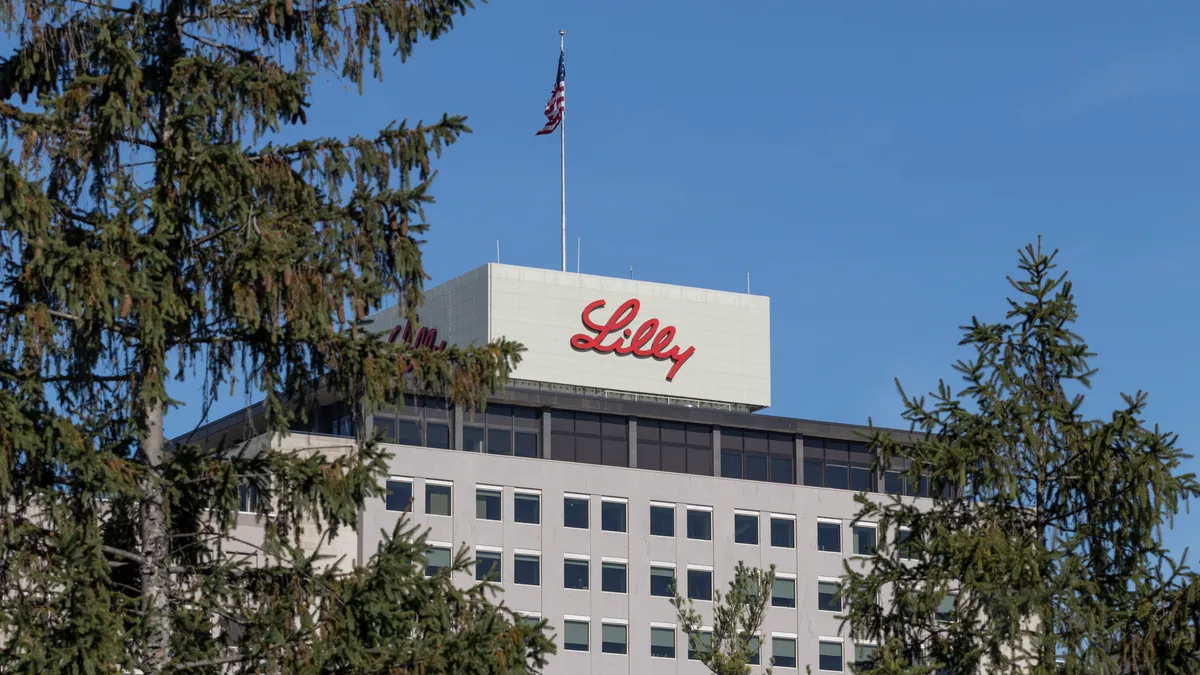
“I think it’s going to be a big part of our future,” said Eli Lilly CEO David Ricks, at the meeting.
Ricks noted that the company’s own efforts began as something of a “skunkworks” project in obesity that’s since become more sophisticated. The lessons have been “profound,” he said, in terms of patients’ receptivity and desire for clarity about a drug’s price before buying. Lilly’s online pharmacy now serves 1 million people and is growing internationally. Ricks envisions that service eventually being important for other types of medications, too.
He wasn’t alone, though. Novo Nordisk’s Mike Doustdar is pitching cash-pay services as an important part of his company’s strategy to grab an early marketing edge with oral obesity medications. And Pfizer CEO Albert Bourla noted how the budding opportunity made Metsera, which it paid $10 billion to acquire, more valuable.
“We saw how big the cash market is” in obesity, Bourla said. “In our projections, we didn’t have that.” — Ben Fidler
Novo’s commercial push
Novo Nordisk had a “difficult” year by many measures, its CEO Mike Doustdar acknowledged in a fireside chat at J.P. Morgan. While he didn’t recap the company’s downslide, the investors in the audience were surely aware of Eli Lilly’s growing command of the obesity drug market, Novo’s resulting shakeup, as well as its messy pursuit of Metsera.
Doustdar, though, worked to assure investors that he’s righted the ship. Novo is currently ahead of Lilly in bringing the first oral GLP-1 drug for obesity to market. The drug, a pill form of Wegovy, was launched in the beginning of January. Novo may only have weeks before orforglipron, a similar, rival medication from Lilly, arrives as well.
With that small lead, Novo is focusing on “commercial execution,” Doustdar said. And a key focus is accelerating the sales coming from people paying in cash.
“Our job is, this year, to recognize what were some of the things that we could do better. Mastering this cash channel to us is really, really important,” he said.
Because many people with obesity have health insurance coverage, Novo didn’t fully appreciate the magnitude of the opportunity in the cash-pay market, he said. “The pre-authorizations, the obstacles that the insurance companies have created for many of these millions means that it’s not that they’re going to be able to get their medicines just because they're obese and have insurance,” he said.
Novo claims to be ready going forward. To ensure it was ready to meet demand, the company relaunched its online pharmacy and partnered in advance with other direct-to-consumer channels like Ro Health, Weight Watchers and Costco. And while Doustdar believes that the Wegovy pill has certain advantages over orforglipron, he also expects that the overall market will grow because more people will be willing to take a GLP-1 pill.
Doustdar estimated that there are some 100 million people with obesity in the U.S. “Us and Lilly combined have probably 10, 15 million patients. What about the other 85 million? We need to get to them,” he said. “Right now we are being judged on how many patients are being switched between us and Eli Lilly.” — Jonathan Gardner
Renewed IPO optimism
Less than a dozen biotechnology companies priced initial public offerings in 2025, the lowest total since at least 2018, according to BioPharma Dive data. Those that went public a year earlier weren’t performing well either, at one point in 2025 trading a median of 77% below their debut prices and chilling enthusiasm for new offerings, said Jonathan Norris, a managing director at HSBC Innovation Banking. Slow-to-fall interest rates and upheaval at the Food and Drug Administration only made matters worse.
But things have turned around since. Most of the 11 companies that managed IPOs in 2025 currently trade above their offering prices and two, Sionna Therapeutics and Maze Therapeutics, have more than doubled their value. Another, Metsera, was acquired by Pfizer.
IPOs, then, could rebound in the year ahead. As many as 20 companies may price offerings in 2026 if the market conditions are right, Norris predicted in a Tuesday media briefing. “When you look back at all the crossover rounds that have been done in the last few years, that is a reasonable number of companies that are in a position to have thought about IPOs,” he said.
Most of those biotechs will have drugs in mid-to-late-stage testing, though there could be IPO opportunities for a handful of preclinical companies that have already been backed by prominent investors and presented compelling early data, he said.
Venture investors interviewed by BioPharma Dive corroborated a newfound push among biotechs to go public. “We’re hearing from a lot of bankers that companies are absolutely putting confidential S-1s on file,” said Jakob Dupont, an executive partner at U.S.-based Sofinnova Investments, referring to the document companies submit to securities regulators when preparing for an IPO.
“We’re shifting more toward saying ‘you should go public’ for companies, instead of just having conversations with pharma,” added Henrijette Richter, a managing partner at Paris-based Sofinnova Partners. “The patent cliff is still there, so pharma still needs to buy. We would love to see the public market coming in as a competitor to those conversations.”
There are positive, albeit early signs that it will. Aktis Oncology shares have climbed more than 20% since raising $318 million in one of the largest IPOs in three years. Eikon Therapeutics, a startup that’s raised more than $1 billion privately, revealed before the conference its own plans to hit the public markets. — Gwendolyn Wu
A blockbuster for hepatitis B
GSK is in the middle of a transition. Longtime CEO Emma Walmsley passed leadership of the company to Luke Miels on Dec. 31, following years of middling stock performance that drew frustration from investors.
But GSK, one of Britain’s largest drugmakers, saw its share price climb by more than 50% last year amid a broader sector upturn and a string of drug approvals. And during a fireside chat at J.P. Morgan, Chief Scientific Officer Tony Wood claimed that more growth is ahead.
According to Wood, 15 launches could generate more than $2 billion in peak year sales apiece in the years ahead. One he highlighted in particular was an emerging, experimental medicine for hepatitis B.
Earlier this month, GSK and partner Ionis Pharmaceuticals said the RNA-based medicine succeeded in two late-stage trials. Full data has not been presented, but Wood said to expect details at the EASL Congress in May.
Chronic hepatitis B infections can cause cirrhosis and liver cancer. Though vaccines can prevent hepatitis B, it’s still the world’s most common liver infection and current therapies are taken for life. And in the U.S., public health agencies have rolled back a universal vaccine recommendation for newborns, which could make treatments more valuable in the future.
Wood said that GSK and Ionis’ drug bepirovirsen, by comparison, could be a “functional cure” for a patient population that exceeds 200 million.
“A disease with dreadful long-term consequences and now the first effective functional cure and progress in more than 30 years,” he said.
One area Wood didn’t touch on, however, is vaccines, where GSK is a leader and could be impacted by the U.S.’s policy shifts. Its newly approved 5-in-1 meningococcal shot is now among those only recommended for certain high-risk groups. — Delilah Alvarado
Cell therapy ins and outs
Cell therapy has shown remarkable — in some instances, essentially curative — effects in certain blood diseases and hard-to-treat cancers. And there are signs that, before too long, its reach may extend into disorders of the immune and nervous systems.
But a counterweight to this immense potential is the extremely complex and expensive process used to create these treatments, which can push developers to adopt an all-in or all-out position. In October, Takeda Pharmaceutical, Japan’s largest drug company, chose the latter.
Takeda’s head of research and development, Andy Plump, looked disheartened while explaining how that decision came about. Much of the rationale was financial, he said. Takeda already has six other research areas of focus and more than a dozen drug programs in late-stage testing, so there are plenty of other places for that cell therapy money to go.
And though the company still has confidence in its technology, the challenges that lie ahead — like proving cell therapy’s merits outside blood illnesses, or finding less harsh “conditioning” regimens so that patients aren’t deterred from getting these treatments — remain daunting.
“There was nothing that told us the platform wasn't going to get us there,” Plump said, “but when we started to look at the opportunities in our pipeline and portfolio beyond cell therapies, it was hard to justify the spend to support the platform.”
“I'm disappointed that not just we, but the entire field, have not made [more] progress,” he added.
For companies with marketed products, like Gilead Sciences and Bristol Myers Squibb, there’s clearer incentive to invest. Just last year, the two companies respectively dropped $350 million and $1.5 billion to access technologies designed to genetically modify cells inside the body.
Over the first nine months of last year, Gilead’s cell therapy business generated $1.4 billion in sales, while Bristol Myers recorded $1.3 billion from its products Breyanzi and Abecma.
“In the cell therapy space, we’re doing more and more in autoimmune disease,” David Elkins, Bristol Myers’ chief financial officer, said in an interview. “We did our Orbital Therapeutics [acquisition]. That gives you a good idea of the types of deals that we're focused on.”
“We've been investing heavily,” Elkins said, and “we believe we're in a position to win.” — Jacob Bell