Dive Brief:
- Pfizer is undertaking yet another deal in China to get into a budding area of research, using “in vivo” cell therapy for autoimmune diseases.
- Under the terms of the agreement with Starna Therapeutics, Pfizer will obtain exclusive rights outside Greater China to three preclinical programs focused on autoimmune diseases. It will also get the rights to use Starna’s technology in inflammation, immunology and oncology as well as options to license other projects and expand its territory to include Greater China.
- Pfizer will pay Starna $330 million up front and offer as much as $2.3 billion more in payments for reaching certain development and commercial milestones. Starna is eligible for royalties on sales of approved products as well, Pfizer said Wednesday.
Dive Insight:
The agreement opens up a new avenue for Pfizer to expand its pipeline. Though this would be its first venture into this particular area of research, the company on Wednesday emphasized its experience with RNA-based medicines after the success of the COVID-19 vaccine Comirnaty. Pfizer said it would manufacture the products for clinical trials in the U.S.
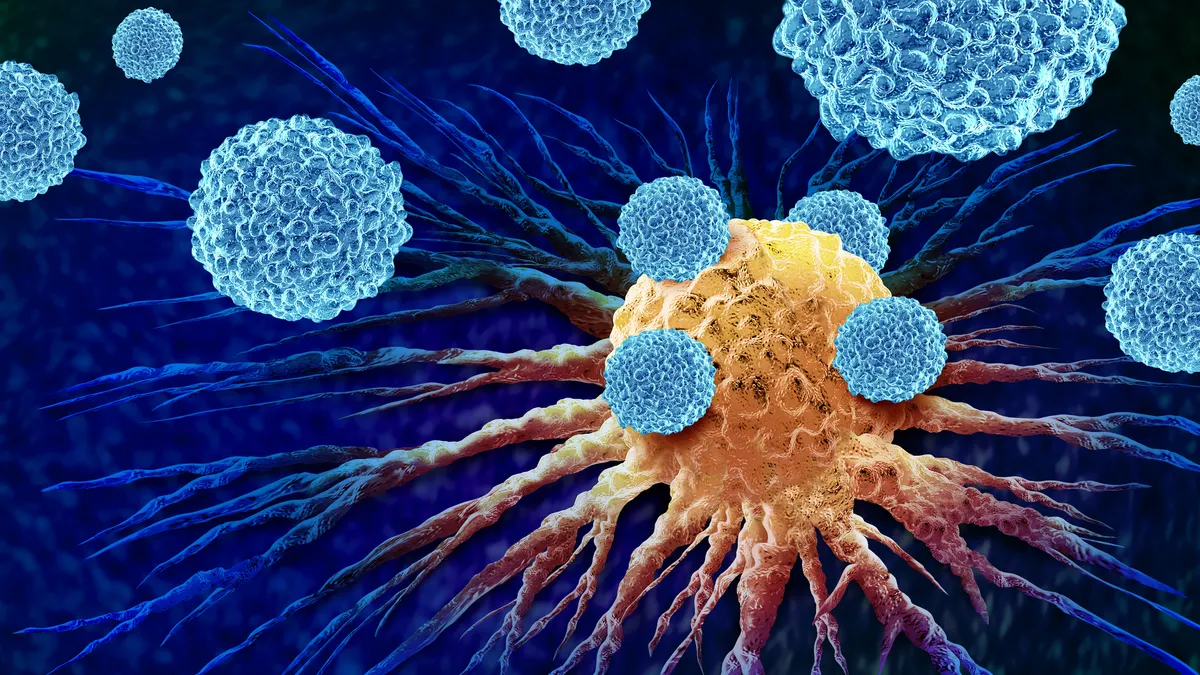
Starna is developing RNA medicines that are designed to reprogram cells inside the body — or “in vivo” — while also branching into fields beyond oncology. Marketed CAR-T cell cancer therapies such as Johnson & Johnson’s Carvykti use an “ex vivo” process that involves harvesting a patient’s cells, modifying them and infusing them back into the body.
Drugmakers like Starna are hoping that they can eliminate much of the complicated and lengthy process involved in making an ex vivo CAR-T therapy as well as avoid the chemotherapy “conditioning” that typically accompanies it. The in vivo work is still in early stages, but it’s drawn a lot of attention. Just in the last two years, AstraZeneca, AbbVie, Gilead Sciences and Bristol Myers Squibb have all undertaken acquisitions centered on the technology. Eli Lilly, meanwhile, has announced two buyouts this year alone.
Many drugmakers are now pursuing a similar strategy to Pfizer and Starna’s, hoping that the therapies can treat conditions such as lupus and multiple sclerosis in addition to cancer. Research released a few years ago suggested that CAR-T treatments can “reset” the immune system, and ex vivo therapies are getting closer to market for that use. But there are also questions; Novartis and Bristol Myers both recently paused trials of CAR-T therapies in autoimmune conditions because of safety concerns.
For Pfizer, the Starna deal marks at least the fifth major alliance with a Chinese company since the start of 2025, and the company is far from alone in pursuing drug candidates in the country. The trend has become so pronounced that the industry trade group BIO recently unveiled a five-year plan to help prop up the U.S. biotechnology industry in the face of Chinese competition.